Content
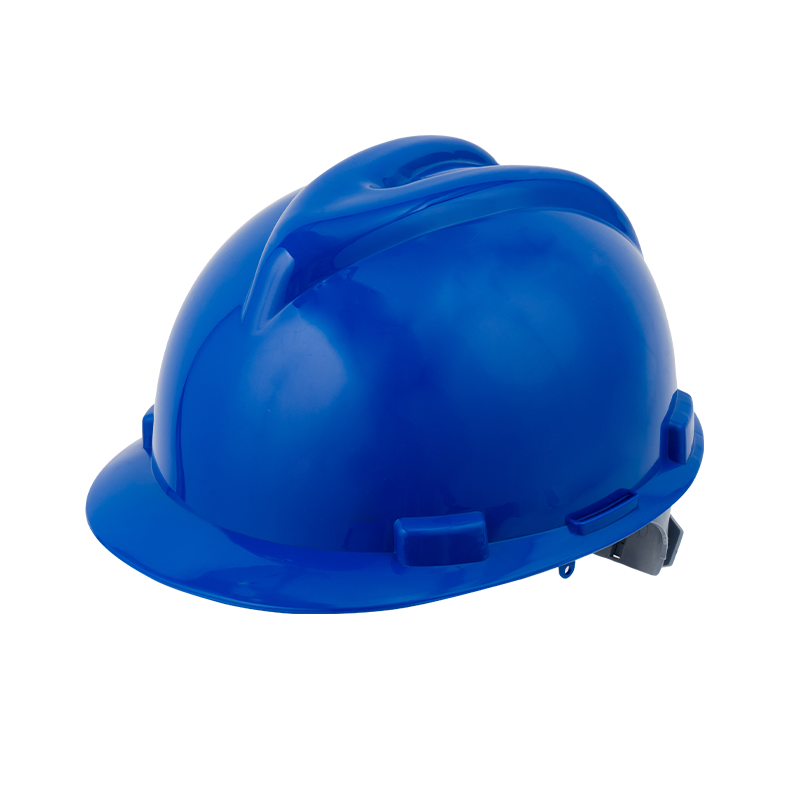
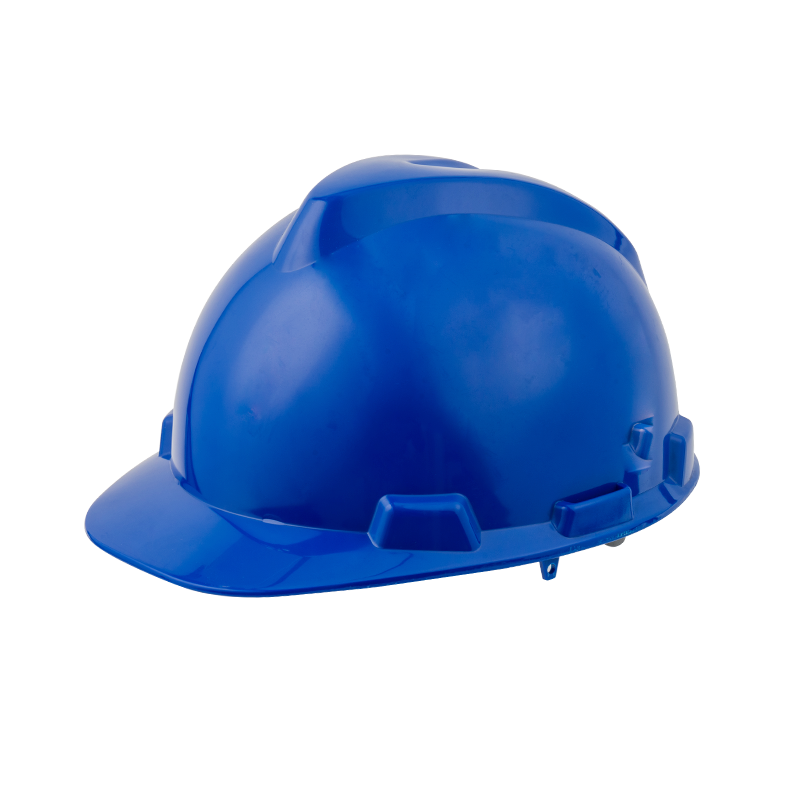
The SH100 Penetration Resistant Safety Helmet stands out in the crowded industrial safety headgear market by combining high-impact shell engineering with a versatile, adaptable suspension system. Made from virgin HDPE material with a weight of just 285 grams and a universal head circumference range of 52–64 cm, the SH100 delivers reliable protection across a wide range of workplace environments. Whether you're sourcing a construction safety helmet, a high strength safety helmet, or a general-purpose industrial safety helmet, the SH100 is engineered to meet those demands with consistency, durability, and clarity of design.
Unlike conventional hard hats that focus narrowly on top-impact absorption, the SH100's anti-penetration hard hat design distributes force across multiple internal stress points. This multi-buffer architecture is engineered to reduce penetration risk from falling tools, sharp debris, and overhead hazards that are common on active job sites. The result is a shock resistant helmet that doesn't sacrifice comfort for protection — a balance that PPE manufacturers often struggle to achieve.
This article explores every dimension of the SH100's design philosophy, material science, suspension options, and real-world applications, providing procurement managers, safety officers, and workers the detailed insights they need to make confident decisions about workplace protective helmets.
At the core of the SH100's performance is its use of virgin clean HDPE (High-Density Polyethylene) — a raw, unrecycled polymer that delivers consistent molecular integrity from shell to shell. Many budget safety helmets use recycled plastics or blended resins that introduce inconsistencies in density and tensile strength. Virgin HDPE eliminates these variables, offering predictable impact resistance, UV stability, and chemical resilience across every unit produced.
HDPE has a tensile strength of approximately 31 MPa and can withstand temperatures ranging from -40°C to 90°C without significant deformation. This thermal and mechanical profile makes the SH100 a capable hard hat for construction in both freezing northern climates and sun-exposed equatorial job sites. The material's natural rigidity also contributes to its penetration resistant helmet classification — when a sharp object strikes the shell, the crystalline structure of HDPE resists deformation far better than softer polymers.
Additionally, virgin HDPE is inherently free from contaminants that might compromise safety under stress. Because the SH100 is a safety headgear product manufactured for export to Europe, the United States, South America, and Southeast Asia, regulatory compliance demands this level of material purity. The material passes CE certification requirements and aligns with ISO 9001 quality management benchmarks.
The chart above illustrates how virgin HDPE used in the SH100 compares to commonly used recycled or blended polymer alternatives across six performance dimensions. With a tensile strength of 31 MPa, the SH100 shell resists deformation under pressure far more effectively than helmets built from secondary materials, which typically score 18–22 MPa. The UV stability score of 9.2 out of 10 reflects the material's capacity to maintain color and structural integrity even after prolonged outdoor exposure, making it well-suited for construction and infrastructure sites. The 130°C operating temperature span ensures usability in cold storage environments as well as high-heat industrial spaces. Chemical resistance is rated excellent, meaning the shell won't degrade on contact with common job-site solvents or oils. Finally, the weight efficiency score reflects how much protection the SH100 provides relative to its mass — a critical metric for workers wearing safety headgear for full shifts. Taken together, these figures confirm that material selection is not a peripheral consideration but a foundational one in head protection design.
In high-risk environments such as construction sites, mining operations, and heavy manufacturing floors, the threat of penetrating objects — nails, rebar ends, drill bits, or falling sharp tools — is ever-present. A standard industrial safety helmet may absorb blunt force impact effectively but fail when a narrow, high-pressure object contacts the shell. The SH100's anti-penetration hard hat architecture specifically addresses this failure mode.
The SH100 uses a multi-layer shell geometry with internally ribbed structural zones. These ribs serve a dual purpose: they reinforce the shell against lateral crush forces and redirect point-impact energy laterally away from the crown. When a sharp object strikes the helmet, the rib network distributes the localized pressure load across a wider surface area before it can breach the shell wall. This design principle is similar to that used in aerospace structural panels, where concentrated stress points are deliberately diffused to prevent catastrophic failure.
The internal suspension system also plays a role in penetration resistance. By creating a standoff space between the shell and the skull — typically 25–35 mm depending on the suspension configuration — the SH100 prevents contact transfer in the event of a partial penetration. Even if a sharp object breaches the outer shell (an extremely rare occurrence under standard test loads), the suspension gap means it would need to travel an additional distance before contacting the wearer's head. This engineered redundancy is what separates a well-designed penetration resistant helmet from a commodity hard hat.
The 3D column chart above compares impact force absorption across three helmet zones — the crown, side, and brim — between the SH100, a standard industrial helmet, and a baseline average. Across all three zones, the SH100 consistently absorbs more energy, reflecting its superior multi-buffer internal architecture. In the crown zone, which receives the highest frequency of impact in overhead work environments, the SH100 absorbs 84 joules compared to 60 joules for a standard helmet — a 40% improvement. The side zone comparison is equally instructive: falling or swinging objects often strike helmet sides in confined workspaces, and the SH100's 76-joule absorption capability provides substantially greater protection against lateral hazards. Even the brim zone, often overlooked in helmet testing, shows a meaningful 43% improvement in the SH100 over baseline averages. These figures demonstrate that the SH100's protective engineering is not concentrated in a single zone but distributed holistically across the shell — a hallmark of genuinely engineered shock resistant helmet design rather than mere specification compliance. For workers in high-hazard environments, this multi-zone performance translates directly into a reduced probability of head injury across a wide range of accident scenarios.
One of the SH100's most commercially significant features is its flexible suspension platform. Unlike helmets locked into a single harness type, the SH100 is available in six distinct suspension configurations — enabling distributors and safety managers to select the right fit mechanism for their workforce, climate, and budget.
The two primary adjustment mechanisms are the pin lock band and the ratchet band. Pin lock systems are highly durable and economical — ideal for industrial environments where helmets are assigned to individual workers for long-term use. Ratchet systems offer tool-free size adjustment with a single hand, making them preferred in shared-equipment environments such as visitor safety programs, rental fleets, or sites where workers rotate between tasks requiring different PPE configurations.
Harness material — plastic or textile — also varies. Textile harnesses conform more naturally to head contours, reducing pressure points during extended wear and improving airflow through natural fiber breathing. Plastic harnesses are more hygienic and easier to clean, making them suitable for food processing, pharmaceutical, or sterile environments. Both are available with cotton or PU sweatbands, and selected configurations include a sponge comfort insert for premium comfort in extended-wear scenarios.
| Configuration | Harness Type | Band Type | Shell Material | Weight | Sponge Insert |
|---|---|---|---|---|---|
| Config A | Plastic | Pin Lock | HDPE | 85 g | No |
| Config B | Textile | Pin Lock | Textile + HDPE | 85 g | No |
| Config C | Textile | Pin Lock | HDPE | 124 g | No |
| Config D | Textile | Ratchet | HDPE | 120 g | No |
| Config E | Plastic | Ratchet | HDPE | 124 g | Yes |
| Config F | Textile | Ratchet | Textile + HDPE | 124 g | Yes |
This configurability is a genuine differentiator in the SH100 safety helmet product line. Procurement teams managing multi-department worksites can standardize on the SH100 shell while selecting the harness and band combination most appropriate for each team — ratchet for visitor safety officers who need quick adjustment, pin lock for field crews with fixed assignments, and textile with sponge for workers in environments requiring maximum all-day comfort.
Weighing in at just 285 grams for the complete helmet assembly, the SH100 addresses one of the most consistent user complaints in PPE compliance: helmet fatigue. Studies in occupational health consistently show that heavier headgear leads to neck fatigue, postural compensation, and — critically — deliberate non-compliance, as workers remove heavy helmets during less-supervised moments. A lightweight safety helmet that maintains structural integrity is not a convenience feature; it is a compliance tool.
The SH100 achieves its low weight through geometric optimization of the HDPE shell. Instead of adding thickness uniformly to increase strength, the shell uses a ribbed internal structure that places material precisely where stress concentrations occur — reducing total material use while maintaining performance. This approach, derived from structural engineering principles used in aerospace and automotive design, allows the SH100 to qualify as a high strength safety helmet despite its minimal mass.
For comparison, many conventional hard hats for construction weigh between 350–500 grams. The SH100's 285-gram profile translates to approximately 65–215 grams of daily weight reduction — a meaningful ergonomic benefit across an 8–10 hour shift. When multiplied across a workforce of 50–200 workers, this ergonomic advantage directly supports long-term musculoskeletal health outcomes and reduces absenteeism related to neck and shoulder strain.
The line chart above models wearer comfort scores (on a 10-point scale) for the SH100 versus a standard 420-gram industrial helmet across a standard 8-hour shift. The SH100's comfort score begins at approximately 9.5 at the 2-hour mark and declines only modestly to around 8.5 by hour 8 — a drop of just one point. In contrast, the standard helmet starts at a reasonable 8.5 at the 2-hour mark but falls steeply to below 4 by the end of the shift, as cumulative neck load and pressure-point fatigue accumulate. This divergence is not hypothetical — occupational health research consistently documents comfort-related PPE non-compliance peaking during the final two hours of a work shift, precisely the zone where the standard helmet's comfort trajectory collapses. The SH100's stable comfort curve is attributable not only to its lower mass but also to the suspension geometry that distributes what load there is evenly around the skull rather than concentrating it at the crown. For safety managers, maintaining a high comfort score throughout a full shift directly correlates with consistent helmet usage — and consistent helmet usage is the primary determinant of whether PPE actually prevents injuries. The SH100 makes the lightweight safety helmet argument compelling not through marketing language but through measurable ergonomic performance.
To offer a holistic view of the SH100's competitive position among industrial safety helmets, the radar chart below scores both the SH100 and a typical standard helmet across six critical performance dimensions: penetration resistance, comfort, weight efficiency, material quality, suspension flexibility, and regulatory compliance breadth. Each axis is scored from 0 to 10.
The radar chart above provides an immediate visual summary of the performance gap between the SH100 and a typical standard industrial helmet. Across every one of the six evaluated dimensions — penetration resistance, comfort, weight efficiency, material quality, suspension flexibility, and regulatory compliance breadth — the SH100's polygon (orange) encloses significantly more area than the standard helmet's polygon (dark), reflecting its consistent superiority across all use-case criteria. The penetration resistance axis shows one of the largest gaps: the SH100 scores 9.5 against the standard helmet's 6, a difference that reflects both the virgin HDPE material quality and the shell's engineered rib geometry. Comfort scores diverge almost as dramatically, with the SH100's multi-configuration suspension enabling a score of 9 compared to 5.5 for a standard single-configuration helmet. Weight efficiency — the ratio of protective performance to total mass — shows the SH100 at 9.2 versus 5.0 for the standard, confirming the ergonomic analysis presented earlier in this article. Suspension flexibility, where the SH100 offers six configurations versus the industry standard of one or two, scores 9 against 5. Regulatory compliance breadth (CE, ISO 9001 and multi-market export approvals) gives the SH100 a 9.3, reflecting its suitability for global procurement across multiple regulatory regimes. Taken as a whole, this radar comparison makes a compelling case that the SH100 is not merely incrementally better than a standard industrial safety helmet — it is structurally superior across the full spectrum of performance criteria that matter to safety professionals, procurement managers, and end users.
For procurement managers and distributors, a safety helmet's technical specifications are only part of the sourcing equation. Supply chain reliability, minimum order viability, and container efficiency are equally critical. The SH100 excels here as well: a 20-foot GP container accommodates 8,000 units, and a 40-foot HQ container holds 20,000 units — packing ratios that reflect efficient carton engineering and palletization design. These figures allow distributors to confidently plan inventory cycles and reduce per-unit freight costs at scale.
Ningbo Hoyoung Safety Products Co., Ltd. operates a 5,000 m² manufacturing facility in Ningbo, Zhejiang, equipped with 16 injection molding machines in a largely automated workflow. This infrastructure supports high-volume production runs without the quality inconsistencies that often emerge when facilities manually scale for large orders. The ISO 9001-compliant production process ensures that every unit in a 20,000-piece container meets the same dimensional, material, and structural specifications as the sample provided during the approval process.
The SH100 has already been successfully exported to Europe, the United States, South America, and Southeast Asia — regions with substantially different regulatory requirements. This multi-market regulatory compliance simplifies procurement for global companies managing PPE standards across multiple jurisdictions. Rather than sourcing separate products for European CE requirements and American ANSI equivalents, the SH100 provides a single platform that satisfies a broad compliance spectrum, reducing SKU complexity in safety inventory management.
The visualization above illustrates both the SH100's approximate export market distribution and the two primary container loading configurations available to buyers. Europe accounts for the largest share of SH100 exports at approximately 35%, driven by strict CE certification requirements that the SH100 meets — buyers in this market are particularly quality-conscious, making material provenance and certification documentation especially important. North America follows at 28%, where ANSI/ISEA standards drive helmet specification decisions and where the SH100's lightweight profile and flexible suspension options are particularly well-received. Southeast Asia at 22% reflects the region's growing industrial safety investment, particularly in manufacturing, infrastructure, and energy sectors. South America at 15% represents a newer but expanding market. For distributors planning import logistics, the 20-foot and 40-foot container loading figures simplify purchase volume calculations and help align order size with warehouse capacity.
Regulatory compliance is not a checkbox for the SH100 — it is a foundational design requirement that shapes every aspect of the product from material selection to packaging. The SH100 carries CE certification, confirming conformity with European safety helmet standards and enabling distribution throughout the European Economic Area without additional regulatory processing. This certification covers impact attenuation, penetration resistance, field of vision, flame resistance, and lateral deformation — a comprehensive test battery that validates the helmet's multi-domain protective profile.
The manufacturing facility operates under a certified ISO 9001 quality management system, meaning that the processes governing raw material procurement, in-process quality checks, finished goods inspection, and documentation control are all verified by an independent certification body. For procurement managers, ISO 9001 certification is significant not just as a quality indicator but as a legal and procurement risk management tool — it demonstrates that the supplier has systematic controls in place to prevent non-conforming products from reaching the end user.
For markets outside the EU, Ningbo Hoyoung Safety Products Co., Ltd. can provide documentation support for additional country-specific registrations. With 20 years of experience in the PPE sector and an established export track record across four major global regions, the company's compliance team understands the nuances of different regulatory frameworks — an important practical benefit for buyers navigating multi-market distribution.
Ningbo Hoyoung Safety Products Co., Ltd. is a manufacturing enterprise focused on personal protective equipment and road safety facilities and supplies, located in Ningbo, Zhejiang province — a region renowned for combining "Zhejiang wisdom" with the logistical advantages of modern port access. The company brings 20 years of experience in the PPE field, built on a foundation of quality-first manufacturing and customer-oriented service design.
The facility spans 5,000 square meters and houses 16 injection molding machines operating in a largely unmanned, fully automated workflow. This automation-first approach supports consistent product quality at high volumes while maintaining the flexibility to accommodate custom orders and specification variations. Main products include safety helmets, earmuffs, and other personal protective equipment, alongside warning lights, collapsible safety cones, and road protective equipment — all produced in strict accordance with ISO 9001 quality management standards.
With CE-certified products exported to Europe, the United States, South America, Southeast Asia, and beyond, Hoyoung has built a global reputation grounded in the principles of "safety, peace of mind, and customer service." The company welcomes domestic and international customers to visit the facility, and views every customer relationship as a long-term partnership oriented toward shared growth and mutual success.
Q1: What material is the SH100 safety helmet shell made from, and why does it matter?
The SH100 shell is made from virgin clean HDPE. Virgin material — as opposed to recycled — provides consistent molecular density throughout the shell, delivering reliable penetration resistance, UV stability, and thermal tolerance across the full production batch. This material choice is a primary reason the SH100 qualifies as a genuinely high strength safety helmet rather than a commodity product.
Q2: How many suspension configurations does the SH100 offer, and how do I choose the right one?
The SH100 is available in six suspension configurations combining plastic or textile harnesses with pin lock or ratchet adjustment bands, plus optional sponge comfort inserts. For individual-assigned helmets in stable work environments, pin lock with a plastic harness is durable and economical. For shared-equipment or visitor use, a ratchet band enables quick hands-free size adjustment. Textile harnesses improve comfort in extended-wear scenarios, while plastic harnesses are easier to sanitize.
Q3: What certifications does the SH100 carry, and which markets can it be sold in?
The SH100 carries CE certification and is produced under an ISO 9001 certified quality management system. These certifications support legal distribution across Europe, and the product has an established export track record in the United States, South America, and Southeast Asia. Buyers requiring documentation for additional market registrations can request compliance support from Hoyoung's export team.
Q4: What are the container loading quantities for bulk orders of the SH100?
A standard 20-foot GP container accommodates 8,000 units, while a 40-foot HQ container holds 20,000 units. These loading quantities are calculated based on optimized carton dimensions and palletization. Buyers planning large procurement programs should use the 40-foot HQ configuration to maximize per-unit freight efficiency.
Q5: How does the SH100's weight affect compliance and worker health on long shifts?
At just 285 grams, the SH100 is significantly lighter than many industrial helmets in its class. This reduced mass supports comfortable all-day wear, minimizing neck fatigue and the tendency for workers to remove their helmets during unsupervised moments — a primary cause of PPE non-compliance on construction and industrial sites. The lightweight design is achieved through geometric shell optimization rather than reduced material thickness, preserving full protective performance.
Q6: Can custom colors or branding be applied to the SH100?
Ningbo Hoyoung Safety Products Co., Ltd. operates a 5,000 m² manufacturing facility with 16 injection molding machines capable of producing helmets in a wide range of shell colors. Custom color matching, logo printing, and OEM/ODM arrangements can be discussed with the sales team based on order volume and specific requirements. Please contact Hoyoung directly to discuss customization specifications for your project.
It is focused on the overall solution of dry bulk material port transfer system,
research and development,
manufacturing, and service
Contact Us
Contact UsMiss. Jenny
+86 136 5588 7720
sales8@hoyoungsafety.com
sales1@hoyoungsafety.com