 English
 Español
 عربى

Industry News
Home / News / Industry News / New OSHA Hard Hat Requirements 2026: What Specifiers Must Verify First
Content
A pallet of hard hats lands at the jobsite trailer in January with a sticker that reads "OSHA compliant." The safety manager asks the only question that matters: compliant with which edition, and does the paperwork prove it? That exchange is happening more often as buyers search for the new OSHA hard hat requirements for 2026 and find a mix of rule summaries, supplier claims and blog posts that never resolve the edition question.
Here is the short answer. OSHA did not rewrite its head protection rules for 2026. The legal backbone is still 29 CFR 1910.135 for general industry and 29 CFR 1926.100 for construction. What has moved is the practical layer around those rules: which edition of the ANSI/ISEA Z89.1 consensus standard a supplier can document, how often Type II shells are written into specifications, how the fit language from OSHA's recent construction PPE rule is being checked on site, and how strictly accessories and reverse donning are reviewed during an audit.
Below we walk through what a compliance officer, a safety director and a procurement team each need from a hard hat in 2026, where the real risk sits when a purchase order says "ANSI approved" and nothing else, and how to write a specification that survives both an inspection and a shipping container.
OSHA writes performance standards and then leans on consensus standards for the technical detail. For head protection, the Code of Federal Regulations tells you when head protection is required and points to an ANSI standard for what the helmet must withstand. The edition cited in the regulation is the edition that carries weight in an inspection. OSHA has revised its list of referenced standards more than once, and the agency generally allows an employer to rely on a later edition when the employer can show it provides equal or greater protection than the text cited in the rule.
That single mechanism explains most of the noise behind the phrase "new hard hat requirements." The trigger language — falling objects, electrical contact — has stayed stable for years. What keeps shifting is the documentation a supplier has to produce and the questions an auditor asks at the gate.
Equally important is what did not change, because these myths keep costing buyers money:
A five-minute verification beats a week of argument. Turn the shell over and read the marking: manufacturer, date of manufacture, standard and edition, Type, Class and head size. Then ask the supplier for the test report that corresponds to that marking. If the answer is "all our helmets are ANSI," that is not an answer.
General industry and construction cite different paragraphs, and that difference changes how much documentation you keep. Under 1910.135, head protection is required where there is a risk of head injury from falling or flying objects, or from electrical shock and burns. Under 1926.100, employees working where there is a potential for head injury from falling objects must be protected, and where employees are exposed to electrical shock hazards from exposed conductors that could contact the head, helmets must be designed to reduce that hazard.
The two rules also reach different places on paperwork. General industry is explicit: 1910.132(d) requires the employer to assess the workplace for hazards, select PPE accordingly, communicate that decision, and — under 1910.132(d)(2) — certify the assessment in writing with the workplace evaluated, the person certifying and the date. Construction is less prescriptive about the certificate itself, which tempts some firms to skip the assessment entirely. That shortcut survives until the first incident review, when the first question is always "show me how you decided this helmet was adequate."
| Requirement | General industry (29 CFR 1910.135) | Construction (29 CFR 1926.100) |
|---|---|---|
| When head protection is triggered | Risk of head injury from falling or flying objects, or from electrical shock and burns | Exposure to falling objects, or to electrical shock from exposed conductors that could contact the head |
| Technical benchmark | Helmet must comply with the ANSI Z89.1 edition cited, or the employer must demonstrate equal protection | Same structure, cited through the construction standard |
| Bump caps as compliance | Not accepted as head protection | Not accepted as head protection |
| Written hazard assessment | Explicit certification required under 1910.132(d)(2) | Assessment still expected in practice; the certificate format is less prescriptive |
| Training | 1910.132(f): when PPE is needed, what it is, how to don, doff, adjust and wear it, its limitations, and care and disposal | 1926.21 and 1926.95 support the same expectations delivered through site induction and task briefing |
| Who pays | Employer, with narrow exceptions under 1910.132(h) | Employer under 1926.95(d) |
Two practical notes on that table. First, the payment rule is narrower than people assume: non-specialty safety-toe footwear and ordinary clothing can be handled differently, but a hard hat is squarely an employer cost in both frameworks. Second, the training rule is not a one-time event. Retraining is triggered when the workplace changes in a way that makes earlier training obsolete, when the PPE changes, or when an employee's conduct shows they did not understand the instruction — which is exactly what happens when a crew is issued a new shell with a different suspension system and nobody explains it.
For multi-site firms, add a third column of your own: the state plan. A programme that is fully compliant in a federal-plan state can still fail a local consultation visit because the state adopted a stricter accessory rule or a different training record expectation.
Most hard hat arguments collapse once the crew stops talking about brands and starts talking about three letters and a number. Type describes the direction of impact protection. Class describes the electrical proof test. Neither tells you whether the helmet fits, and neither is a substitute for the hazard assessment.
| Designation | What it protects against | Typical 2026 use | Watch-outs |
|---|---|---|---|
| Type I | Top impact only | General site work, warehousing, light trades, most routine construction tasks | The side of the head is unprotected against swinging or falling objects |
| Type II | Top and lateral impact | Overhead work in tight quarters, utility crews, tunnelling, heavy civil, work near suspended loads | Usually heavier and warmer; if the crew removes it, the protection advantage disappears |
| Class G | Proof-tested to 2,200 V | General construction where incidental contact with low-voltage circuits is conceivable | Not a live-work rating; never treat it as electrical PPE for hands-on work |
| Class E | Proof-tested to 20,000 V | Electrical maintenance, substations, utility line work support tasks | Confirm the marking rather than the shell colour or the catalogue photo |
| Class C | Conductive — no electrical rating | Metal-working and fabrication areas with no electrical exposure | Never issue near energized conductors, even briefly |
In practice the decision reduces to three questions: is there a lateral impact exposure, is there any chance of head contact with an energized conductor, and what will the crew genuinely keep on for eight hours in July? A Type II shell that lives in a locker protects nobody, and a Class E shell issued without a fit adjustment is an expensive way to fail the fit requirement.
The electrical classes are easiest to understand when the proof-test voltages sit on one scale. The chart below keeps that scale honest, because the gap between Class E and Class G is not cosmetic.
Proof-test voltage by ANSI/ISEA Z89.1 electrical class
All three bars share one scale. A Class C shell carries no electrical rating because the assembly may include conductive components.
Read the bar lengths literally: a Class E shell is proof-tested to roughly nine times the voltage of a Class G shell, and a Class C shell carries no electrical rating at all. On a mixed site, two crews standing side by side can legitimately be wearing different classes on the same afternoon, and that is not a compliance problem as long as the hazard assessment explains why. HDPE and ABS shells can both be built to Class E, but the rating belongs to the tested assembly — shell, suspension and hardware together — not to the material name on the invoice. If your specification says "Class E" and your purchase order says "white hard hat, 100 pieces," nothing in the delivery will prove the claim, and the receiving clerk has no way to check it.
For work where overhead strikes dominate and lateral exposure is limited, a heavier-ribbed shell gives extra structure without moving the entire crew onto a Type II budget line. A model built around that idea is the double-ridge HDPE shell used on formwork, scaffold erection and demolition support tasks.
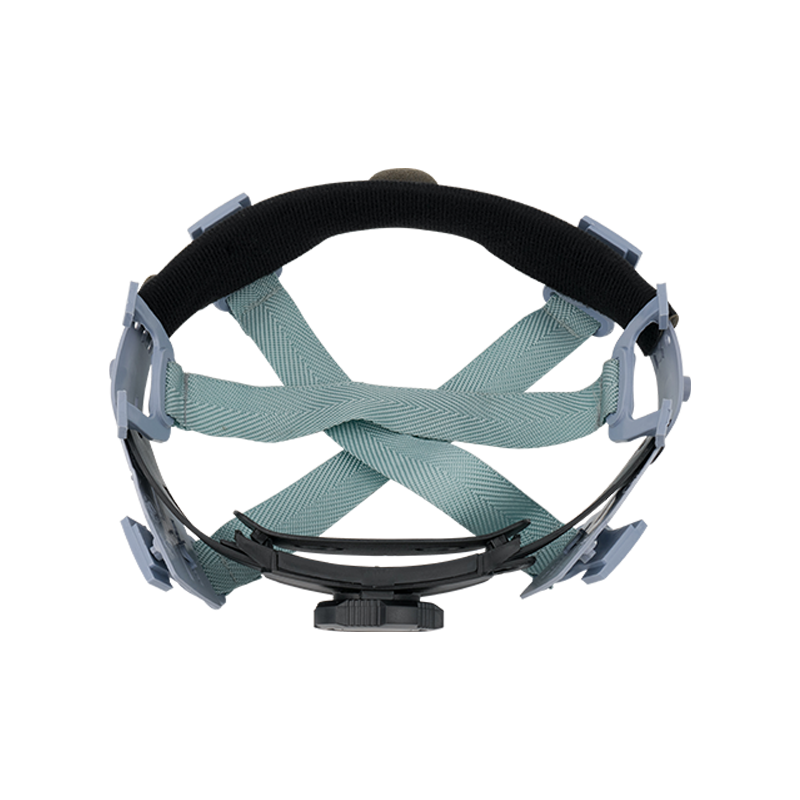 SH188 Double-Ridge HDPE Safety HelmetA double-ridge HDPE shell for overhead-strike work, with selectable plastic suspension and a brim gutter; worth checking when shell structure matters.View Product →
A hard hat is a system of four parts: the shell, the suspension, the headband and whatever accessory you have bolted on. Auditors in 2026 tend to work through them in that order, and most failures happen in the second and third parts, not the first.
Impact testing measures how much force reaches the headform when a known weight is dropped on the crown. Penetration testing uses a pointed striker instead, and the pass criterion is simple and unforgiving: the striker must not contact the headform. That distinction matters commercially. A shell can pass impact easily and still be marginal on penetration, which is why the two properties get specified separately on serious projects.
Where there is a puncture-type exposure — rebar, exposed form ties, sheet metal edges at head height during fit-out — the shell specification matters more than the brand on the front. A helmet built around that single requirement is the SH100 penetration-resistant HDPE model.
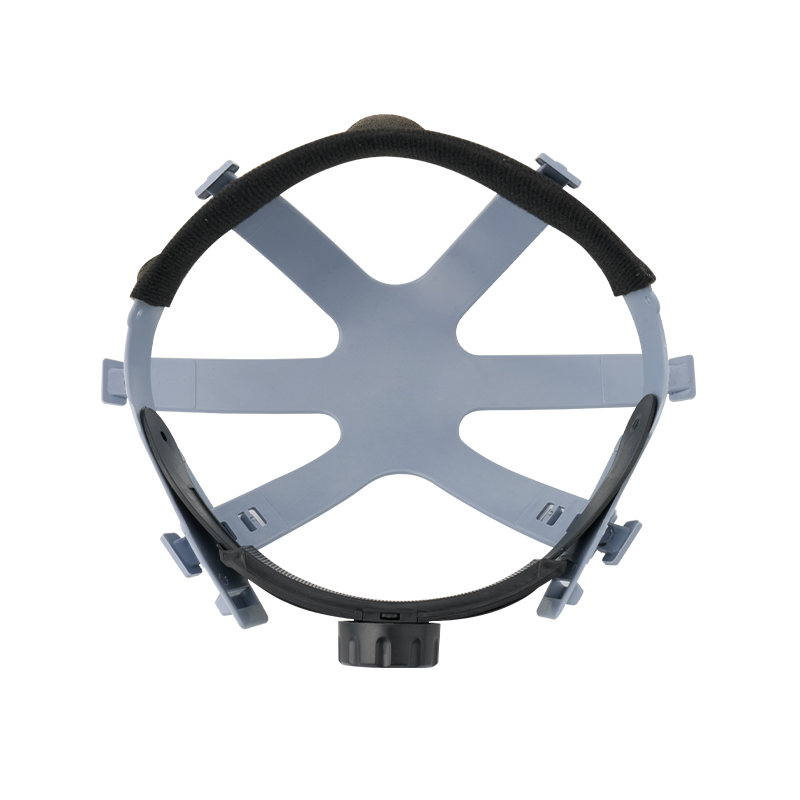 SH100 Penetration-Resistant HDPE Safety HelmetA penetration-resistant HDPE helmet with multi-point shock absorption and multiple suspension and sweatband options, suited to rebar and sheet-metal edge exposure.View Product →
Shell material is the second half of that conversation. HDPE shells generally bring flexibility, good low-temperature behaviour and strong resistance to sunlight and many chemicals. ABS shells generally bring stiffness and a clean, consistent surface finish, and are widely used where appearance and printability matter for a distributor's own label. Both can be dielectric; both can be certified. What varies is how the finished, tested assembly performs in the environment where you intend to deploy it, which is why the test report beats the material name every time.
The suspension is where comfort and retention are won or lost. A four-point suspension is adequate for intermittent wear. A six-point suspension spreads load more evenly across the head and holds adjustment better through a long shift, which is the practical reason it dominates industrial catalogues. Ratchet adjustment is faster to set and easier to keep honest; pin-lock is simpler and tougher in dusty conditions. Whichever you choose, the headband should sit level and low enough on the head that the shell does not rock, and the nape strap should be engaged rather than left dangling.
Finally, read the warning text inside the shell before you add anything to it. Most manufacturers list the accessories they have validated, and that list is shorter than the aftermarket catalogue suggests.
Accessories are the quietest source of non-compliance on most sites. A lamp bracket screwed into a shell that was never tested with that bracket, a face shield attached with a third-party adapter, or ear muffs clipped to a brim that was not designed for the clip — each of these can alter how the helmet behaves under impact, and none of them shows up on a delivery note.
Reverse donning is the other recurring argument. Wearing a hard hat back to front is permitted when the manufacturer approves the practice and the suspension is reversed along with the shell, so that the nape strap sits at the back of the head. In that configuration, protection against impact and penetration is retained, and the brim becomes useful for rain and for upward visibility. Without manufacturer approval, reverse donning is an unapproved modification, and a helmet worn backwards with the suspension still installed the forward way is simply a badly fitted helmet.
Chin straps deserve a similar level of discipline. They are not required for every task, but they are the difference between a helmet that stays on and one that becomes a dropped-object hazard when a worker leans over an edge or steps into a lift. Some manufacturers require the strap for certain configurations, and that instruction overrides a general site preference.
Fit is the requirement most likely to be examined closely in 2026, because it is the easiest to observe and the hardest to defend after the fact. The construction PPE rule language added in the 2023 rulemaking made explicit what was always implied: protection that does not fit the individual is not adequate protection. A shell that rotates on the head, lifts off the crown when the wearer looks up, or presses so hard that the worker removes it between tasks fails the same test.
Sizing ranges vary by manufacturer, but the practical points are consistent. The headband should sit roughly an inch above the eyebrows and level across the forehead, not tilted back like a cap. Adjustment should be made with the helmet on the head rather than guessed at in the storeroom. Crews with smaller head sizes, long hair tied up, or religious headwear need a shell and suspension combination that accommodates them without loosening the fit for everyone else — a point that procurement teams overlook until the first complaint.
Suspension choice is a fit decision as much as a comfort one. Where crews report pressure points, heat build-up or constant re-adjustment, the answer is often a six-point suspension with a breathable crown rather than a larger shell. A model that addresses exactly that combination is the SH102 six-point suspension breathable helmet.
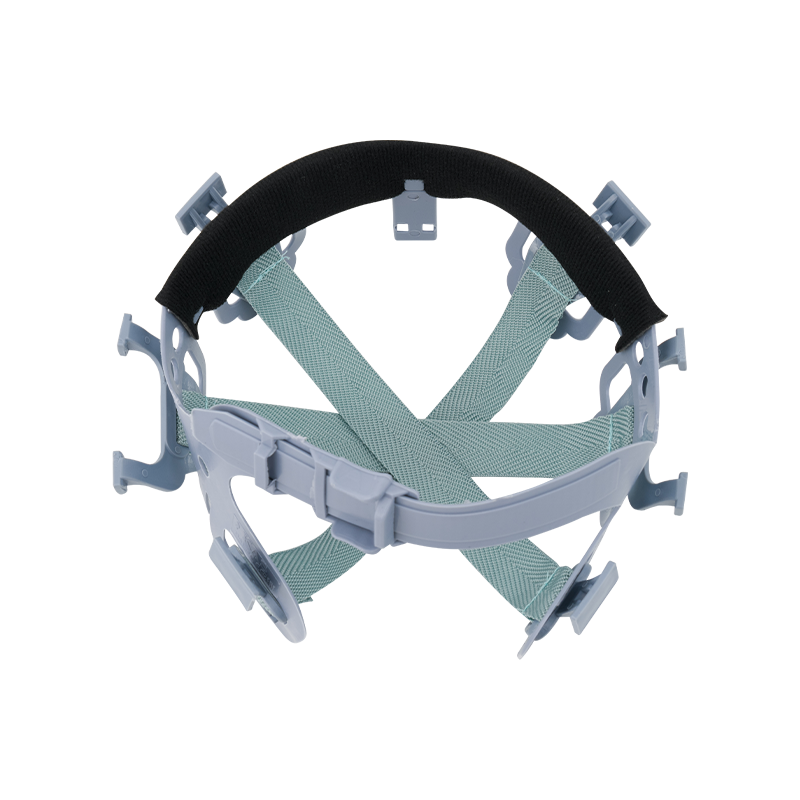 SH102 Six-Point Suspension Breathable Safety HelmetA breathable HDPE helmet with six-point suspension and ventilated holes, aimed at crews reporting pressure points, heat build-up or constant re-adjustment.View Product →
Training ties the whole clause together. Under 1910.132(f) the employer must explain when head protection is required, what it is, how to put it on, take it off, adjust and wear it, what it cannot do, and how to care for and dispose of it. Retraining is triggered by workplace changes, by a change of PPE, or by evidence that an employee did not understand the instruction. Handing someone a helmet and a hard hat sticker is not training; it is a delivery.
There is no federal expiry date on a hard hat, and anyone who tells you otherwise is selling something. Retirement is a function of manufacturer instructions plus physical condition, and the two rarely disagree. Most makers publish a service life expectation in the range of two to five years of normal use, with the suspension replaced more frequently — often annually — because it is the suspension that degrades first through sweat, adjustment cycles and UV exposure.
The pre-use check takes under a minute and follows a fixed order:
Impact is the case people get wrong. A shell that has taken a heavy strike can pass a visual check and still have lost the structural capacity it was certified for, because the damage often lives inside the shell wall rather than on the surface. The rule of thumb in the industry is to retire after any significant impact regardless of appearance — a principle worth reading in more detail, including why a helmet struck by a heavy object with no visible cracks still needs replacing.
Storage is the other silent killer. A van dashboard in summer, a shelf next to a solvent drum or a stack of shells under a leaking roof will all shorten service life without any event to record. Keep spare helmets in a cool, dry, shaded place, out of direct sun and away from chemicals, and rotate stock so the oldest shells go out first.
Everything above becomes useful the moment it reaches a purchase order. A specification that names the standard edition, the Type, the Class, the shell material, the suspension type and the size range closes the gaps that generic "ANSI approved" language leaves open. It also gives a receiving clerk something to check against the marking inside the shell, which is where most non-conforming deliveries are actually caught.
| Specification line | What to write | Failure it prevents |
|---|---|---|
| Standard and edition | ANSI/ISEA Z89.1, with the edition your hazard assessment references | Delivery of a shell whose certification does not match your documents |
| Type and Class | For example Type I, Class G — or Type II where lateral impact is a genuine exposure | Substitution of a cheaper general-purpose shell for an electrical or lateral-impact requirement |
| Shell and suspension | HDPE or ABS shell, four-point or six-point suspension, ratchet or pin-lock adjustment | Fit complaints, voluntary removal and re-adjustment downtime |
| Size range | Stated head-size range plus availability of replacement suspensions in every size | Crews with smaller head sizes ending up with ill-fitting shells |
| Marking and traceability | Manufacturer, date of manufacture, standard, Type, Class and head size legible inside the shell | Unverifiable deliveries and failed inspection records |
| Approved accessories | A written compatibility list per model, plus spare parts availability | Unapproved brackets and clips voiding the tested assembly |
| Quality documentation | Test report, ISO 9001 certificate, and CE or EN 397 evidence for export markets | Tender disqualification and customs delays |
| Logistics | MOQ, lead time, packaging and a sensible spare ratio per site | Shortages on day one and emergency buying at retail prices |
For wholesale buyers, the supplier side of that table matters as much as the product side. A manufacturer with in-house moulding can hold a specification stable across repeat orders, control the shell wall thickness batch to batch and offer replacement suspensions for the life of the model, which is exactly what a distributor needs to avoid a catalogue that turns over every season. Ningbo Hoyoung Safety Products Co., Ltd. works from a 5,000 square metre workshop in Ningbo with 16 injection moulding machines and largely automated moulding lines, operates to ISO 9001 and holds CE certification for exports to Europe, North America, South America and Southeast Asia. The company's range covers HDPE and ABS helmets, helmet accessories, PVC safety shoes and rain boots, plus traffic cones and solar warning lights, so a wholesaler can consolidate head protection and road safety on one purchase order.
Two procurement habits are worth adopting across the board. First, ask for the suspension as a separate order line — helmets fail through suspensions far more often than through shells, and a replacement suspension is cheaper than a new helmet. Second, sample-fit before you commit to volume. Send two sizes to the site, have three workers adjust them, and watch whether anyone reaches to take the helmet off within an hour. That test costs less than a single failed tender.
There was no wholesale rewrite of the head protection rules. 29 CFR 1910.135 for general industry and 29 CFR 1926.100 for construction remain the legal basis, with the ANSI/ISEA Z89.1 consensus standard supplying the technical performance requirements. What changed in practice is the level of proof expected: the exact standard edition you reference, the Type and Class you specify, documented employer payment and training, and the fit language that came out of OSHA's construction PPE rulemaking.
No. Neither 1910.135 nor 1926.100 sets an expiry date. Retirement depends on the manufacturer's published guidance and on condition. Most makers suggest a service life in the region of two to five years under normal use, with the suspension replaced more frequently, and any shell should come out of service immediately after a significant impact or on any sign of cracking, crazing or chemical damage.
Not as a blanket federal rule. Type II shells, which add lateral impact protection, are frequently required by owner specifications, general contractor requirements and internal risk assessments for overhead work in confined spaces, but the decision remains hazard-based. If your hazard assessment identifies side-impact exposure and you specify Type I, the gap is yours to explain.
Yes, when the manufacturer approves reverse donning for that model and the suspension is reversed along with the shell so the nape strap sits at the back of the head. Wearing a helmet backwards with the suspension still installed the forward way is not reverse donning — it is a misadjusted helmet that will not perform as tested.
Not universally, but they are required by a growing number of employers for work at height, in high wind and in confined space entry, and some manufacturers specify straps for particular configurations. Where a strap is required by the manufacturer's instructions or by site rules, that requirement takes precedence over personal preference.
Not where 1910.135 or 1926.100 applies. Bump caps are designed to protect against minor bumps and scrapes in areas with no falling-object or electrical exposure, and they are not tested to the same standard as a hard hat. Using one as a substitute for a compliant helmet is one of the most common findings in a head protection audit.
Yes, with narrow exceptions that do not cover head protection. Under 1910.132(h) in general industry and 1926.95(d) in construction, the employer supplies required PPE at no cost to the employee. The common exceptions relate to non-specialty safety-toe footwear and ordinary clothing, not to helmets.
At minimum: the manufacturer, the date of manufacture, the standard and edition the shell meets, the Type designation, the electrical Class and the head size range. Many makers also print warnings about approved accessories and reverse donning. If the marking is missing or unreadable, the helmet cannot be verified in an inspection and should be treated as non-conforming.
For 2026 the practical answer is reassuring and demanding at the same time. OSHA has not raised the bar on hard hats with a new paragraph; it has made the existing bar easier to inspect. The buyers who come through cleanly will be the ones who can name the standard edition, state the Type and Class, prove employer payment and training, and show that the shells they issue actually fit the people wearing them. Everything else — the colour, the logo, the catalogue photography — is decoration on top of that foundation.
That is also the sensible frame for a purchasing conversation. Ask your supplier for the marking, the test report and the replacement suspension first, and let the price discussion come after; a helmet that fails verification has no value at any discount.
Need your hard hat specification checked before the next order?
Send us the Type, Class and standard edition you have written down, plus a short note on the work environment, and our team will confirm which shell, suspension and accessory combination matches it. We supply test documentation, replacement parts and OEM labelling support before you commit to a wholesale order.
It is focused on the overall solution of dry bulk material port transfer system,
research and development,
manufacturing, and service
Contact Us
Contact UsMiss. Jenny
+86 136 5588 7720
sales8@hoyoungsafety.com
sales1@hoyoungsafety.com