 English
 Español
 عربى

Industry News
Home / News / Industry News / Nitrile Dipped Gloves Buying Guide: Coatings, Grip Levels and Sourcing Tips
Content
Two cartons of nitrile dipped gloves land on the same receiving dock on the same morning. Both are 13 gauge, both are black with a sandy palm, both carry the same EN388 marking, and both cost roughly the same per pair. Three shifts later, one carton is still in service and the other is in the reject bin with split coatings and palms that have gone shiny and slippery. The difference was never the colour or the logo. It sat in the yarn of the liner, the grams of nitrile per pair, the number of dips, and the temperature curve in the curing oven.
That is the short version, and it is worth stating before anything else: with nitrile dipped gloves, the specification sheet matters far more than the sample photo. A buyer who understands four variables, which are liner gauge, coating chemistry, dip coverage and cure quality, can predict field performance before a single pair leaves the warehouse. This guide walks through those variables in the order they affect your cost, your rejection rate and your workers' hands, using the same checklist we apply on our own production floor in Ningbo, where we have spent two decades building PPE and road safety products under ISO9001 and CE marking.
A nitrile dipped glove is a knitted liner that has been partially or fully coated with a nitrile rubber compound, then cured. Three things happen in that sentence, and each one is a place where a factory can save money quietly.
For importers and distributors, this is where the real risk sits. A cheap batch is not a bargain if ten percent of it fails within a month, because the replacement cost is never just the replacement cost. It is the freight, the paperwork, the customer conversation and the space the failed cartons occupy while the claim is argued.
Judge a nitrile dipped glove by liner gauge, coating weight and cure consistency, because price per pair tells you nothing about cost per hour of wear.
Most sourcing mistakes happen at the coating selection stage, usually because the wrong question gets asked. Buyers often ask for "the grippiest glove" when the task actually calls for a glove that stays grippy after thirty minutes of oil contact, or one that lets the hand breathe during a ten hour shift. Those are different products.
Flat nitrile is the entry point. It is smooth, dense and inexpensive, and it performs reasonably well on dry components and light packaging work. On oily sheet metal the surface quickly loads up and the grip drops, which is the complaint that pushes many buyers toward sandy or foam coatings. Sandy nitrile, which is often double dipped so the palm carries two distinct layers of texture, holds oil away from the surface and gives the best dry-to-wet grip of the family. It is the standard choice for automotive service, machine maintenance, oil changes and general handling of heavy, slick parts. The trade-off is tactile feedback, since the coarse texture can feel clumsy when picking up small fasteners.
Micro-foam nitrile sits at the other end. It is aerated during the dipping process, which produces an open, cellular surface that grips wet and slightly oily parts while remaining breathable and flexible. Assembly lines that handle small, oiled components usually prefer it. Nitrile over polyurethane double coatings are also worth knowing: the PU base layer promotes flexibility and the nitrile top layer adds oil resistance, which suits mixed tasks. Fully dipped or three-quarter dipped versions extend coverage to the back of the hand and wrist and are the right answer for chemical splash, janitorial work and anything where liquid runs down the arm.
| Coating build | Grip on oily parts | Abrasion resistance | Breathability | Typical tasks | Practical caution |
|---|---|---|---|---|---|
| Flat nitrile palm dip | Moderate | Good | Low | Dry assembly, packaging, light handling | Becomes slick once oil saturates the surface |
| Sandy nitrile, single or double dip | High | Very good | Low to moderate | Automotive service, maintenance, heavy parts | Texture reduces feel for very small components |
| Micro-foam nitrile | High | Good | High | Precision assembly, logistics, oiled small parts | Cellular surface can load with dust in dirty areas |
| Nitrile over PU double coating | Moderate to high | Very good | Moderate | Mixed dry and lightly oiled work | Higher unit price, needs clearer justification |
| Fully or three-quarter dipped nitrile | High | Very good | Low | Chemical splash, wet handling, cleaning crews | Heat build-up on long shifts without a ventilated liner |
Choose the coating by asking what contaminant the part carries, not by asking which glove has the strongest grip claim.
Grip is usually described in marketing language, but it can be measured in ways that are useful to a purchasing team. The simplest approach is an internal oiled-grip trial that records how long a glove keeps hold of a representative part, and how many pairs a worker actually consumes per month. The index below reflects typical relative differences between coating families as reported in supplier testing and field trials, and it is intended as a starting point for your own trial rather than a fixed rule.
Illustrative oily-grip index by coating type (higher is better)
The gap between sandy nitrile and flat nitrile is the single most common reason a glove specification is changed after the first shipment. It is also where the cost discussion should start, because a pair that keeps its grip for a full shift usually costs less per working hour than a cheaper pair that gets swapped twice. When we quote a glove programme, we ask for the part being handled and the contaminant on it, because those two answers move the recommendation far more than the target price does.
Two caveats are worth passing to the shop floor. First, texture that is loaded with metal dust or grit will lose grip regardless of coating chemistry, so gloves need a washing or replacement routine. Second, a very coarse sandy finish is not automatically better for wet work, because water can sit in the valleys of the texture. A micro-foam surface sometimes drains better on wet, soapy tasks. Trial the glove against the actual contaminant rather than a generic wet test.
A glove trial is only meaningful when the test part, the contaminant and the shift length match real production conditions.
Gauge describes how many knitted stitches fit into a given length of liner, and it is the quietest driver of comfort. A 13 gauge liner is thicker and more durable, a 15 gauge liner is the general purpose middle ground, and an 18 gauge liner is thin, flexible and closer to a second skin. Higher gauge does not automatically mean better protection, but it does change the balance between dexterity and abrasion life. A worker handling small screws all day will feel the difference between 13 and 18 gauge within the first hour.
Cut resistance is a separate conversation that frequently gets miscalculated. Under EN388:2016 the shield marking carries abrasion, cut, tear and puncture results, followed by the TDM cut test score from A to F. A glove marked 4X42B and a glove marked 4X42C can look identical in a photo while offering materially different cut protection. If your risk assessment points to cut hazards, the liner needs high performance polyethylene, glass fibre, steel or a blend, and the coating must not compromise the cut performance of the yarn. Nitrile dipped gloves with a cut resistant liner are common in glass handling, metal stamping and recycling, and those are exactly the places where a downgrade from cut level D to cut level B is felt in the injury log rather than the invoice.
Fit deserves equal attention. A glove that is one size too large will ride at the fingertips, bunch in the palm and fail early at the crotch of the thumb. A glove that is too small stretches the coating and thins it at the knuckles. Sizing should be checked against the palm circumference chart supplied by the factory, and the wrist cuff length should match the task, with a short knit cuff for assembly and a longer cuff for wet or overhead work. If the glove will be laundered, ask for the shrinkage figure after five wash cycles, because a liner that loses five percent of its length will not fit the same hand in month two.
Specify gauge, cut level under EN388:2016 and a measured size chart together, since a compromise in any one of the three shows up as premature wear.
Nitrile is chosen by many buyers simply because it contains no natural rubber latex protein, which removes the most common trigger of glove related skin reactions. That does not make every nitrile glove comfortable. Residual accelerators and curing agents in a poorly processed coating can still irritate skin, particularly when a worker wears the same pair for eight hours in a warm environment. Water-based, well rinsed coating systems and a clean liner reduce the risk, and a ventilated back helps more than most people expect.
Food handling is its own specification. A glove intended for direct food contact should be supported by documentation for the relevant framework, such as EU 1935/2004 and EU 10/2011 for plastic materials, or FDA 21 CFR 177.2600 for rubber articles in the United States. Ask for the declaration of compliance rather than a general statement that the glove is "food grade". Colour also matters operationally: blue nitrile dipped gloves are popular in food plants because fragments are easier to spot against most food surfaces, and metal detectable versions exist for higher risk lines.
Powder is another easy win. Powdered gloves were once used to make donning easier, but powder carries contamination risk in clean environments and can aggravate skin. Most industrial nitrile dipped gloves sold today are powder free and rely on a chlorinated or polymer surface treatment instead, and buyers should confirm that treatment does not leave the palm slippery on dry parts.
For any food or clean environment application, request the written compliance declaration and confirm powder status before the first bulk order.
A pinhole is the most expensive defect in a dipped glove because it is invisible until liquid gets through. Reliable factories test for it. The standard approach is an air inflation or water leak test on a sampled lot, with an acceptable quality level agreed in the purchase order. The AQL number is a commercial decision, and it is worth writing down rather than assuming, because a factory that samples 20 pairs from a lot of 5,000 is offering a very different assurance to one that samples 125.
Coating weight is the second measurable. Expressed in grams per pair, it tells you how much nitrile actually sits on the liner, and a consistent weight across batches is a good sign that the dipping line is under control. Adhesion is the third, and the practical test is simple: flex the glove at the knuckle repeatedly after washing and look for lifting or cracking at the coating edge. If the coating peels from the liner, the batch will fail in service regardless of what the certificate says.
| Check | Method | What to confirm with the supplier |
|---|---|---|
| Pinhole and leak tightness | Air inflation or water leak test on a sampled lot | Agreed AQL, sample size per lot and record keeping |
| Coating weight | Weigh sampled pairs and compare with the agreed figure | Tolerance range from batch to batch |
| Coating adhesion | Flex and peel test, ideally after several wash cycles | Performance claimed after laundering |
| Cure and residual tack | Touch test on the palm and flex point after unpacking | Whether the compound is water based or solvent based |
| Dimensions | Measure length, palm width and cuff length against the chart | Shrinkage figure after repeated washing |
| Colour fastness | Wet rub test on dyed liners and cuffs | Bleed risk when the glove is wet or sweaty |
| Marking and traceability | Check EN388 shield, CE mark and lot code | Whether cartons can be traced back to a production date |
Write the AQL, coating weight tolerance and traceability requirement into the order, because unwritten expectations are the ones that fail inspection.
Four factors set the price of a nitrile dipped glove, and only one of them is the nitrile itself. Liner gauge and yarn type come first, since a high performance polyethylene liner costs several times what a nylon liner does. Dip count comes second, because a double dipped sandy glove passes through the line twice, consuming labour and energy. Packaging comes third, which surprises many first time importers: a poly bag with a printed header card and a hanging hook adds cost and, more importantly, adds lead time. Branding comes fourth, and custom printing, custom cartons and private label artwork all extend the production schedule.
Volume is the lever that buyers control. Small trial orders are best handled from stock or from a short production run, while a full container usually justifies a dedicated run and a better unit price. As a manufacturer with a 5,000 square metre workshop and 16 injection machines, our own production is largely automated, and that automation matters for consistency as much as for speed. It also means we can schedule a mixed order across product families rather than forcing a buyer to fill a container with a single item.
Lead time is where the port matters. Ningbo is one of the busiest export ports in the world, and a factory within easy reach of it can shorten the inland leg and reduce the risk of missed sailings. Even so, plan for the full chain: sample approval, raw material procurement, production, inspection and booking. A realistic schedule for a customized nitrile dipped glove programme is usually built from those stages rather than from a single quoted number, and a supplier who explains the stages is generally easier to work with than one who promises the shortest date.
Price per pair is decided by liner, dip count and packaging, so a specification change in any of those three moves the quotation more than negotiation does.
Hand protection rarely travels alone. A construction site, a municipal maintenance depot or an industrial plant usually buys gloves alongside head protection, footwear and site warning equipment, and consolidating those items with fewer suppliers reduces inspection workload, documentation effort and freight cost. This is the practical reason we keep safety helmets, PVC safety footwear, traffic cones and warning lights in the same catalogue as the PPE consumables our customers request. One set of compliance documents, one container, one point of contact for claims.
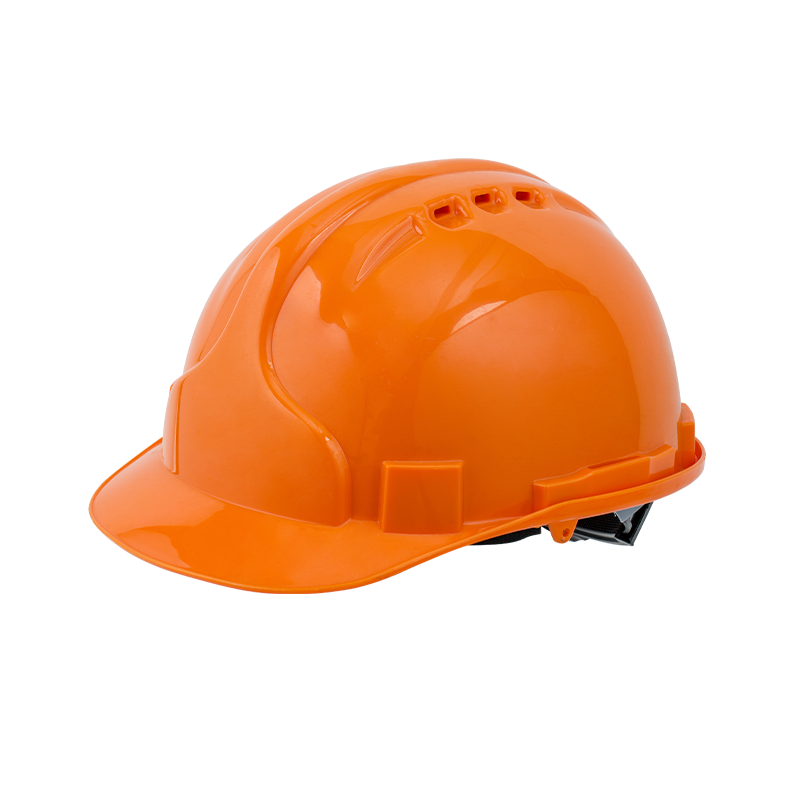
On the head protection side, the choice usually comes down to weight, suspension and ventilation. A six point suspension helmet with a ventilated shell is a sensible match for warm workshops where gloves are worn all shift, because the same heat that makes hands sweat makes a sealed helmet uncomfortable. Our SH102 sits in that category, and it is commonly specified together with coated work gloves for general industrial and site use.
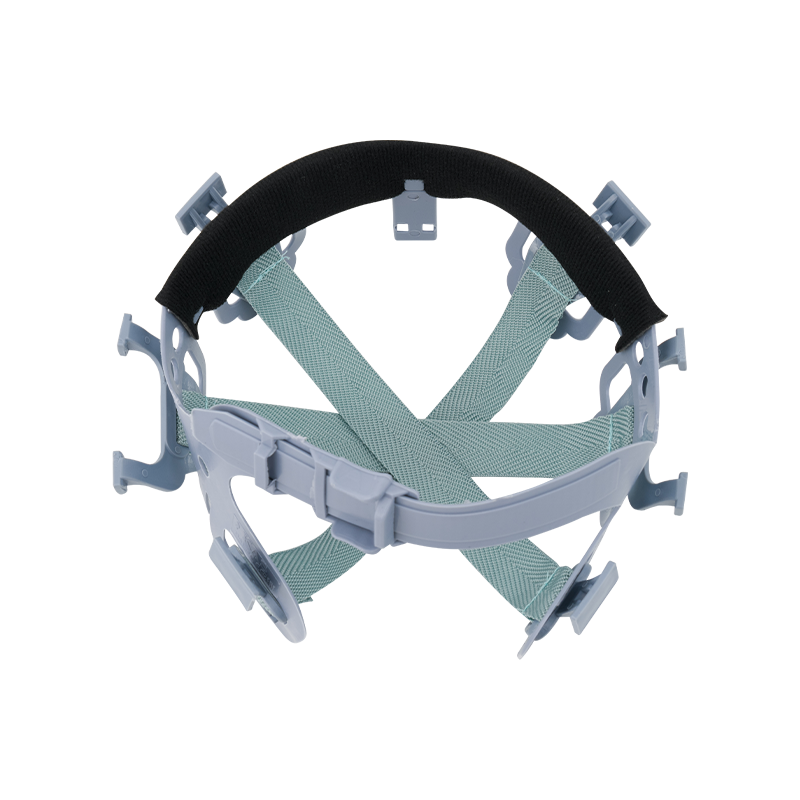 SH102 Ventilated Six-Point Suspension Safety HelmetA CE EN397 HDPE helmet with six ventilation holes and six-point suspension, suited to warm workshops and general industrial site use.View Product →
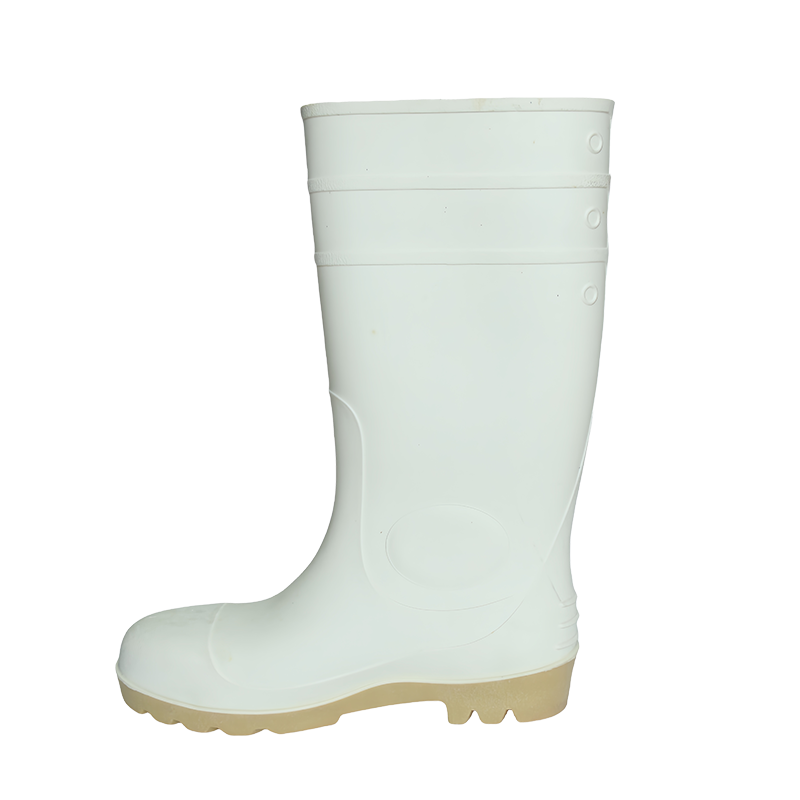
Footwear follows the same logic. Where gloves are specified for wet or oily conditions, boots with a steel toe cap and a waterproof PVC body are a coherent pairing, particularly for cleaning crews, food plants and yard work that alternates between wet and dry surfaces. A coordinated order also makes it easier to match sizes and colours across the range, which matters to distributors who resell the kit as a bundled offer.
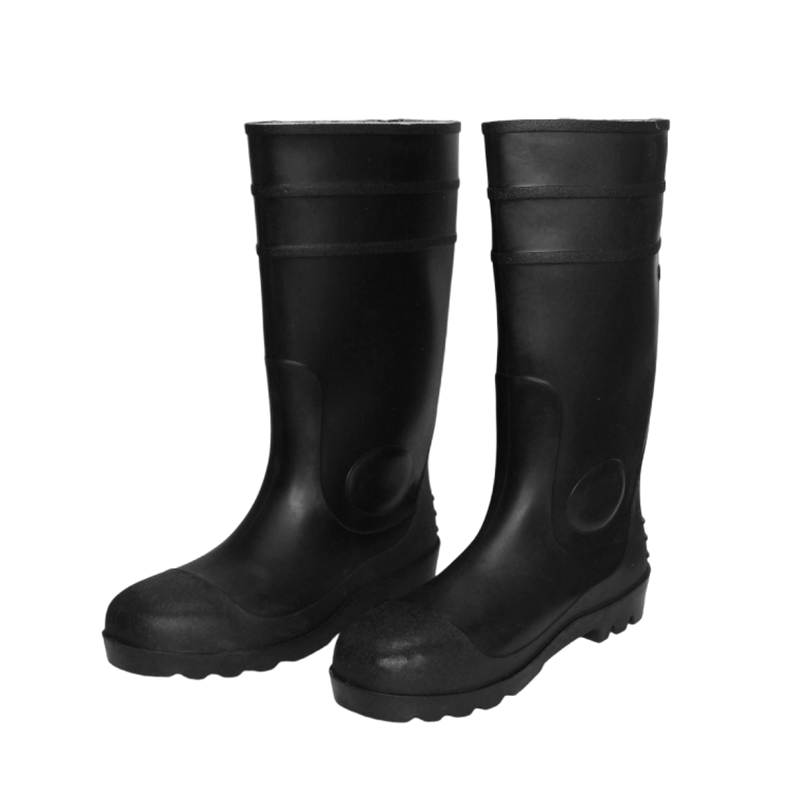 SS032-BB Men's Steel Toe Waterproof PVC RainbootsKnee-high waterproof PVC rainboots with a steel toe and EVA midsole, suited to wet work areas such as cleaning, food plants and yard tasks.View Product →
Consolidating gloves, helmets and footwear with one manufacturer cuts documentation and freight overhead, which often saves more than a small unit price difference.
Automotive assembly and service is the largest single use case. Parts arrive lightly oiled, tools are handled repeatedly and dexterity matters when threading fasteners. A micro-foam or sandy nitrile glove in 15 gauge covers most of this work, with a cut resistant liner where sharp edges are present.
Warehousing and logistics is the second. Here the hazard is abrasion from cartons, straps and pallets rather than oil, so a durable flat or sandy palm with a breathable back tends to last longer than a thin precision glove. The reverse is true in electronics assembly, where an 18 gauge liner and a thin foam coating give the fingertip sensitivity the task demands, and where a heavier glove simply gets taken off.
Chemical handling, janitorial work and food processing each pull the specification in a different direction. Chemical splash pushes toward a fully dipped glove with a longer cuff, plus verification against the specific substance under EN ISO 374 rather than a general chemical resistance claim. Food processing pushes toward documented food contact compliance, powder free construction and a detectable or high visibility colour. Cleaning work often sits between the two, and a three-quarter dipped glove with good wet grip is usually the compromise that crews accept.
Roadside and municipal crews have a mixed profile: they handle cones, barriers and tools, and they work in weather. A nitrile palm gives grip on wet metal and plastic, and the site equipment itself needs to be visible and stable. For that kind of work, a 70cm reflective cone with a weighted rubber base is a common pairing with gloves and high visibility clothing, especially where vehicles pass close to the work zone.
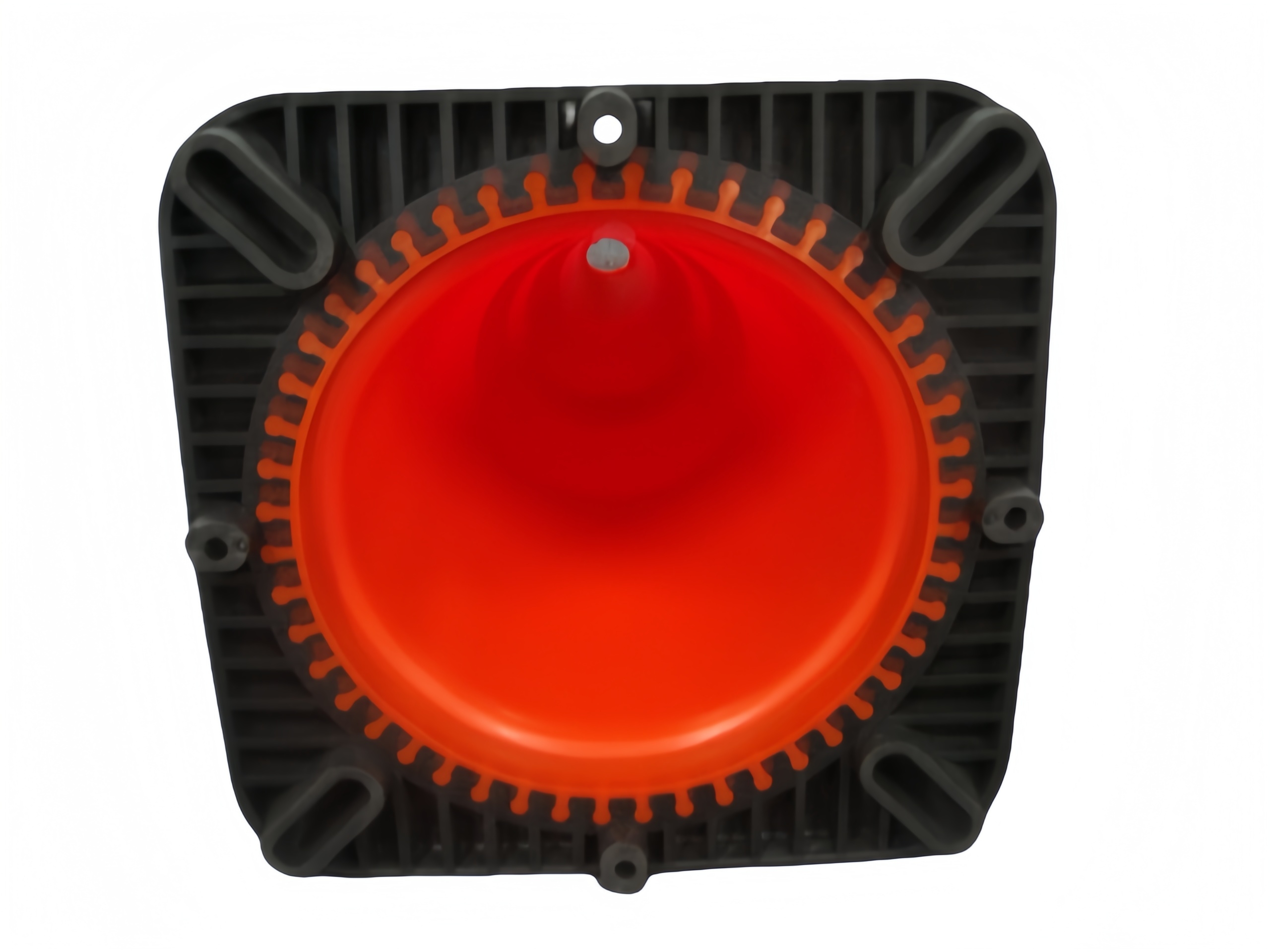 TC-PVC70B 70 cm Reflective PVC Traffic ConeA 70 cm reflective PVC cone with a rubber base for road separation and warning, offering flexible weather-resistant performance in roadside work zones.View Product →
Match the glove to the dominant hazard on the task, because a general purpose compromise glove tends to be replaced more often than a correctly specified one.
Supplier evaluation is often reduced to a price list and a certificate folder. A short structured review tells you much more, and it takes less than an hour once you know what to request.
It is also fair to ask a supplier what they will not do. A manufacturer that declines a request for an unrealistic price or an impossible lead time is usually telling you the truth about capacity, and that is more useful over a three year relationship than a quotation that wins the first order and fails the second.
Vet the process, not the catalogue: test reports, coating weight, AQL and in house dipping tell you more than a sample photo ever will.
They are work gloves made from a knitted liner that has been coated, usually on the palm or the full hand, with a nitrile rubber compound and then cured. The liner provides fit and cut resistance, and the nitrile provides grip, abrasion resistance and a barrier against oils and light chemical contact.
No. Disposable nitrile examination gloves are thin, single use film gloves. Nitrile dipped gloves are reusable coated work gloves with a textile liner, designed for handling tasks where abrasion and grip matter. They should not be treated as substitutes for chemical protective gloves unless the specific standard and substance have been checked.
Sandy nitrile generally holds grip better on heavy, oily parts and lasts longer under abrasion. Foam nitrile is more breathable and offers better feel for small components. The right answer depends on the part being handled and the contaminant, which is why a short trial usually settles the question faster than a datasheet comparison.
Only if the liner is engineered for it. The nitrile coating itself is not a cut barrier. Look at the EN388:2016 cut result and the TDM score, and match that to your risk assessment. A glove with a high abrasion rating can still have a low cut rating.
That number should come from your own trial, not from a general estimate. Record pairs issued per worker per month and the reason for replacement, such as coating wear, pinholes or loss. When the dominant reason is coating wear at the palm, a heavier coating or a different chemistry will usually reduce consumption.
Many can be laundered a limited number of times, but the coating adhesion and the shrinkage of the liner both matter. Ask the factory for the claimed number of wash cycles and test adhesion afterwards. Gloves used with chemicals should not be rewashed unless the manufacturer approves it.
It varies with liner type, coating and packaging. Stock items can often ship in smaller quantities, while a custom colour, custom liner or printed retail packaging requires a larger run to be economic. Ask for both figures, since a mixed order across glove sizes and other PPE items can often justify a better schedule than a single small item.
Normalize the comparison. Ask every supplier for the same liner gauge, the same coating type and dip count, the same AQL, the same packaging and the same delivery term. A quote that looks lower usually reflects a lighter coating, a coarser liner or bulk packaging, and those differences appear later as higher consumption.
Compare quotations only after liner, coating, AQL and packaging have been fixed, otherwise you are comparing four different products.
The fastest way to get a usable quotation for nitrile dipped gloves is to send the task, the contaminant, the required EN388 result, the liner gauge you prefer and the packaging format you sell in. With those five points we can recommend a coating build, quote a realistic minimum quantity and give a production schedule that reflects the actual chain from liner knitting to container loading. If you also need helmets, footwear, cones or warning lights, list them in the same enquiry so the order can be planned as one shipment.
It is focused on the overall solution of dry bulk material port transfer system,
research and development,
manufacturing, and service
Contact Us
Contact UsMiss. Jenny
+86 136 5588 7720
sales8@hoyoungsafety.com
sales1@hoyoungsafety.com