 English
 Español
 عربى

Industry News
Home / News / Industry News / OSHA Hard Hat Requirements 2026: Types, Classes, Fit, Inspection and Replacement
Content
OSHA hard hat requirements 2026 are not a single new rule that forces every worker into a Type II safety helmet. The practical answer is narrower and more useful for buyers and safety teams: OSHA still requires protective headgear wherever employees face a reasonable possibility of head injury from falling objects, impact, penetration, electrical contact, or burns, and the helmet still has to be selected, fitted, inspected, and replaced correctly.
The confusion comes from three overlapping conversations: OSHA’s general industry and construction rules, the ANSI/ISEA Z89.1 consensus standard that defines helmet types and classes, and the gradual market shift from traditional hard hats toward safety helmets with more coverage and retention features. Those conversations matter to employers, but they also matter to distributors, wholesalers, and anyone sourcing from a PPE manufacturer. A helmet that looks compliant on a shelf can still fail a site audit if the marking is unclear, the suspension is missing, the shell has been painted, or the worker is wearing it backward when the model was not designed for that position.
This guide explains what OSHA requires, what it does not require, how Type I and Type II helmets differ, how Class G, E, and C markings affect electrical work, and how to build a head-protection program that holds up in real site conditions. It also covers fit, ventilation, inspection, replacement, and the purchasing details that matter when a factory or safety distributor is comparing suppliers.
OSHA does not mandate Type II helmets for every workplace in 2026; it requires suitable head protection for the hazard, and the employer must show that selection, fit, training, and replacement are handled correctly.
OSHA’s head-protection rules are performance-based. For general industry, 29 CFR 1910.135 requires employers to ensure that each affected employee wears a protective helmet where there is a potential for head injury from falling or flying objects, impact, or electrical shock or burns. For construction, 29 CFR 1926.100 uses very similar language and applies to employees working in areas where there is a possible danger of head injury from impact, falling or flying objects, or electrical shock and burns.
The rules do not publish a list of approved helmet models. Instead, they point employers toward consensus standards such as ANSI/ISEA Z89.1, and they place the duty on the employer to assess the hazard and provide appropriate protection. In practice, that means a compliant program usually has five parts: a hazard assessment, a helmet selected for that hazard, proper fit and use, training and enforcement, and inspection and replacement before the shell or suspension becomes unsafe.
The 2026 discussion also includes OSHA’s safety helmet guidance. OSHA has highlighted that modern safety helmets can offer advantages in some workplaces, especially where lateral impact, slips, trips, falls, or retention during movement are concerns. That guidance is useful, but it is not the same as a blanket regulation replacing every traditional hard hat. Employers still need to match the helmet to the task, the site, and the worker’s exposure.
| Rule or standard | What it addresses | Practical buyer takeaway |
|---|---|---|
| 29 CFR 1910.135 | General industry head protection where falling objects, impact, or electrical hazards can injure the head. | Confirm the helmet is suitable for the actual exposure, not just the site’s general PPE list. |
| 29 CFR 1926.100 | Construction head protection for impact, falling or flying objects, and electrical shock or burns. | Construction buyers should check shell type, class marking, suspension, and replacement practice. |
| 29 CFR 1910.132 and 1926.95 | PPE hazard assessment, selection, training, and employee use obligations around PPE. | Keep documentation practical: hazard assessment, training records, inspection habits, and purchasing specifications. |
| ANSI/ISEA Z89.1 | Industrial head protection performance, marking, Type I and Type II impact coverage, and Class G, E, and C electrical ratings. | Ask for certification and marking details; do not accept “OSHA approved” as a substitute for a standard and class. |
One phrase that causes trouble in purchasing meetings is “OSHA approved.” OSHA does not approve individual hard hat models. It sets requirements and references consensus standards. A helmet may be certified to ANSI/ISEA Z89.1, but that is not the same as an OSHA stamp of approval. A better purchasing question is: “Show me the certification, the marking, the class, and the manufacturer’s instructions for use and replacement.”
Another common mistake is treating a hard hat as a commodity that can be bought once and forgotten. OSHA’s rules require the employer to ensure that defective or damaged equipment is not used. A cracked shell is an obvious problem, but a stretched suspension, a missing nape strap, a brittle shell after long sun exposure, or a helmet worn over a thick winter liner can be less obvious and just as important.
The safest buying position is to document the hazard assessment, specify the ANSI/ISEA type and class, and require usable certification and instructions with every shipment.
ANSI/ISEA Z89.1 uses two ideas that buyers often mix up: impact type and electrical class. Type describes where the helmet is designed to absorb impact. Class describes electrical protection. A helmet can be Type I and Class E, or Type II and Class C, and those combinations mean very different things on site.
Type I helmets are designed to protect the top of the head from impact. They are the familiar traditional hard hat profile and remain common in general construction, warehousing, light industrial work, and many maintenance tasks where the main concern is a dropped object from above. Type II helmets are designed for top impact plus lateral impact. That wider coverage is one reason safety helmets with a fuller shell and a chin strap have gained attention in recent years. Type II does not automatically mean “better for every job,” because weight, heat, visibility, fit, and electrical class still matter.
Class G, E, and C are about electrical performance. Class G helmets are general-purpose helmets with a voltage rating commonly stated as 2,200 volts. Class E helmets are electrical-rated helmets with a higher rating commonly stated as 20,000 volts. Class C helmets are conductive and provide no electrical protection. Vented helmets require special attention here. A vented shell may improve airflow, but vents can compromise electrical protection unless the manufacturer specifically certifies the configuration for the intended use. For electrical work, a vented Class C helmet is not a sensible choice.
For distributors, the label is also a sales tool. A contractor may ask for a “construction hard hat” and then mention electrical work, heat, or a need for chin straps only after the first quote. A supplier that can explain the difference between Type I and Type II, and between Class G and Class E, is easier to trust than one that treats every helmet as interchangeable.
Read the marking as a pair: Type tells you where impact protection is designed to work, and Class tells you whether the helmet has electrical protection.
A head-protection selection that starts with color or price is backward. Start with the hazard. A warehouse worker under a mezzanine may need top-impact protection and a secure fit when looking upward. A road-maintenance crew may need visibility, retention, and a helmet that does not become uncomfortable during long shifts. An electrical technician may need a Class E shell with no vents and no conductive accessories. A worker in a hot plant may need ventilation, but only if the electrical class still matches the task.
Penetration is a separate concern from impact. A falling bolt and a sharp protruding edge do not load the shell in the same way. Some helmets are marketed as penetration-resistant because the shell is designed to resist sharp-object contact. That does not replace the need to check the ANSI/ISEA marking, the class, and the employer’s hazard assessment. It simply gives the buyer one more selection criterion when the work involves exposed rebar, sharp tools, or overhead protrusions.
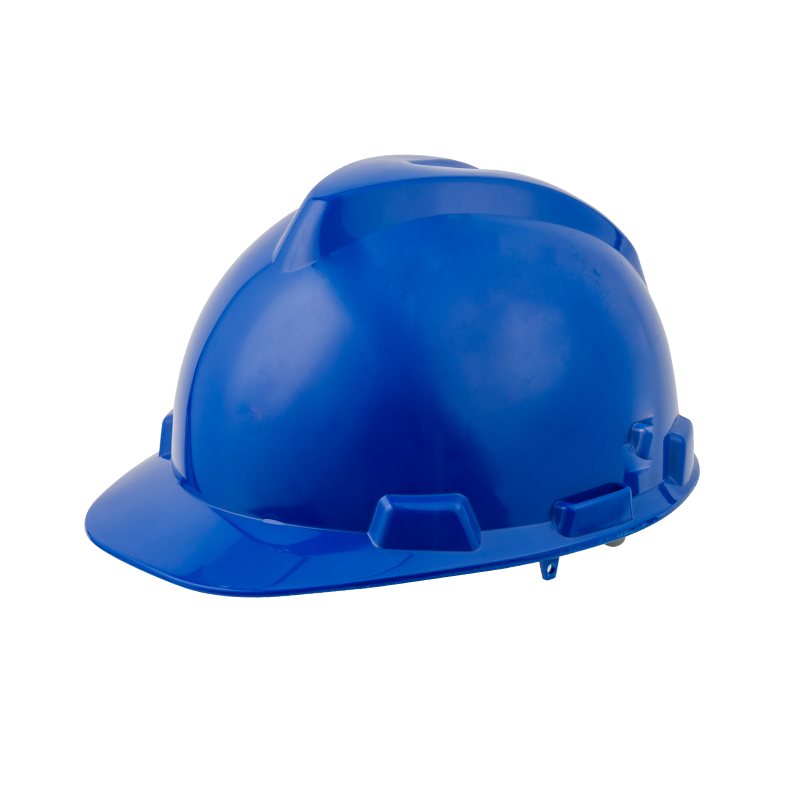
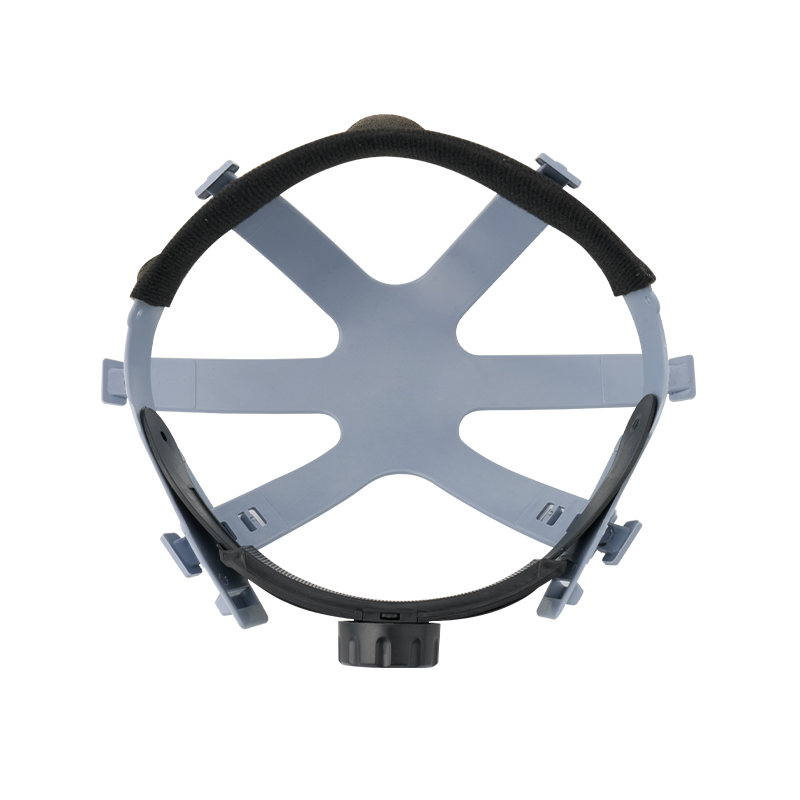 SH100 Penetration Resistant HDPE Safety HelmetA penetration-resistant HDPE helmet for construction and engineering sites where sharp overhead or protruding hazards are part of the selection review.View Product →
Ventilation is another practical criterion. In heat, a sealed shell can become uncomfortable, and discomfort leads to workers tilting the helmet back, removing it during short breaks, or loosening the suspension. A breathable helmet with a six-point suspension can improve airflow and stability, but the buyer still needs to confirm the class and the site’s electrical exposure. If the site has no electrical hazard and heat is a daily issue, ventilation may be a valid comfort feature rather than a compromise.
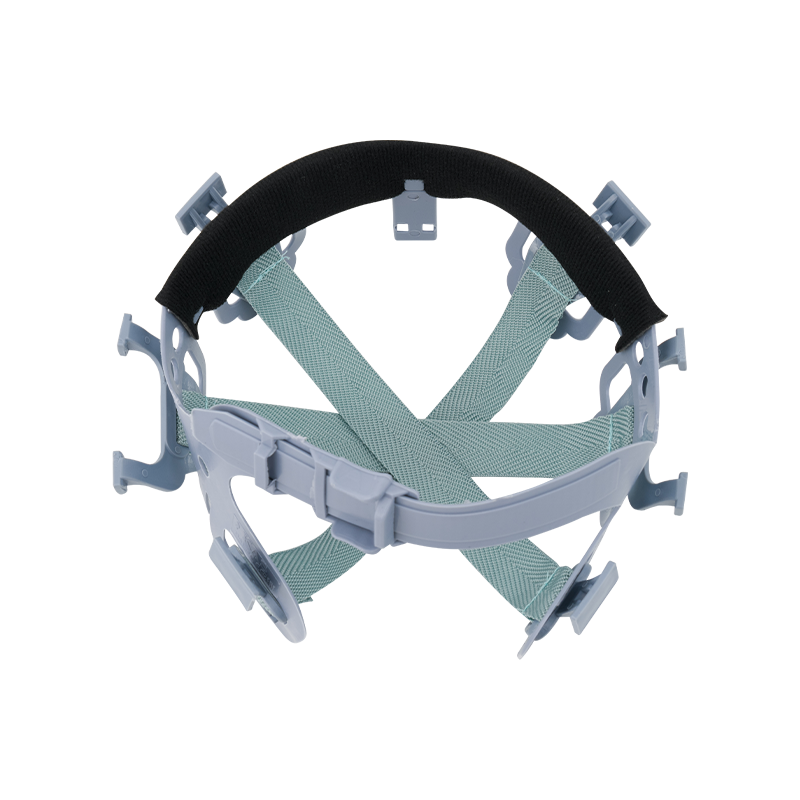 SH102 Six-Point Suspension Breathable Safety HelmetA ventilated HDPE helmet for hot construction environments, with six-point suspension for airflow and stability when electrical hazards are not present.View Product →
Material choice also deserves a plain-language review. HDPE helmets are common in industrial head protection because they can be tough, lightweight, and suitable for molding complex shell shapes. ABS helmets can offer a different balance of rigidity and surface finish. Neither material is automatically superior for every site. Heat exposure, chemical contact, cleaning methods, UV exposure, and storage conditions all affect service life. A supplier should be able to explain the intended use, the cleaning limits, and the replacement guidance rather than simply listing the material name.
For a mixed site, it is often better to standardize by hazard category rather than by one universal model. General workers might use a Type I helmet with the right class for the facility. Electrical staff might need Class E. Workers exposed to lateral impact or frequent movement might be better served by a Type II safety helmet with a chin strap. The goal is not to create the longest catalog list; it is to make the correct selection obvious at the point of issue.
A hard hat is suitable only when its impact type, electrical class, fit, and accessories match the task; the lowest-price shell is rarely the lowest-risk choice.
Fit is not a soft issue. A helmet that sits too high, presses on the forehead, or slides when the worker bends over is more likely to be removed or worn incorrectly. OSHA requires employees to wear the protection, but the employer’s selection and training determine whether the helmet can be worn correctly for a full shift. The shell should not rest directly on the head. The suspension should cradle the head, spread load, and keep the shell positioned according to the manufacturer’s instructions.
Six-point suspension is common in industrial helmets because it spreads force across more contact points than a four-point system. That can improve stability and comfort, but only if the headband is adjusted properly. A six-point helmet that is too loose is not safer than a four-point helmet that fits. Workers should know how to adjust the nape strap, set the headband, and check that the helmet does not interfere with eyewear, hearing protection, or a respirator.
 SH104WS Lightweight V-Guard HDPE Safety HelmetA lightweight HDPE helmet with four-point suspension for construction and engineering, relevant when retention and proper fit are being reviewed.View Product →
Chin straps deserve a careful answer. OSHA’s general head-protection rules do not say that every hard hat must have a chin strap. However, chin straps can improve retention when a worker climbs, bends, works at height, or moves through crowded spaces. OSHA’s safety helmet guidance has drawn attention to retention features, and many employers now specify chin straps for tasks where a dropped helmet would create a secondary hazard or where a fall could cause the helmet to come off. The employer should make that decision through the hazard assessment and the manufacturer’s instructions, not through a blanket rumor that “OSHA now requires chin straps on all hard hats.”
Compatibility also matters. A helmet that fits well by itself may become unstable when a worker adds a winter liner, a face shield, earmuffs, or a headlamp. Accessories should be approved for the helmet and installed without drilling, gluing, or modifying the shell. A headlamp clamped to a non-approved point can affect balance or shell integrity. A face shield that is not matched to the helmet can leave gaps or put pressure on the suspension.
Compliance is more than issuing a helmet; workers need a helmet that stays in place, fits with their other PPE, and can be worn correctly all shift.
There is no single OSHA rule that says every hard hat expires on the same date. Replacement is driven by the manufacturer’s instructions, the shell material, the suspension condition, the work environment, and what has happened to the helmet. Many manufacturers mark a production date on the shell or suspension and publish a service-life recommendation. Those instructions should control the site’s replacement schedule. A generic “replace every five years” rule may be too long for a hot, sunny site and too short for a helmet kept in a clean, controlled store.
Impact is the clearest replacement trigger. A helmet that has taken a heavy hit should be inspected carefully and, in most cases, replaced even if the outer shell looks intact. The shell may have absorbed energy in a way that is not visible. Cracks, whitening, deep gouges, deformation, brittle edges, and a loose or torn suspension are all reasons to remove the helmet from service. Paint, solvents, adhesives, and certain cleaning chemicals can also damage the shell. That is why “just paint the company logo on it” is a risky instruction unless the manufacturer specifically permits the process.
Storage is part of maintenance. Leaving helmets on a dashboard, in a hot vehicle trunk, or in direct sun for long periods can accelerate aging. Storing them under heavy tools can distort the shell. Stacking them tightly can crush the suspension. A simple storage rack and a short inspection routine are low-cost controls with a direct effect on service life.
For a safety distributor, replacement is not just a compliance topic; it is a service opportunity. Customers need spare suspensions, seasonal liners, chin straps, and a clear reminder when a batch is approaching the manufacturer’s replacement window. A supplier that helps the customer manage those details is more valuable than one that only quotes a carton price.
Replace on evidence, not on habit alone: visible damage, a significant impact, degraded suspension, or the manufacturer’s service-life limit should take the helmet out of service.
Heat and electrical work pull head-protection choices in opposite directions. Ventilation improves comfort, but vents can reduce electrical protection. A worker who is hot may remove a sealed helmet when no one is watching, which is a real compliance problem. A worker who wears a vented helmet around energized equipment may be exposed to a hazard the site did not intend. The practical answer is to separate the work zones. Use vented helmets where heat is the dominant issue and the electrical class is appropriate. Use unvented, electrical-rated helmets where contact with live parts is a credible risk.
Labeling is another area where good intentions can create risk. The helmet marking must remain readable, and the certification information should not be covered by stickers, paint, or tape. Some employers add reflective strips, names, or department colors. That can be acceptable if the manufacturer allows it and the material does not contain solvents that attack the shell. Drilling holes for a badge or a headlamp is different: it changes the shell and should not be done unless the helmet is designed for that accessory and the manufacturer approves the method.
Cleaning matters too. Harsh solvents can make a shell brittle. Abrasive cleaners can scratch the surface and hide small cracks. The manufacturer’s cleaning instructions should be posted where helmets are issued. In large operations, a simple cleaning and inspection station near the PPE store can prevent a lot of quiet damage.
Ventilation and electrical protection must be decided together; a comfortable helmet is not compliant if its class does not match the electrical exposure.
A head-protection program can look complete on paper and still fail at the point of use. The chart below is an illustrative view of where many site programs concentrate effort, not an OSHA scoring system or a fixed formula. It is useful because it shows that selection and purchase are only one part of the job.
The chart is a reminder that a helmet purchase is not the end of the process. Hazard assessment decides whether the site needs Type I or Type II coverage and whether electrical class is relevant. Selection then turns those findings into a specification: shell material, suspension type, vents, chin strap, accessories, and marking. Fit checks catch the everyday failures that a catalog cannot, such as a headband that is too loose or a shell that conflicts with a face shield.
Inspection and replacement are the areas most likely to be neglected when production pressure rises. A helmet with a stretched suspension may still look acceptable from a distance. A shell with a small gouge may be ignored because the worker does not want to ask for a replacement. A clear replacement rule, a spare stock of suspensions, and a simple inspection checklist make it easier for supervisors to act. Training then ties the whole program together: workers need to know why the helmet matters, how to adjust it, when to remove it, and how to report damage.
For a manufacturer or supplier, this is where product support becomes practical. A helmet range that includes different shell types, suspension options, and accessories can help a distributor serve several site profiles without forcing every customer into the same model. The supplier should also be able to provide instructions, certification information, and replacement guidance that the distributor can pass on to the end user.
A helmet program is only as strong as its weakest routine; assessment, fit, inspection, and training must work together after the purchase order is closed.
For a distributor, wholesaler, or site buyer, the commercial decision is not only “which helmet?” It is “which supplier can deliver a consistent helmet, with the right documentation, at a workable lead time?” That question becomes more important as buyers move between traditional hard hats and modern safety helmets, because a catalog that mixes types, classes, and accessory systems can create confusion at the counter.
A useful supplier discussion should cover certification, marking, shell material, suspension type, available colors, packaging, minimum order quantity, lead time, and spare parts. If the buyer serves electrical contractors, ask specifically about Class E options and unvented shells. If the buyer serves road crews or warehouses, ask about visibility, comfort, and six-point suspension. If the buyer serves mixed industrial customers, ask for a range that makes the differences easy to explain.
Ningbo Hoyoung Safety Products Co., Ltd. is a manufacturer of PPE and road safety products based in Ningbo, China. The company describes 20 years of experience in PPE, a 5,000-square-meter workshop, 16 injection machines, and a production model that has moved toward automated operation. Its safety helmet range includes HDPE and ABS helmet categories, with models that differ by suspension, ventilation, shell shape, and accessories. For a distributor, that kind of range can be useful, but the buyer should still verify the certification for the exact model, the intended class, and the instructions that will be shipped with the product.
Price comparisons should be made on the same specification. A low quote for a basic Type I helmet is not comparable to a Type II helmet with a six-point suspension and a chin strap. A quotation should state the shell material, the suspension type, the size range, the marking, the packaging, and whether spare suspensions are available. For tenders or private-label programs, request a sample and check the fit, the finish, the label placement, and the accessory compatibility before committing to a volume order.
Quality consistency matters more than a single impressive sample. Ask how the manufacturer controls shell thickness, molding defects, suspension strength, and batch traceability. Ask what happens if a carton contains a damaged shell or a missing suspension. A supplier that can answer those questions in plain language is easier to manage than one that only sends a photo and a price list.
If a helmet has taken a hard hit, this article on why a helmet may need replacement even without visible cracks explains the inspection logic: read the replacement guidance.
For product details, samples, or a supplier discussion, contact Ningbo Hoyoung Safety Products and include the helmet type, class, expected use, and order volume in your inquiry.
Buy on specification and documentation, not on a generic “OSHA hard hat” label; the supplier should make type, class, suspension, and replacement guidance easy to verify.
No. OSHA has not issued a blanket rule requiring every private employer to replace traditional hard hats with Type II safety helmets. OSHA requires suitable head protection where a hazard exists. Some employers choose Type II helmets because they provide top and lateral impact coverage, but that is a hazard-based decision, not a universal legal mandate.
OSHA does not approve individual hard hat models. Employers should look for certification to the applicable consensus standard, such as ANSI/ISEA Z89.1, plus the type, class, and manufacturer’s instructions. A sales sheet that says “OSHA approved” without a standard or class is not enough for a serious purchasing decision.
Type I helmets are designed for top impact. Type II helmets are designed for top and lateral impact. Type II can be useful where workers may strike the side of the head or where a fuller shell and retention system are desirable, but it still has to fit the task and the electrical class.
Class G helmets are general-purpose helmets with a commonly stated 2,200-volt rating. Class E helmets are electrical-rated helmets with a commonly stated 20,000-volt rating. Class C helmets are conductive and provide no electrical protection. Vented helmets need special attention because vents may affect electrical performance.
There is no single OSHA replacement interval for every helmet. Follow the manufacturer’s service-life guidance, inspect the shell and suspension regularly, and replace after a significant impact or any sign of cracking, deformation, brittleness, or suspension damage. A generic calendar rule should not replace inspection.
Stickers and paint can be acceptable only when the manufacturer allows them and the materials do not damage the shell. Do not cover certification or warning markings, and do not use solvents or adhesives that can degrade the plastic. Drilling or cutting the shell should be avoided unless the helmet is designed for that accessory and the manufacturer approves the method.
OSHA’s general head-protection rules do not require a chin strap on every hard hat. However, chin straps can improve retention in climbing, bending, work at height, or crowded tasks. Employers should decide through the hazard assessment and the manufacturer’s instructions, especially when using modern safety helmets.
Ask for the exact model’s certification, type and class marking, shell material, suspension type, size range, available accessories, packaging, minimum order quantity, lead time, and replacement-part availability. For volume programs, request samples and confirm that the label, finish, and fit are consistent from batch to batch.
The 2026 answer is not “everyone needs the same new helmet”; it is “match the helmet to the hazard, verify the marking, and manage fit, inspection, and replacement.”
Before a site signs off on its head-protection program, it helps to reduce the question to a short checklist. The list should be practical enough for a supervisor to use and specific enough for a buyer to verify.
For a manufacturer or supplier, the same checklist points to a clear service model: provide helmets that cover real site differences, document the type and class, supply replacement parts, and give distributors language they can use with customers. For an employer, it points back to the basic OSHA position: head protection is required where the hazard exists, and the employer remains responsible for selection, use, and maintenance.
In 2026, the market may continue to move toward safety helmets with more coverage and better retention, but the compliance principle has not changed. A traditional hard hat can still be the right answer for some tasks. A Type II safety helmet can be the better answer for others. The decision should be traceable to the hazard, the marking, and the worker’s actual conditions.
A defensible head-protection program shows a clear link between the hazard assessment, the helmet’s type and class, the fit routine, and the replacement rule.
It is focused on the overall solution of dry bulk material port transfer system,
research and development,
manufacturing, and service
Contact Us
Contact UsMiss. Jenny
+86 136 5588 7720
sales8@hoyoungsafety.com
sales1@hoyoungsafety.com