 English
 Español
 عربى
عربى

Industry News
Home / News / Industry News / ANSI Hard Hats: Complete Guide to Types, Classes, Selection & Maintenance
Content
A warehouse floor supervisor in Ohio orders 1,000 hard hats for a refinery turnaround project. The purchase order simply says "ANSI hard hats, not cheap imports." When the delivery arrives, the supervisor flips one helmet over and reads the label: ANSI Z89.1 Type I Class E. He knows that means top impact protection plus electrical insulation up to 20,000V. But does it protect a worker who strikes his head against a low steel beam? No, that would require a Type II helmet. Does it hold up to a hot, humid workday with UV exposure? That depends on the shell material and proper maintenance. ANSI certification is not a single pass or fail. It is a framework of performance categories that buyers must read correctly.
The conclusion is straightforward: ANSI Z89.1 is the reference standard for industrial head protection in the United States, and anyone who understands its types, classes, materials, and replacement guidelines will select safer hard hats at a competitive price. This guide is built for safety managers, purchasing agents, and wholesale buyers who need clear answers without administrative jargon from an ANSI hard hat manufacturer or supplier.
ANSI Z89.1 is the American National Standard for Industrial Head Protection, and it is the standard behind most hard hats sold in the United States. OSHA references it in 29 CFR 1910.135 for general industry and 29 CFR 1926.100 for construction. A helmet marked ANSI Z89.1 has been subjected to laboratory tests that predict how it will behave in real accidents.
The standard addresses three main areas. The first is impact attenuation, which measures how well the shell and suspension reduce the force transmitted to the head. The test involves dropping a striker onto the helmet at a defined speed. The second is penetration resistance, which uses a pointed object to check whether it can reach the wearer's skull. The third is electrical insulation, which evaluates the helmet's ability to prevent conducted electricity from reaching the head.
Every compliant ANSI hard hat must carry a visible label. That label must show the manufacturer's name, the date of manufacture, the standard reference (ANSI Z89.1), and the type and class designation. If a hard hat arrives at a job site with an unreadable or missing label, inspectors treat it as uncertified. This is a frequent finding during safety audits and one of the most common reasons a wholesale shipment is rejected.
ANSI Z89.1 also tests water absorption and flammability. The shell must not become dangerously conductive when soaked, and the plastic must not melt or drip onto the wearer during a fire or welding arc flash. For industrial sites with wet conditions or hot work, these requirements matter just as much as impact testing.
For a manufacturer, meeting ANSI Z89.1 requires more than printing a sticker. Every production run depends on injection molding parameters, consistent material batches, and periodic third-party testing. A reliable hard hat supplier with ISO 9001 processes and automated production lines is more likely to maintain performance consistency across large shipments.
It is also worth noting that the current edition is ANSI Z89.1-2014, distributed through the American National Standards Institute. Buyers should check the date on the label. Helmets produced under an outdated revision may not represent the most recent requirements, even if they still function. Large U.S. reference files from OSHA and NFPA 70E continue to point to the Z89.1 standard as the foundation for compliant head protection.
The type and class designation is the most important part of the ANSI label. A Type I helmet is tested for a blow to the top of the head, which covers falling objects and debris from above. The majority of hard hats sold in North America are Type I because they satisfy the most common construction and industrial demands. However, a Type I helmet does not protect from a side impact.
Type II hard hats add a lateral impact test. They are designed for workers who may strike the side of their head on beams, machinery, or vehicles. Type II helmets typically have a thicker shell, more foam padding inside, and sometimes a wider suspension to distribute off-center forces. These helmets are increasingly required on sites with moving equipment or low overhead structures.
Next, the electrical class. Class E stands for electrical and is tested to withstand 20,000V. Class G stands for general and is tested to 2,200V. Class C stands for conductive and offers no protective insulation. A Class C helmet is normally made with ventilation slots and is used in logistics, sports, or assembly work where electrocution risk is absent.
To see how the ANSI classes differ, it helps to compare the electrical insulation thresholds side by side. The chart below shows the maximum voltage each class must survive during testing. These numbers are not theoretical values; they are hard thresholds established by the standard. A higher voltage rating does not automatically mean the helmet suits every job. It simply means the helmet has been evaluated for a specific level of electrical risk.
The chart immediately reveals that Class E sits in a completely different range from Class G. The 20,000V threshold is roughly nine times higher than the 2,200V requirement, which explains why electrical workers are almost always required to use Class E helmets in energized settings. Yet a Class E label does not mean the helmet is Type II. Class rating only addresses electrical insulation, while type rating addresses impact direction. A contractor working near live wires but with limited overhead risk might choose Type I Class E, while a worker on a refinery platform with no electrical exposure may prefer Class C for better airflow.
In practice, large distributors stock mostly Class E helmets because they cover the broadest range of applications. However, wholesale buyers should not assume that a Class E helmet has the same side-impact performance as a certified Type II model. The chart also highlights that Class C has no insulation rating whatsoever. That means a Class C helmet must never be worn where the wearer could contact live electricity. Many users confuse the C class with "comfort," but the C actually stands for conductive. The logical takeaway is that class selection must be based on real voltage risk, not on catalog descriptions.
From a procurement and safety compliance perspective, this distinction matters when writing specifications. A request that simply states "ANSI hard hats" is incomplete. Replacing the specification with "ANSI Z89.1 Type I Class E" removes ambiguity and gives the supplier clear direction. It also prevents the wrong safer alternative from being selected at a lower price point. When the risk assessment identifies electrical exposure, the safest approach is to default to Class E for all site workers. When the worksite is fully de-energized and dry, Class G or Class C become reasonable choices based on comfort requirements.
Understanding these boundaries keeps buyers from overpaying for protection that is not needed, or worse, underpaying for a helmet that fails in a specific incident.
| Category | Protection Focus | Typical Applications | Test Standard |
|---|---|---|---|
| Type I | Top impact only | Construction, general industry, demolition | Vertical drop test |
| Type II | Top and lateral impact | Mining, logistics, steel mills, vehicle exposure | Vertical and angular drop |
| Class E | Electrical up to 20,000V | Electricians, utility workers, high-voltage switchgear | Electrical insulation test |
| Class G | Electrical up to 2,200V | General industrial, maintenance, public works | Electrical insulation test |
| Class C | No electrical protection | Non-hazardous warehouses, sports, assembly lines | No insulation requirement |
This table makes one thing immediately clear: type and class are independent dimensions. A Type II helmet can be Class E, G, or C. A Type I helmet can also be Class E, G, or C. The buyer has to choose the combination that matches the risk profile. This is why using a resource such as the HDPE safety helmet benefits article can help procurement teams understand how material performance interacts with these categories.
Hard hat shells are almost always made from one of two thermoplastics: high-density polyethylene (HDPE) or acrylonitrile butadiene styrene (ABS). Which one a buyer chooses affects weight, impact performance, temperature behavior, and cost. A good supplier can produce both, but understanding the differences helps when specifying a helmet for demanding work.
HDPE is the standard shell material for most industrial hard hats. It is lightweight, flexible, and very resistant to cracking on impact. HDPE shells absorb energy by flexing under load, which reduces the force transmitted to the suspension and then to the head. HDPE helmets are also cost-effective in large production runs and can be molded with many different custom colors. This detailed article on the benefits of HDPE safety helmets in industrial settings explains the practical trade-offs for maintenance teams and site supervisors.
ABS is a stiffer material that offers high impact strength and a smoother surface finish. It holds its shape better at elevated temperatures and is often chosen for Helmets with an exposed-shell aesthetic. ABS is slightly heavier than HDPE and may feel harder against the head in a severe impact. However, ABS products offer a premium feel and are frequently used for high-end electrical helmets.
| Property | HDPE | ABS |
|---|---|---|
| Weight | Lighter | Slightly heavier |
| Impact absorption | Flexible, high absorption | Stiffer, high load transfer |
| Temperature resistance | Good, maintains shape | Excellent at elevated temperatures |
| Surface finish | Matte, robust | Smooth, more aesthetic |
| Typical cost | Lower per unit | Higher per unit |
The suspension is as important as the shell because it holds the helmet correctly on the head and absorbs shock. The most common suspensions in ANSI hard hats are four-point and six-point. A four-point suspension uses four attachment points around the shell. A six-point suspension uses six points, which spreads the weight more evenly, reduces hot spots, and often feels more stable. For heavy heads and long shifts, a six-point system is the prefered option.
Adjustment mechanisms also matter. A ratchet adjustment is faster and more precise than a standard buckle. It allows workers to tighten the helmet without removing it, which encourages a proper fit. The SH102 six-point suspension breathable safety helmet is a good example of a model that combines ANSI certified impact performance with day-long comfort through six suspension points and breathable ventilation channels.
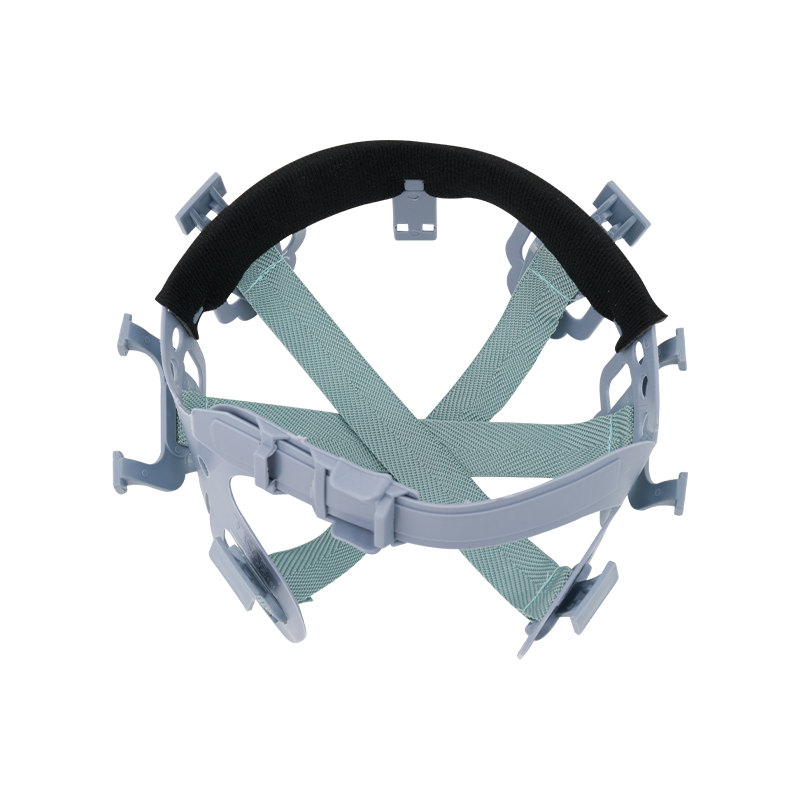 SH102 6-Point Suspension Breathable Safety HelmetThis ventilated helmet with six suspension points and three reinforcing ribs offers comfort and impact protection, making it a practical choice for warm work environments.View Product →
Ventilation is another feature that drives adoption. Workers in hot climates are more likely to wear a ventilated helmet consistently. Some designs, such as the V-guard hard hat, add a ridge along the top of the shell to deflect falling debris while offering extra stiffness. The SH104 V-guard safety helmet from the HDPE series is built with this functional shape and meets ANSI impact requirements for top force applications.
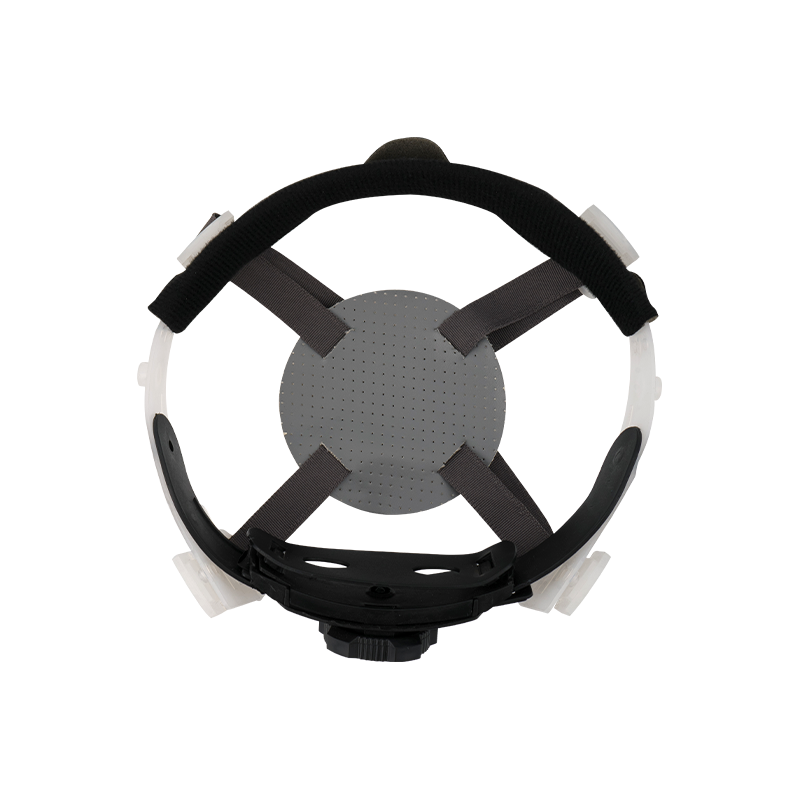 SH104 V-Guard Safety Helmet with Ridge DesignFeaturing a V-shaped shell that deflects debris, this helmet combines strength and adjustability, meeting ANSI impact requirements for reliable top-force protection.View Product →
For wholesalers, material choice also affects inventory planning. HDPE models usually sell faster in general construction categories, while ABS models attract premium industrial buyers. Carrying both in a warehouse allows the supplier to serve a wider customer base without adding excessive SKU complexity.
Selection starts with a site-specific risk assessment. The correct hard hat depends on three factors: the likely direction of impact, the presence of electrical hazards, and the exposure to heat, sunlight, or industrial chemicals. A proper specification must include all three. This section gives a practical path through the most common scenarios without requiring the reader to interpret dense technical standards.
Construction and DemolitionFalling debris, rebar, and swinging loads are the dominant risks. A Type II Class E helmet is often recommended for workers near cranes or scaffolds, because side impact can occur. For general site workers, Type I Class E is the minimal safe baseline. |
Electrical and Utility WorkClass E is mandatory when working on or near energized circuits. NFPA 70E requires insulating helmets in many electrical tasks. Type I Helmet with Class E is standard; Type II Class E should be considered for outdoor bucket work where a struck head may hit the equipment. |
Manufacturing and MaintenanceOverhead cranes, conveyor lines, and presses are common hazards. Type I Class G often meets the requirement, but a plant with mobile equipment should upgrade to Type II Class G. Ventilated options increase worker compliance. |
Roadwork and Traffic OperationsWorkers face vehicle collisions more than falling debris. Type II Class G helmets with high-visibility colors are ideal. Consider helmets that can be fitted with accessories such as reflective strips or earmuffs. |
A hard hat that is uncomfortable will be removed as soon as the supervisor looks away. That is why comfort and fit should be considered safety features, not optional extras. A correct fit means the helmet sits level on the head, covers the top of the head without pressing into the forehead, and cannot be pulled off with a sharp downward movement. The suspension should touch the head evenly around the skull.
Rachet adjustments are the easiest way to match the helmet to different head sizes in a team. Some models use a padded front brow band which reduces pressure when the helmet is worn for multiple hours. In hot environments, breathable versions with small openings along the top greatly increase acceptance. In cold environments, the same helmet can be worn over a knit cap to trap heat, but only if the cap does not change the fit.
For applications where sharp or pointed objects can impact the head through the shell, penetration resistance plays a larger role. The SH100 penetration-resistant safety helmet is designed specifically to withstand tests where a pointed striker is dropped onto the shell. This model is especially relevant for demolition, forestry, and scaffolding work, where rebar or broken wood could pierce a standard HDPE shell.
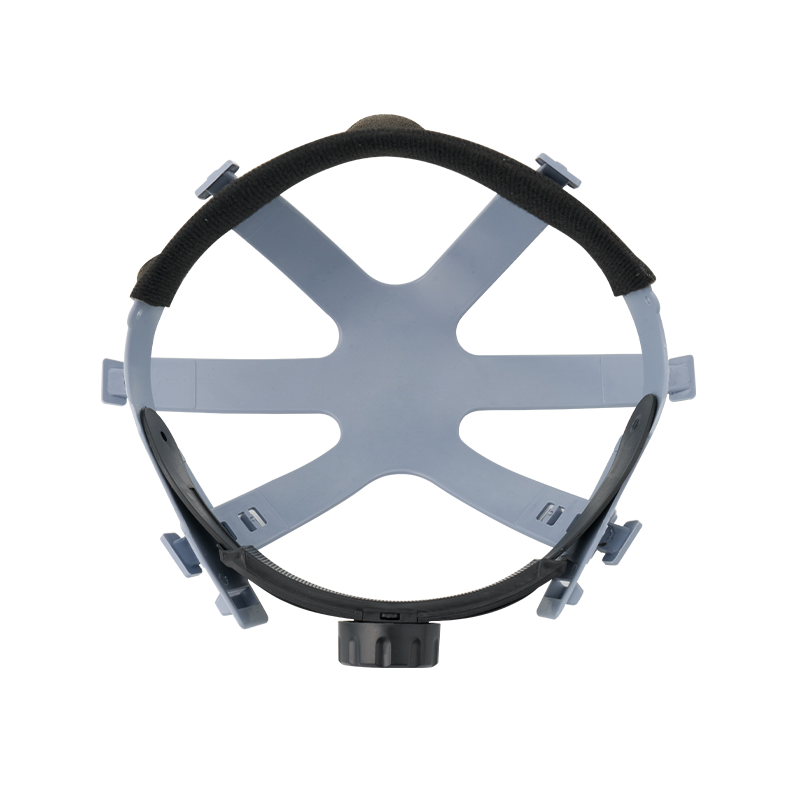 SH100 Penetration Resistant Safety HelmetBuilt with virgin PE or ABS to resist pointed impacts, this helmet provides shock absorption and multi-point buffering, ideal for demolition or forestry tasks.View Product →
Matching the helmet material to the climate is also critical. In hot stress zones, ventilated helmets reduce heat buildup around the forehead. In extreme UV environments, a fully pigmented HDPE shell is preferable to a painted shell, because added paint tends to crack and then weaken the base material. The most reliable approach is to ask the supplier for the material composition and testing data instead of relying only on the product name or appearance.
When a manufacturer claims ANSI compliance, the claim has to be backed by consistent processes between the mold and the packaging line. Plastic shells are created through injection molding, where molten HDPE or ABS is injected into a steel mold under high pressure. The mold temperature, injection speed, and cycle time all influence the final wall thickness, internal stress, and impact behavior. Small variations in these parameters can affect the quality of an entire batch.
Reputable facilities invest in automated production lines with real-time pressure and temperature monitoring, which significantly reduces human error. For a large order from a wholesale customer, traceability is often the deciding factor. The manufacturer should be able to match a production batch to its raw material lot and record the date of processing. This becomes important if a defect is later discovered in a specific batch.
Quality control laboratories typically perform destructive tests on random samples from each production run. These tests include drop testing, penetration testing, and electrical insulation testing. The frequency of sampling is written into the quality assurance plan. Some plants also send samples to independent laboratories for annual certification, which is a strong signal of a credible supplier.
A 5,000-square-meter workshop equipped with 16 injection molding machines can support both high-volume continuous orders and smaller customized runs. Automated robotic handling and conveyor systems reduce the chance of shell scuffs or contamination. For the buyer, this kind of infrastructure means quicker lead times and more predictable inventory. For the factory, it allows a rapid response to seasonal demand for road and construction related face protection products.
Many established hard hat manufacturers also hold CE certification in addition to ANSI certification. CE marking indicates compliance with European head protection standards, which has broad acceptance in international markets. A supplier that has implemented ISO 9001 quality management systems and maintains CE documentation alongside ANSI testing gives a safety manager a strong justification for approving the vendor.
Bulk buyers such as distributors, EPC contractors, and safety equipment resellers need a supplier that delivers a perfect product in consistent volume. The procurement conversation should include certification documents, lead times, payment terms, and custom branding options. A quick look at a catalog page is not enough to evaluate a potential ANSI hard hat manufacturer.
First, request the current ANSI Z89.1 test report for the exact model number. The report should be from a qualified independent laboratory. Some suppliers have up-to-date ANSI and CE reports for every model in their range. Second, ask about the material specification and the date range of production. A trustworthy supplier will openly share batch traceability information. Third, verify the production capacity. A factory with 16 injection molding machines and automated production lines can handle large quantities with shorter lead times than a workshop with only a few manual presses.
Custom colors and private label branding are almost always needed for resellers. A wholesaler can request a different shell color without any change to the certification as long as the same molding parameters and material grade are used. The minimum order quantity for a custom color is typically higher than a standard black or white shell. Ratchet suspensions, chin straps, and reflective tapes are common add-ons that can be assembled at the factory before shipment.
For a reseller expanding into industrial safety, having a supplier that specializes in personal protective equipment creates a significant advantage. The same supplier may also offer safety shoes, warning lights, and traffic cones, which allow the buyer to consolidate multiple product lines from one vendor. A consolidated order lowers freight cost per unit and reduces administrative overhead.
Port logistics matter equally. Ningbo, the home base of the manufacturing company behind this article, combines a large container port with direct mainland access to many industrial parks. This reduces shipping time to key Western markets. When choosing a hard hat manufacturer or supplier, a buyer should compare both ex-works price and landed cost, including freight.
To begin a sourcing discussion, a direct inquiry through the contact page allows the buyer to share the exact model, quantity, destination port, and certification request. The manufacturer can point out the most appropriate ANSI type and class and suggest an alternative if the requested model does not fit the intended application. This initial conversation often prevents expensive purchase errors in large tender orders.
In a tender or sustainable sourcing process, the safety team should review the supplier's quality management system, the testing frequency, and the feedback response time. A dependable supplier will share its QC checklist and propose a sampling plan for the delivery. This reduces the risk of accepting a full container of non-conforming helmets.
Even the best ANSI hard hat has a limited service life. Every U.S. manufacturer prints a date of manufacture on the label and often provides a recommended replacement interval. In practice, many safety programs use a two-year, five-year, or ten-year policy depending on the environment. The main factors are UV exposure, chemical contact, physical abuse, and impact history.
Inspection should be a daily habit at the job site. Workers should check the shell for cracks, dents, or deep scratches. Any crack or stress mark means the helmet has lost structural integrity and must be removed from service. The suspension should be inspected for frayed webbing, broken clips, and stretched bands. If the suspension has a visible dent in the shell interior, the helmet has absorbed an impact and must be replaced immediately.
The most dangerous situation is a helmet that has been dropped or struck and shows no visible damage. This happens when a heavy object hits the helmet but does not crack the shell. The suspension system absorbs the shock, and often the helmet appears fine. This article on whether a helmet needs replacement after a heavy impact with no visible cracks explains why the answer is generally yes. Internal damage can be invisible, and the helmet's ability to withstand a second impact may be significantly reduced.
UV degradation is harder to detect than cracks. A shell that becomes brittle or chalky after years outdoors should be retired. ANSI testing includes a UV reference in the material specification, but real-world exposure accelerates the aging process. This is especially important in hot climates such as Texas, Florida, or the Middle East, where heat and direct sunlight work together to weaken the plastic.
Cleaning should be limited to mild soap and water. Solvents such as paint thinner, alcohol, or bleach can attack the shell material and the suspension straps. The storage area should be cool, dry, and free from direct sunlight. Helmets must not be used as seats, tool containers, or fishing weights. These non-certified applications quickly create hidden damage that can fail in the next real impact.
Many safety managers schedule a periodic date-stamping program. A black marker or a printed sticker shows the first date of service. This helps a supervisor identify helmets that exceed the factory's service life during a routine audit. For large teams, digital inventory management tools can track issue dates and replacement reminders automatically.
What does ANSI Z89.1 certified mean?It means the hard hat has been tested according to the American National Standard for Industrial Head Protection and meets the requirements for impact attenuation, penetration resistance, and electrical insulation as listed on the label. The certification is tied to the specific type and class printed on the helmet. |
Are ANSI and CE the same certification for hard hats?No. ANSI Z89.1 is a North American standard, while EN 397 is a European standard. Many hard hat manufacturers hold both, but they test different criteria with different protocols. CE marking is often a criterion for export to the European Union, while ANSI remains the reference standard in the United States. Check the label carefully to see which standards apply. |
What is the difference between a Type I and Type II ANSI hard hat?Type I protects against a blow to the top of the head. Type II adds protection against lateral or side impacts. If the risk is a falling object from above, Type I is enough. If the work creates a risk of striking the head against structural elements, machinery, or vehicles, Type II should be specified. |
Can I paint or modify my ANSI hard hat?No. Adding paint, stickers that dissolve into the plastic, or drilling holes for a headlamp can weaken the shell and alter its certified properties. The standard explicitly tests the shell in its original manufactured condition. Any modification voids the manufacturer's certification and may violate OSHA compliance requirements. |
How long do ANSI hard hats last?The manufacturer's recommendation is generally two to five years from the date of manufacture. The service life is influenced by UV exposure, temperature extremes, chemical contact, and impact history. Daily visual inspection is required. Any helmet that hits a significant object should be replaced, even if it appears undamaged. |
Do ANSI hard hats come in different sizes?Yes. Hard hats are available in multiple head sizes, and most modern suspensions use a ratchet adjustment that fits a range from roughly 52 cm to 64 cm. The correct size should be chosen for each user. A helmet that is too small can cause pressure points, while a helmet that is too large can dislodge in an impact. |
Can a hard hat be used as a stool or a cup?No. Using a hard hat as a seat, hammer, cup, or container is dangerous. The plastic is engineered for impact performance, not for static loads or food contact. These non-approved usages introduce permanent deformation and micro-damage that can cause the helmet to fail in the next impact. |
It is focused on the overall solution of dry bulk material port transfer system,
research and development,
manufacturing, and service
Contact Us
Contact UsMiss. Jenny
+86 136 5588 7720
sales8@hoyoungsafety.com
sales1@hoyoungsafety.com