Content
The right warning light for a given site is determined by three factors working together: the power source available at the location, the required flash pattern and light color for the traffic environment, and the distance from which approaching drivers need to notice it. A solar-powered unit suits an unpowered roadside or field location, an AC/DC traffic warning light suits a fixed intersection or crossing with existing power, and an integrated sign-and-light unit suits a location where the message itself, not just the alert, needs to be visible at night. Picking a warning light without first placing it into one of these three practical categories is the most common specification mistake, and it usually shows up later as a device that is either underpowered for its site or unnecessarily complex for a simple job.
This article works through warning light selection from the ground up: the common product types and what distinguishes them, the internal structure that makes a unit work reliably outdoors, the road safety data that explains why nighttime visibility deserves this much attention, application-specific selection guidance, a detailed side-by-side comparison, flash pattern and color considerations, maintenance practices, and guidance for buyers evaluating a warning light manufacturer or warning light supplier for a bulk or recurring order.
Key takeaway: Warning light selection starts with power source, flash and color requirements, and required visibility distance — the product category follows from these, not the other way around.
Warning lights used across road, construction, and industrial settings generally fall into three broad product families, and understanding what separates them makes every later decision, from mounting method to flash pattern, considerably easier.
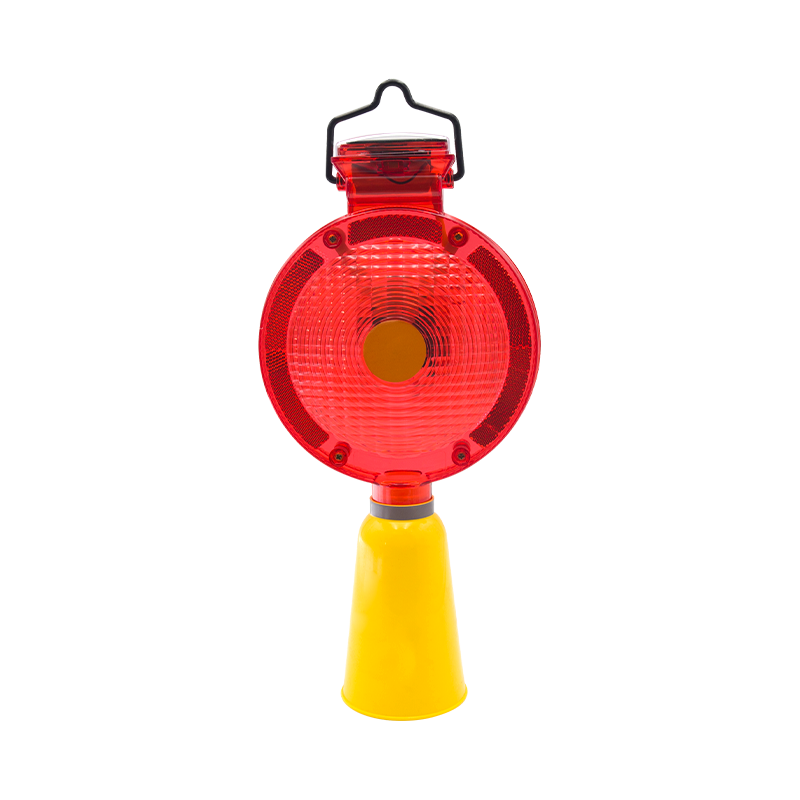
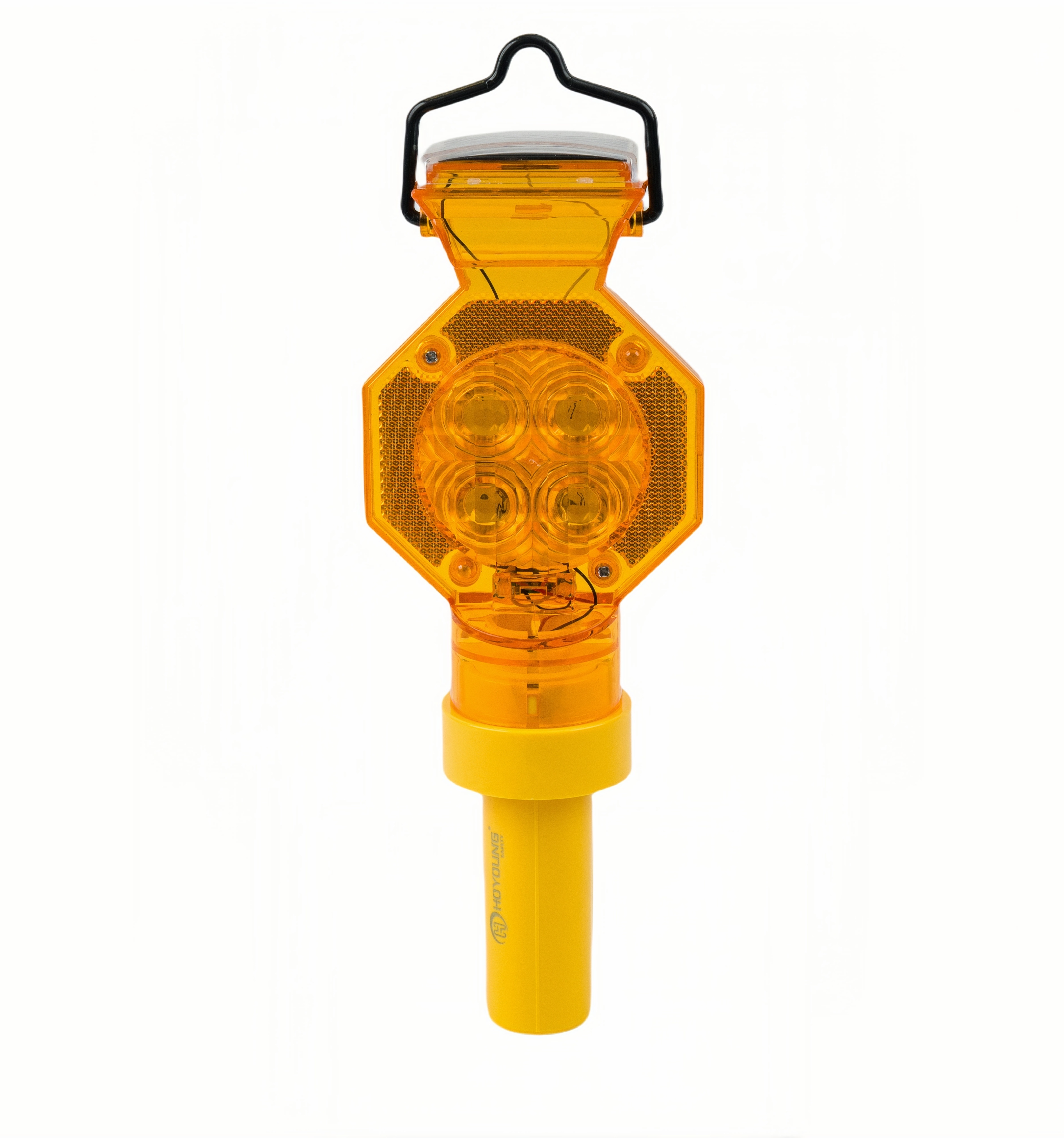
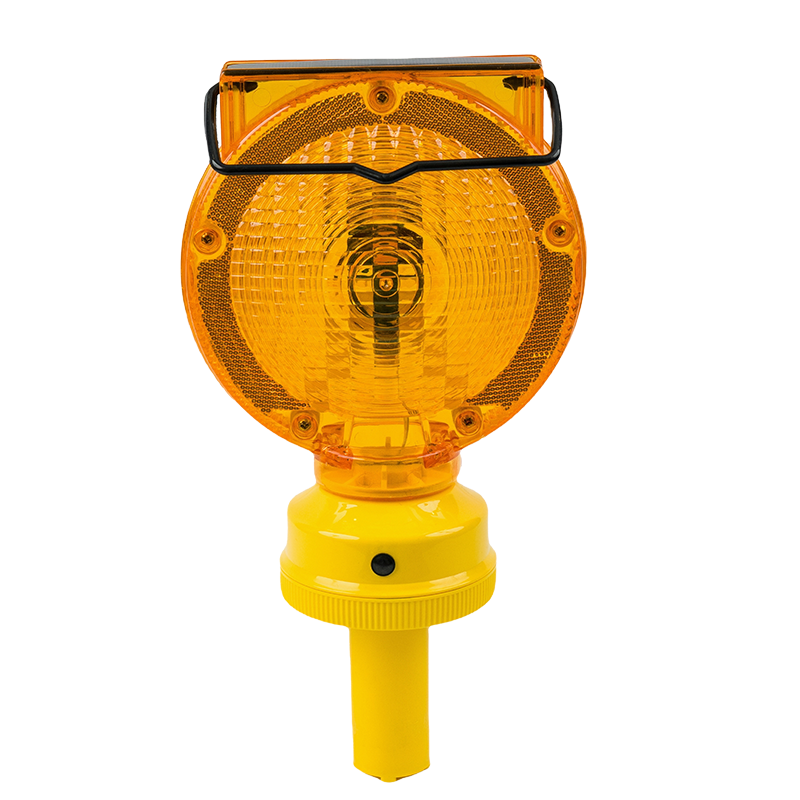
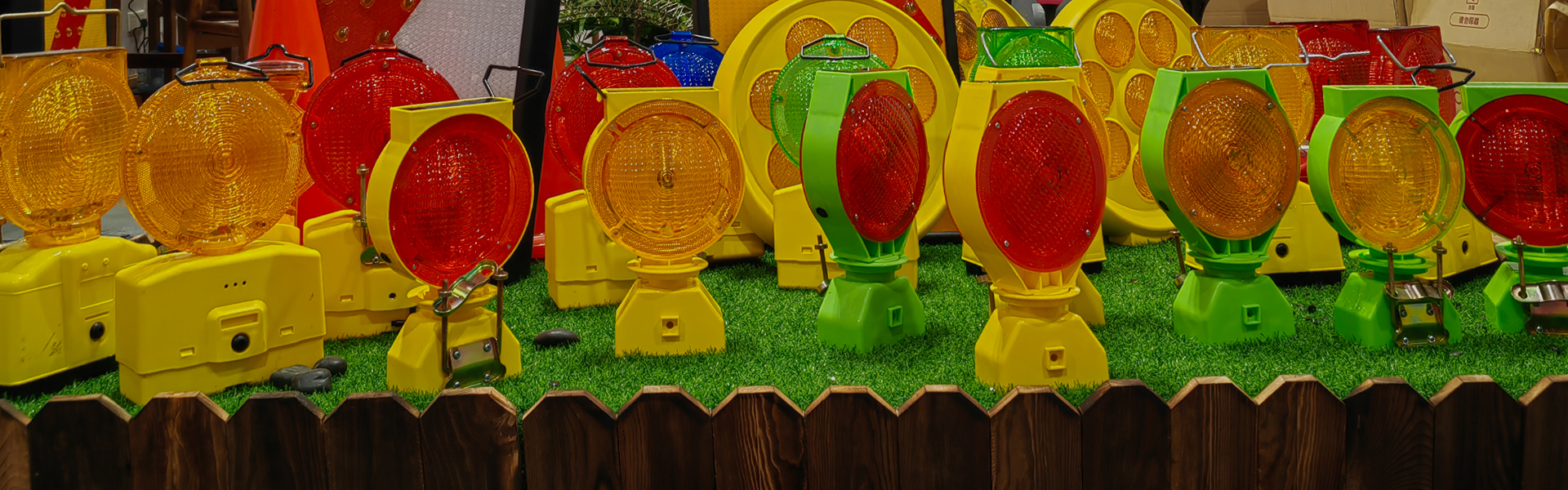
A solar warning light draws its power from an onboard solar panel and stores it in a built-in rechargeable battery, which allows it to operate around the clock without any external power connection. Most units in this category use light-controlled sensing, meaning they switch on automatically once ambient light falls below a set threshold at dusk or in low-visibility conditions, then recharge automatically through the following day. Because they need no wiring, solar warning lights are typically used at road construction sites, temporary traffic control points, hazardous area boundaries, and other locations where running a power cable would be impractical, including agricultural and open-field settings.
A traffic warning light intended for fixed installation typically uses a high-brightness LED source and supports dual AC/DC power input, which lets the same unit be wired into mains power at a permanent site or run from a DC supply where mains is not convenient. These units commonly offer several light color options, including red, yellow, blue, and green, along with selectable flash patterns such as steady illumination, single-color strobe, or alternating flash between two colors. A wide-angle, all-round visual design is common in this category so the signal remains readable from multiple approach angles, which matters at intersections, school zones, crosswalks, railway crossings, airport taxiways, and port or terminal traffic points.
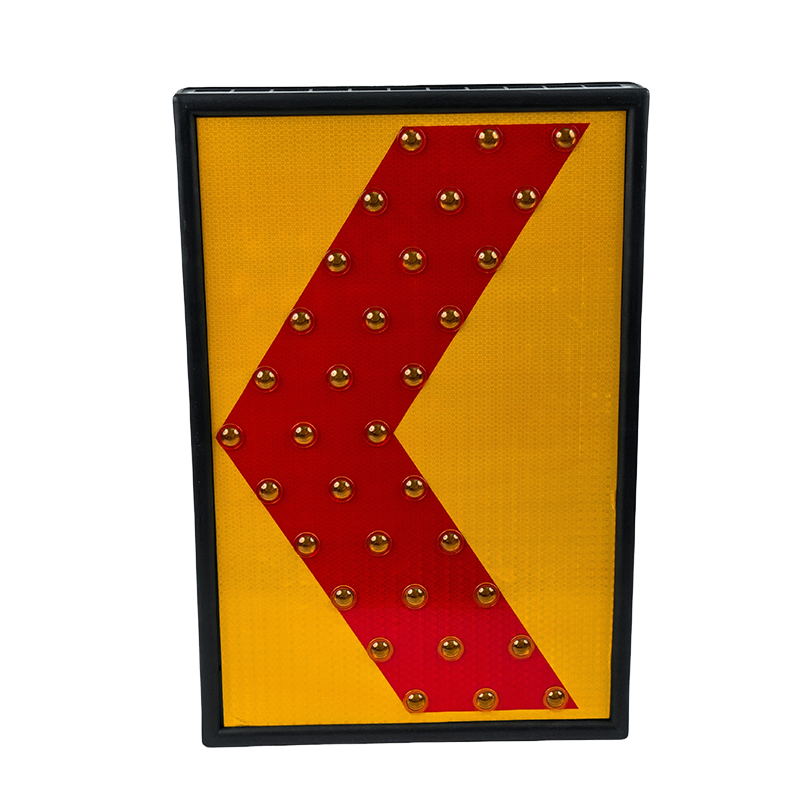
This category combines a traditional reflective signboard with an integrated LED warning light, so the sign's message and its nighttime alert function are built into a single unit rather than mounted separately. Manufacturer specifications for this configuration commonly reference nighttime visibility distances well beyond what a reflective-only sign can achieve on its own, since the active LED component supplements the passive reflective film. These units are generally designed for modular mounting, supporting column, hanging, or wall-mounted installation depending on the site, and are built with UV-resistant housing material intended to reduce long-term maintenance needs.
Key takeaway: Power availability at the site is usually the fastest way to narrow a warning light choice — unpowered locations point toward solar units, while fixed sites with mains access open up AC/DC and integrated sign options.
A warning light's outdoor durability and nighttime performance both trace back to a handful of internal components working together. The schematic below labels the main parts of a typical solar warning light so the terminology used elsewhere in this article is easy to follow.
Figure 1: Labeled structure of a typical solar-powered warning light.
The solar panel and the light sensor work as a pair to give the unit its autonomous operation: the panel converts daylight into stored electrical energy in the battery through the day, while the sensor continuously measures ambient light and triggers the LED circuit once conditions fall below a preset threshold at dusk or during heavy overcast weather. The sealed housing around the battery and electronics is the component that determines how well the unit tolerates rain, dust, and physical impact over time, which is why waterproof and dustproof ingress protection ratings are commonly referenced in manufacturer specifications for this product category. The lens itself is shaped and colored to maximize the spread of light across a wide viewing angle, since a warning light that is only visible from directly in front of it provides little protection to drivers approaching from an angle. The mounting bracket and pole interface determine installation flexibility, and many units are designed to attach to an existing barricade, cone, sign post, or dedicated pole without requiring specialized tools. Taken together, these components explain why two warning lights that look similar from a distance can perform very differently once exposed to months of outdoor use, and why housing quality and sensor reliability deserve as much attention during selection as brightness or color.
Warning light selection is not a cosmetic decision, since it directly affects how early an approaching driver notices a hazard in reduced light. Published U.S. federal crash data gives a useful, concrete picture of just how much of the country's fatal crash burden happens after dark, which is the exact condition a warning light for road safety is meant to address. The chart below breaks down 2023 traffic fatalities by lighting condition, split between rural and urban areas, using data compiled by the National Highway Traffic Safety Administration's National Center for Statistics and Analysis. Before reviewing the numbers, it helps to know that "dark" in this dataset includes both lit and unlit roadway segments, while "dawn, dusk, or other" captures the transitional lighting periods around sunrise and sunset. This distinction matters because it shows that darkness, not just the complete absence of lighting, is already associated with a disproportionate share of fatal outcomes.
Figure 2: 2023 U.S. traffic fatalities by lighting condition, rural vs urban. Source: NHTSA National Center for Statistics and Analysis, Rural/Urban Comparison of Motor Vehicle Traffic Fatalities.
The most striking pattern in this chart is the reversal between rural and urban areas: in rural areas, 54 percent of 2023 fatalities happened during daylight and 40 percent happened in the dark, while in urban areas the pattern flips, with 57 percent of fatalities occurring in the dark against only 39 percent during daylight. This means that in cities and other built-up areas, a majority of fatal crashes now happen after dark despite the fact that a majority of overall driving still takes place during daylight hours, which points to darkness itself as a disproportionate contributor to severe crash outcomes. The dawn, dusk, and other transitional lighting category adds a further 5 to 6 percent in both settings, a period during which glare and rapidly changing light levels can also reduce a driver's ability to judge distance and speed accurately. The urban-versus-rural difference likely reflects a combination of factors, including denser pedestrian activity after dark in cities, more complex intersections and turning movements, and a higher concentration of vulnerable road users such as pedestrians and cyclists sharing space with vehicle traffic at night. For any organization managing road, work zone, or facility safety equipment, this data supports a fairly direct conclusion: if a location experiences any meaningful traffic activity after sunset, whether it is urban or rural, an active lighting device such as a warning light typically does more protective work during those hours than a passive reflective device alone. Because these figures represent large national totals compiled from FARS crash data rather than a single local study, they should be read as a general pattern rather than a guarantee for any specific street or intersection, but the pattern itself has held consistently across multiple recent reporting years, which the next chart illustrates directly.
Because a single year's snapshot cannot show whether the nighttime share of fatalities is a stable pattern or a one-off fluctuation, it helps to look at the same urban dark-condition figure across several recent years for which comparable NHTSA reports are publicly available. The area chart below tracks the share of urban traffic fatalities occurring in the dark across 2017, 2021, and 2023, the most recent years with directly comparable published figures. This view makes it easier to judge whether nighttime risk in cities is trending in a particular direction rather than simply holding steady. Reading a trend across several years also helps put any single year's number into better context before drawing conclusions about equipment or policy needs. The same underlying NHTSA rural/urban fatality reporting series is used for all three years shown, which keeps the comparison consistent.
Figure 3: Share of urban U.S. traffic fatalities occurring in the dark, selected years. Source: NHTSA National Center for Statistics and Analysis.
The three data points shown here move in a single, consistent direction: 54 percent in 2017, 56 percent in 2021, and 57 percent in 2023, a gradual but steady increase in the share of urban fatalities happening after dark rather than a fluctuation that moves back and forth. Even though this is a small numeric shift of a few percentage points, it is notable because it is moving in the direction of greater nighttime risk rather than away from it, over a period when many cities have also been investing in street lighting and other infrastructure upgrades. Several factors likely contribute to this gradual increase, including growth in nighttime commercial and delivery traffic, longer commuting patterns that push more trips into darker hours during parts of the year, and continued growth in vehicle miles traveled in urban areas generally. The consistency of the upward movement across three separate reporting years, rather than a single anomalous year, is what makes this trend worth taking seriously rather than dismissing as statistical noise. For procurement teams and safety planners, a rising nighttime share reinforces the earlier point from the bar chart: equipment decisions that improve visibility after dark are addressing a growing share of total risk, not a shrinking one. It also suggests that a warning light program installed several years ago may be facing a slightly higher-risk nighttime environment today than when it was first specified, which is a reasonable prompt to periodically review flash pattern, brightness, and placement rather than treating the initial installation as a permanent solution. None of this data indicates that daytime safety measures should be deprioritized, since daylight still accounts for the larger share of fatalities in rural areas specifically. Rather, the combined picture from both charts argues for a balanced equipment strategy that treats after-dark visibility as a growing, not static, priority, particularly for warning lights deployed in or near urban work zones, intersections, and pedestrian crossings.
A warning light for road safety is used across a broad set of environments, and each one places a somewhat different demand on power source, brightness, and mounting method. The table below pairs common deployment settings with the questions worth working through before an order is placed.
Common Application Scenarios
|
Selection Factors to Evaluate
|
A few common pairings are worth highlighting directly. Temporary road construction and unpowered rural sites generally point toward a solar warning light, since running electrical service to a short-term or remote location rarely makes practical sense. Fixed, higher-traffic locations such as intersections, school zones, and railway crossings more often call for an AC/DC traffic warning light, where consistent power supports continuous operation and where standardized color coding, such as red for stop-related warnings or yellow for general caution, may already be expected by drivers in that jurisdiction. Locations where a driver needs to read an actual instruction or hazard message at night, rather than just notice a generic alert, are better served by an integrated sign-and-light unit, since a standalone flashing light communicates only that something requires attention, not what that something is. Weather exposure also matters: sites that regularly experience rain or fog benefit from units designed for strong light penetration in reduced-visibility weather, a characteristic commonly built into higher-output LED traffic warning lights.
Key takeaway: Power availability, required flash color and pattern, and whether the site needs a readable message rather than a generic alert are the three fastest filters for narrowing a warning light choice.
Beyond the fatality data already reviewed, transportation researchers have also studied what happens when lighting itself is added or improved at a location, rather than simply comparing outcomes between lit and unlit conditions after the fact. This research angle is useful because it isolates lighting as a variable rather than treating it as one factor among many. A joint transportation research report from Purdue University, prepared for the Indiana Department of Transportation, reviewed prior field studies on this exact question at roadway intersections. Before looking at the figure below, it is worth noting that intersections are a useful test case because they concentrate turning movements, crossing conflicts, and pedestrian activity in a small area, which makes any lighting effect easier to isolate from broader traffic trends. The gauge below visualizes the crash-reduction range this research associated with improved intersection lighting.
Figure 4: Cited crash-reduction range associated with improved intersection lighting. Source: Purdue University Joint Transportation Research Program, prepared for the Indiana Department of Transportation.
The highlighted arc segment on this gauge represents a reported reduction of roughly one-tenth to a little more than one-quarter in vehicle crash counts at intersections where lighting was improved, drawn from the field studies reviewed in the Purdue research summary. A range this wide, rather than a single fixed figure, reflects real variation across the different intersections, traffic volumes, and lighting technologies covered by the underlying studies, and it should be read as a general association rather than a fixed multiplier that applies identically everywhere. Even taking the more conservative end of that range, a meaningful share of intersection crashes were associated with the presence of adequate lighting, which lends independent support to the fatality patterns already discussed in the previous section. This is a useful complement to the earlier lighting-condition data because it looks at the problem from the opposite direction: rather than asking how many crashes happened in the dark, it asks what changes when lighting is actively added to a previously darker location. The same underlying research also noted that only a modest share, roughly a quarter to a third, of total vehicle travel occurs at night, which makes the outsized share of nighttime fatal crashes discussed earlier even more significant relative to actual nighttime exposure. Practically, this reinforces why a warning light is not simply a supplementary device at many sites but can be one of the more directly measurable investments in a work zone or intersection safety plan. It also suggests that pairing a warning light with generally good site lighting practice, rather than treating the warning light as a complete substitute for adequate ambient lighting, tends to produce the most consistent visibility outcome. Because the studies behind this figure vary in methodology, site type, and year, the range shown here should be treated as a directional planning reference rather than a guaranteed outcome for any specific location.
Once power source and general product category are settled, flash pattern is usually the next decision, and it involves a genuine trade-off rather than a single obviously correct setting. A completely steady light is easy to look at for long periods but does less to interrupt a driver's attention than a flashing signal does. A very fast strobe pattern captures attention strongly but can become visually fatiguing to drivers or workers who are exposed to it for extended periods at close range. The scatter plot below presents an illustrative, general comparison of four common flash approaches across two practical dimensions: how strongly each pattern tends to capture visual attention, and how much visual fatigue it tends to produce over extended viewing. These ratings reflect general principles from vision science and lighting engineering rather than a single controlled clinical study, and they are meant to support a practical conversation about trade-offs rather than serve as a precise technical benchmark.
Figure 5: Illustrative comparison of common warning light flash patterns by attention capture and viewing fatigue.
Reading the chart from left to right along the horizontal axis, a steady or constant light sits lowest on attention-capturing strength, since a fixed light source tends to blend into the visual background more easily than a changing one, particularly once a driver has been on the same route repeatedly. Moving right, a slow flash pattern improves attention capture noticeably over a steady light while still keeping visual fatigue relatively moderate, which is one reason slow flash remains a common default setting for many general-purpose warning lights. A fast strobe pattern sits furthest to the right on attention capture, reflecting how effectively rapid, high-contrast flashing interrupts a driver's visual field, but it also sits highest on the fatigue axis, which matters for workers or residents who may be exposed to the same light for extended periods rather than passing it briefly in a vehicle. An alternating dual-color pattern lands in a middle-to-upper position on both axes, offering strong attention capture through the color change itself while producing somewhat less sustained fatigue than a continuous fast strobe, since the human eye responds strongly to color transitions even at a moderate flash rate. None of the four patterns is universally correct; a school crossing active only during short pickup and drop-off windows can reasonably use a stronger, faster pattern without much fatigue concern, while a light positioned near a staffed guard booth or overnight security post may be better served by a steadier or slower pattern to avoid excessive fatigue for the people stationed nearby. Weather conditions also interact with this choice, since rain and fog scatter and diffuse light, which is part of why many traffic warning lights are designed with high-brightness LEDs capable of strong penetration through reduced-visibility conditions regardless of the flash pattern selected. For most general road and work zone applications, a moderate flash rate offers a reasonable balance between visibility and sustainability, while faster or alternating patterns are better reserved for higher-risk, shorter-duration exposure points such as active lane shifts or temporary detours. Ultimately, flash pattern selection works best as a site-specific decision informed by how long people will be exposed to the light and how much attention-capturing strength the location actually requires, rather than a single default applied uniformly across an entire inventory.
Bringing the earlier sections together, the table below compares the configurations most commonly requested by contractors, municipalities, and facility managers working with a warning light supplier, followed by a set of quick-reference configuration profiles.
| Configuration | Power Source | Typical Colors | Best Suited Environment | Installation |
|---|---|---|---|---|
| Solar barricade / plug-in light | Solar with lithium battery | Amber, red | Unpowered roadwork, rural sites | Clip-on, barricade mount |
| AC/DC traffic signal light | Mains AC or DC supply | Red, yellow, blue, green | Intersections, crossings, school zones | Pole or fixed structure mount |
| Integrated sign-and-light unit | Solar or mains, model dependent | Amber, red with reflective film | Locations needing a readable message | Column, hanging, or wall-mounted |
| Handheld / portable light | Rechargeable battery | Red, amber | Traffic direction, inspections, emergencies | Handheld, no fixed mounting |
The quick-reference profiles below summarize what each configuration is generally used for, intended as a starting shortlist before a full specification conversation.
Solar Roadwork Light Solar panel and lithium battery, automatic dusk-to-dawn operation. Suited to unpowered construction and rural sites. Fixed Traffic Signal Light AC/DC powered, multi-color, selectable flash mode. Suited to intersections and permanent crossings. Integrated Sign-and-Light Reflective signboard with built-in LED warning. Suited to locations needing a readable hazard message at night. Handheld Portable Light Battery powered, double-sided visibility. Suited to traffic direction, inspections, and short-duration tasks.
Key takeaway: Solar, AC/DC, integrated sign, and handheld configurations each solve a different combination of power access, mounting, and messaging needs rather than one replacing the others.
Warning lights are exposed to sun, rain, dust, and vibration continuously, and a light routine maintenance schedule generally keeps a unit performing closer to its original brightness and battery capacity for longer. The steps below outline a practical maintenance approach that applies across solar, AC/DC, and integrated sign configurations.
Seasonal conditions deserve some additional attention. In regions with heavy winter snowfall, solar panels can become covered and lose charging capacity for extended periods, so more frequent clearing is worthwhile during that season. In consistently hot, high-UV climates, housing and lens materials may fade or become brittle somewhat faster, which is one reason UV-resistant housing material is a common specification point for units expected to remain outdoors year-round. Keeping a simple inventory log by installation date also makes it easier to plan proactive battery or unit replacement rather than waiting for a failure to be discovered in the field, which tends to be the more reliable approach for organizations managing a larger standing inventory of warning lights.
For contractors, municipalities, and distributors placing bulk or recurring orders, the choice of warning light manufacturer matters as much as the product specification itself, since consistency across production batches and responsiveness to order changes both affect whether a shipment performs as expected in the field. A few practical questions tend to separate a dependable production partner from one that is not: Does the facility have dedicated manufacturing capacity, such as its own injection molding equipment, rather than relying entirely on subcontracted production? Is production largely automated, which tends to support more consistent housing dimensions and seal quality batch to batch? Does the supplier offer a genuine range of road safety and personal protective equipment products, suggesting broader manufacturing experience rather than a single narrow product line? And does the company have export experience shipping to the buyer's region, which affects packaging durability and documentation familiarity?
Ningbo Hoyoung Safety Products Co., Ltd. is one example of a manufacturer built around this kind of scale and product breadth. Based in Ningbo, Zhejiang province, the company is a manufacturing enterprise focused on personal protective equipment together with road safety facilities and supplies, with roughly two decades of experience in the PPE field. Production takes place across a 5,000 square meter workshop equipped with sixteen injection molding machines, with much of the workshop operating on a largely automated basis. The company's warning light range spans solar warning lights, AC/DC traffic warning lights, and integrated road traffic signs, alongside a broader product line that includes safety helmets, earmuffs, other personal protective equipment, and collapsible safety cones, with shipments reaching customers across Europe, the United States, South America, Southeast Asia, and other regions. For a buyer comparing a wholesale warning light supplier against this kind of profile, the combination of dedicated molding capacity, an automated production environment, and a product range spanning both PPE and road safety equipment is a reasonable proxy for the kind of manufacturing depth that supports consistent, large-volume fulfillment.
Beyond production capability, ongoing communication matters for any recurring supply relationship. Buyers evaluating a road safety equipment supplier generally benefit from requesting physical samples before committing to a bulk order, confirming lead times against their own project schedule, and clarifying flash pattern, color, and mounting requirements early, since these details are far easier to adjust before production begins than after a shipment has left the factory. A supplier that responds clearly to these early-stage questions is usually a reasonable indicator of how the relationship will function once a larger order is underway.
Key takeaway: Manufacturing scale, automation, and product range are practical indicators of supply consistency worth checking before placing a bulk warning light order.
Q1: What is the difference between a solar warning light and an AC/DC traffic warning light?A: A solar warning light generates and stores its own power onboard for use at unpowered sites, while an AC/DC traffic warning light draws from mains or DC power and is generally used at fixed, higher-traffic locations. |
Q2: What flash pattern is generally recommended for road construction warning lights?A: A moderate flash rate is generally used for most construction and roadwork applications, balancing attention capture against visual fatigue, while faster or alternating patterns are typically reserved for shorter-duration, higher-risk points such as active lane shifts. |
Q3: How should a solar warning light be maintained?A: The solar panel should be wiped clean of dust and debris periodically, the lens checked for cracks or clouding, and light-controlled sensing tested at dusk to confirm the unit still switches on reliably as ambient light drops. |
Q4: Are integrated sign-and-light units suitable for permanent installations?A: Yes, integrated sign-and-light units are generally designed for longer-term or permanent mounting via column, hanging, or wall installation, and are often specified with UV-resistant housing intended for extended outdoor use. |
Q5: Why do warning lights matter more in urban areas after dark?A: Published national crash data shows a majority of urban traffic fatalities now occur after dark, a share that has been gradually rising in recent years, which makes active nighttime visibility equipment a growing rather than static priority in cities. |
Q6: What should a wholesale buyer look for in a warning light manufacturer?A: Buyers generally benefit from checking manufacturing capacity, the degree of production automation, the breadth of the supplier's road safety and PPE product range, and prior export experience shipping to the buyer's region before placing a bulk order. |
It is focused on the overall solution of dry bulk material port transfer system,
research and development,
manufacturing, and service
Contact Us
Contact UsMiss. Jenny
+86 136 5588 7720
sales8@hoyoungsafety.com
sales1@hoyoungsafety.com