 English
 Español
 عربى
عربى

Industry News
Home / News / Industry News / ANSI Z89.1 Hard Hat Guide: Type I vs Type II, Classes, Testing, and Compliance
Content
A US general contractor in Texas lost half a working day when an OSHA compliance officer walked the site and found every crew member wearing a helmet marked to EN 397 with no ANSI Z89.1 label anywhere on the shell. The helmets were not counterfeit. They were not defective. They had passed a legitimate European test regime. None of that mattered, because the jurisdiction required a different certification, and the label on the inside of the crown is the only thing an inspector reads.
That is the practical reality behind ANSI Z89.1: it is not a single badge that a helmet either has or lacks. It is a two-axis specification system. One axis describes the direction of impact a helmet is built to survive, and the other describes how much electrical insulation it provides. A helmet can be fully compliant with ANSI Z89.1 and still be the wrong helmet for a given job, because compliance is defined per configuration, not per product family.
Buyers who treat ANSI Z89.1 as a checkbox usually discover the problem late, after a purchase order has been placed, after containers have shipped, and after a site safety officer has rejected a delivery. The cost of that mistake is rarely the helmet itself. It is the expedited replacement order, the idle crew, and the credibility hit with the client who hired you.
This guide walks through what the standard actually regulates, how Type I and Type II differ in ways that change your bill of materials, what Class C, G and E really mean on a label, how the laboratory tests map to field hazards, how ANSI Z89.1 compares with the European standards that frequently appear on the same import documents, and what to check before you place an order with any industrial head protection manufacturer.
ANSI/ISEA Z89.1 is the American National Standard for Industrial Head Protection. The current widely referenced edition is ANSI/ISEA Z89.1-2014, reaffirmed in 2019, with a revision cycle that has been expanding the optional test menu. The standard is developed under the ANSI consensus process and administered by the International Safety Equipment Association, which is why you will see it written as ANSI/ISEA Z89.1 on product labels and as ANSI Z89.1 in everyday purchasing conversation.
The first thing to understand is that ANSI Z89.1 is a voluntary consensus standard. It is not a law. It becomes effectively mandatory because the Occupational Safety and Health Administration references it in its head protection regulations, notably 29 CFR 1910.135 for general industry and 29 CFR 1926.100 for construction. Those rules require head protection that meets or is equivalent to ANSI Z89.1. In practice, "equivalent" is a hard argument to win in front of an inspector, so most US buyers treat the ANSI label as non-negotiable.
The standard covers the protective helmet as a system: the shell, the suspension, the headband, the sweatband, and any accessories that were present during testing. It sets performance requirements for impact energy attenuation, penetration resistance, flammability, and electrical insulation where a class is claimed. It also defines optional requirements that a manufacturer may choose to certify against, including low temperature, high temperature, reverse wearing, high visibility, and dielectric performance beyond the standard classes.
ANSI Z89.1 says nothing about face protection, eye protection, hearing protection, or neck protection. Those are separate standards. A helmet with a face shield attached is not automatically certified with that face shield, and the face shield is governed by its own requirements.
The standard also does not cover chemical resistance, molten metal splash, welding spatter, or fall arrest anchorage. A helmet that meets ANSI Z89.1 is not a fall protection anchor. It is not a chemical barrier. It is not a substitute for a bump cap, and a bump cap is not a substitute for it.
Another common gap is retention system performance under the general requirement. The basic standard does not require a chin strap, and it does not test retention unless a Type II or an optional reverse-wearing claim is being made. That matters in wind, in confined spaces, and in any work at height where a helmet can be knocked off or lost.
Older editions used different terminology. Buyers with long memories still ask for "Type 1 Class A" or "Type 2 Class B," and those older class labels have been reorganized. Class A and Class B from earlier editions map roughly onto Class G and Class E in the modern scheme, while the old Class C remained Class C. Confusion between the two naming systems is one of the most common sources of wrong-product delivery in the head protection category.
The 2014 edition also tightened how accessories are handled. Accessories that were not part of the original certification can invalidate the compliance claim, which is why a helmet that was compliant with a certain brand of earmuff may not be compliant with a different one. When an importer asks a helmet accessories supplier for a mixed configuration, that question needs to be answered with test documentation, not with an assumption.
The type designation describes the direction of impact the helmet is designed to protect against. This is the single most consequential decision in a head protection specification, and it is also the one most often reduced to a price comparison.
Type I helmets provide protection against impact to the top of the head. That is the classic hard hat orientation: something falls from above, the shell deflects and the suspension absorbs. Type II helmets provide protection against both top impact and lateral or off-center impact, meaning blows delivered from the front, back or sides of the shell.
Falling-object protection is the hazard most people picture, and it is overwhelmingly a top-impact event. Type I handles it. The trouble is that a large share of head injuries in industrial settings do not come from directly overhead. They come from slips, trips and falls where the head strikes a beam, a pipe rack, a machine housing or the ground at an angle. They come from swinging loads. They come from working under a structure with a low clearance and standing up into it.
In those events, the impact arrives off the crown of the helmet, and the shell geometry plus the suspension architecture determine whether the energy is attenuated. A Type I helmet has not been tested for that. It may perform acceptably in some off-axis strikes, but it has not been demonstrated to, and that distinction is exactly what a specification is supposed to eliminate.
Type I testing includes impact energy attenuation at the apex, apex penetration resistance, flammability, and electrical insulation where a class is claimed. Type II adds off-center impact energy attenuation, off-center penetration resistance, and retention system effectiveness. The retention test is the reason Type II helmets in practice almost always ship with a chin strap, even though the strap itself is a separate component.
That retention requirement is frequently underestimated. A Type II helmet without a properly adjusted chin strap cannot deliver the protection it was certified for, because the helmet can shift or leave the head during the very event it is meant to survive. Buyers comparing quotes between a Type I and a Type II offer should check whether the chinstrap is included, what material it uses, and whether it is field-replaceable.
For a manufacturer building an ANSI Z89.1 compliant hard hat range, the Type II platform typically means a different shell molding with a deeper profile, a different suspension with more contact points, and a retention system that is tested as part of the assembly. That is why Type II pricing sits meaningfully above Type I for otherwise comparable products.
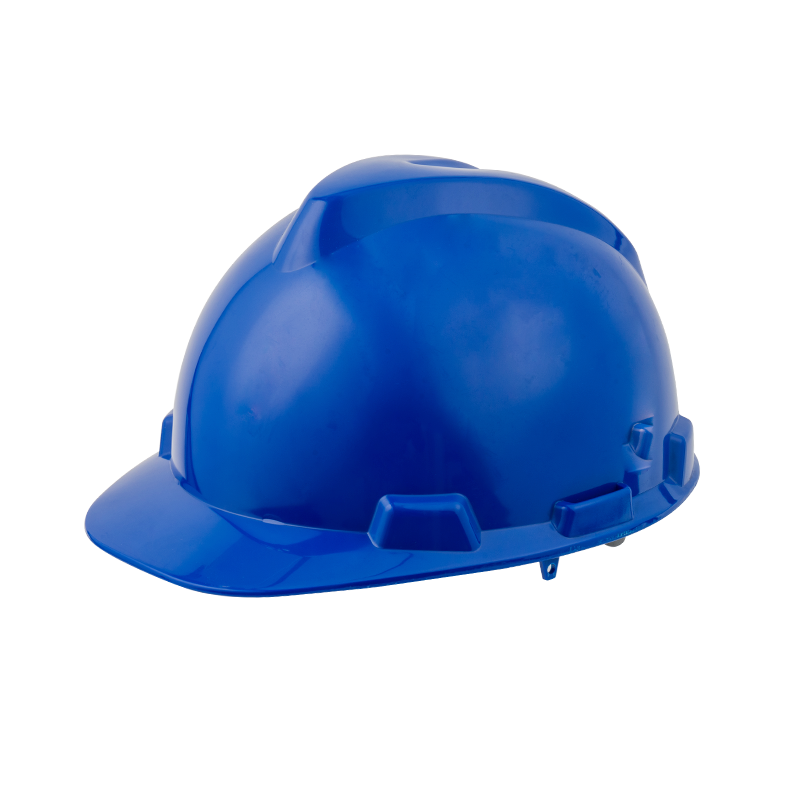
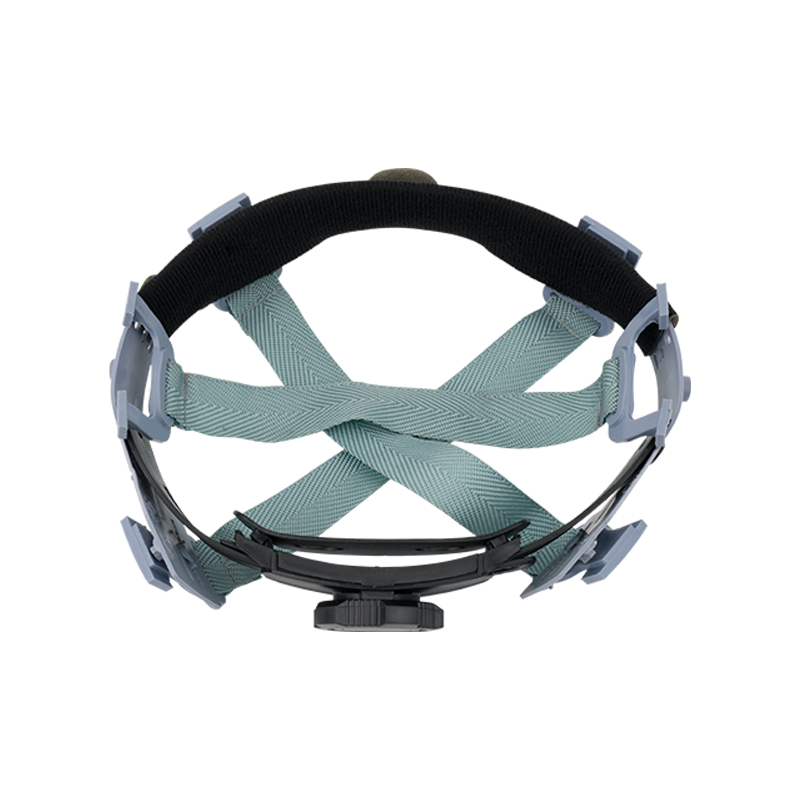 SH188 Two Layers of Ridges Safety HhelmetThis construction safety helmet is our new design model which is simple and elegant. The top of the hat is designed with two layers of ridges, which can better resist ...View Product →
A practical rule used by many safety managers: if the worker is ever at height, near moving equipment, or in a space with hard overhead geometry at head level, specify Type II and stop debating. Reserve Type I for controlled environments where the only credible hazard is a dropped object from directly above.
The class designation describes electrical insulation performance. This is where the most expensive purchasing errors happen, because class determines whether a helmet can be taken onto a live electrical work site at all, and the difference between classes is not a matter of degree in the way most buyers assume.
Class C helmets are conductive. They provide no electrical protection rating. They are typically shells with metal components, or vented shells where the ventilation openings prevent any dielectric claim. Class C has legitimate uses in general industry, but it must never appear on a site with exposed energized conductors.
Class G helmets are tested at 2,200 volts. The "G" historically stood for general, and the class covers the vast majority of industrial electrical exposure at low and medium voltage. Class E helmets are tested at 20,000 volts, historically standing for electrical, and are required for utility work, substation activity, and any environment where high-voltage contact is a credible risk.
| Class | Dielectric Test Voltage | Electrical Protection | Typical Application |
|---|---|---|---|
| Class C | None claimed | Conductive, no rating | General industry with no electrical exposure |
| Class G | 2,200 V | General electrical protection | Low and medium voltage industrial work |
| Class E | 20,000 V | High voltage protection | Utilities, substations, transmission work |
Ventilation and electrical class are mutually exclusive in most configurations. A vented shell has openings through which a conductive path can form, and the standard does not permit a vented helmet to claim Class G or Class E. This creates a genuine conflict for buyers who want a breathable helmet for hot climates and also need electrical protection.
The resolution is usually to split the specification. Issue vented Class C helmets for general hot-weather work where no electrical exposure exists, and issue unvented Class E helmets for the electrical tasks. Trying to satisfy both requirements with one product generally results in a product that satisfies neither properly.
A compliant label carries the type, the class, the standard designation, the manufacturer identification, and the date of manufacture. Some labels also carry the size range, the applicable optional test codes, and a lot or batch reference. If any of the primary fields is missing, treat the claim as unverified regardless of what the product listing says.
Importers should also be aware that the class claim applies to the helmet as tested. Adding a metal accessory, replacing a suspension with a non-original part, or attaching a conductive lamp bracket can void the dielectric claim. This is a common finding during site audits of equipment that was correctly purchased but incorrectly modified.
Electrical class is the most misread line on any hard hat label. Many buyers assume the letters describe a general quality tier, with E simply being a better version of G. That assumption is wrong in an important way. The classes describe one narrow physical property: the dielectric withstand capability of the complete helmet assembly under a defined test voltage. The gap between the classes is not incremental. It is an order of magnitude. The chart below sets out the nominal test voltage behind each class on a proportional scale, with Class E normalized to the full bar width, so the relative separation is visible at a glance rather than buried in a specification table.
The first thing the chart makes clear is the sheer size of the separation between Class G and Class E. A Class E helmet is tested at roughly nine times the voltage of a Class G helmet. That is not a marginal upgrade that can be substituted in the field when stock runs short. Substituting a Class G helmet onto a high-voltage task exposes the wearer to a hazard the product was never evaluated against, and the dielectric strength of the shell is the only thing standing between the wearer's skull and a fault current path.
The second thing the chart shows is that Class C sits at zero. It is not a low tier of electrical protection, it is the absence of any electrical protection. Class C shells are frequently built with metal components or ventilation openings, and both of those features actively conduct. On a site audit, a Class C helmet found near energized equipment is treated as a serious finding, not a minor paperwork issue.
Third, the chart underscores why ventilation and high-voltage protection are architecturally incompatible. Ventilation requires openings. Dielectric withstand requires an unbroken insulating surface. Those two requirements point in opposite directions, and no amount of clever design fully resolves the conflict within the current standard. Buyers who want both are effectively asking for a product that the standard does not recognize.
Fourth, the proportional scale is a reminder that electrical exposure in the field is not distributed evenly across the classes. Most industrial facilities operate at voltages where Class G is appropriate. Utilities, substations, transmission corridors and some heavy process plants operate at voltages where only Class E is defensible. Matching the class to the actual system voltage, rather than to the highest number available, keeps cost proportionate without cutting corners.
Fifth, the chart does not capture the conditioning variables. Electrical performance is tested after the helmet has been conditioned at specified temperature and moisture levels, and performance can degrade with age, UV exposure and physical damage. A helmet that passed at 20,000 volts when new is not guaranteed to pass at 20,000 volts after three summers on a truck dashboard. That is one of the reasons manufacturers publish replacement guidance rather than treating certification as permanent.
Sixth, the chart makes the accessory question obvious. Adding a conductive bracket, a metal lamp mount, or a non-original suspension introduces a conductive path that the original dielectric test never covered. The class printed on the shell describes the shell as certified, not the shell as modified. This is the most common way that a correctly purchased Class E helmet becomes an unrated helmet in service.
Seventh, the proportions explain why the two classes are usually stocked as separate SKUs rather than as a single configurable product. The shell moldings differ, the materials differ, and in many cases the suspension differs. A distributor that carries only one electrical class and promises to "cover both" is making a promise the physical product cannot keep.
Eighth, the chart helps frame the audit conversation. When an inspector or a client safety officer asks why a particular class was specified for a particular area, the answer is a voltage figure, not a preference. Having that figure documented in the procurement file turns a subjective debate into a technical one, and technical debates are much easier to win.
Ninth, the scale highlights a cost-engineering reality. Class E shells require more expensive materials and tighter process control, and they typically cost noticeably more per unit. Buyers who specify Class E everywhere, including in warehouses and on loading docks, are paying for protection that adds nothing to the risk profile of those areas. Segmenting the specification by actual exposure usually produces savings that can be redirected into better Type II coverage elsewhere.
Tenth, and most importantly, the chart should be read alongside the type designation, never instead of it. Electrical class says nothing about impact protection. A Class E Type I helmet and a Class E Type II helmet carry the same electrical rating and very different impact coverage. The two axes are independent, and a complete specification always states both.
Understanding the test sequence helps buyers ask better questions and helps them spot suppliers who are describing a product they cannot document. The tests are destructive, standardized, and repeatable, which means the results are comparable across manufacturers.
The shell and any components that could contact the head are exposed to a controlled flame for a defined period. The material must self-extinguish within a specified time and must not propagate flame across the surface. This is a baseline requirement rather than an optional one, and it applies to the complete helmet, not just the shell resin.
A hemispherical striker of defined mass and geometry is dropped from a defined height onto the helmet while the helmet sits on an instrumented headform. The force transmitted through the helmet to the headform must stay below a threshold. In the US standard this threshold is commonly expressed in the region of 1,000 pounds-force, approximately 4,450 newtons, and the drop geometry is designed to simulate a serious overhead strike.
For a Type I helmet, this test is conducted at the apex. For a Type II helmet, it is repeated at off-center positions representing front, rear and side impacts. The energy input is the same, but the shell geometry and suspension must manage it across a much wider range of contact points.
A pointed penetrator of defined mass is dropped onto the shell. The requirement is straightforward: the penetrator must not make contact with the headform surface beneath the shell. This is the test that separates a genuinely protective helmet from a hard plastic cap, and it is also the test most affected by shell material choice and wall thickness consistency.
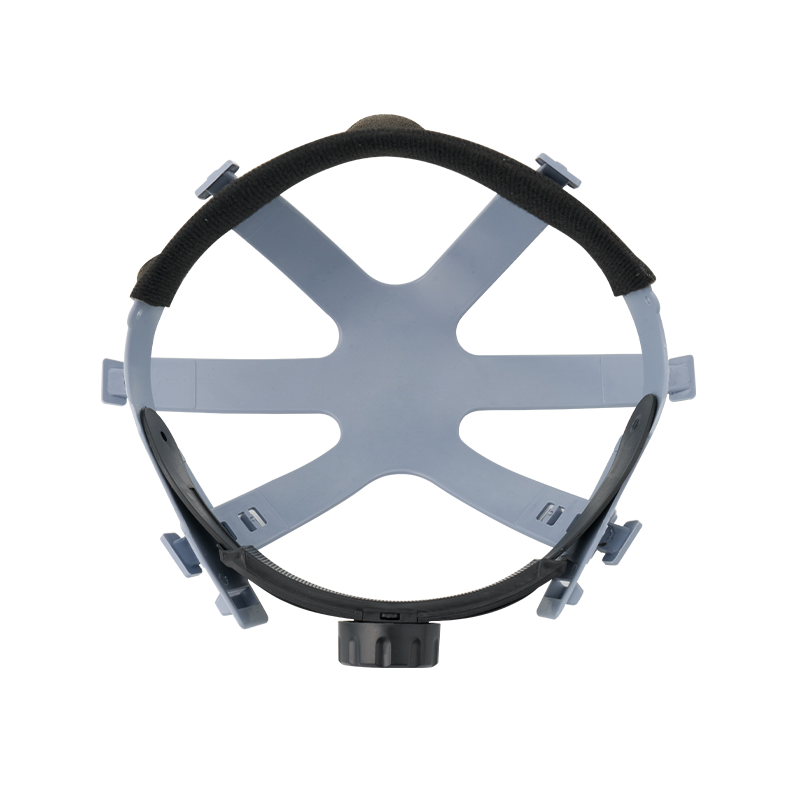 SH100 Penetration Resistant Safety Helmets1. Reliable quality,we always consider quality control as our top task, we are producing safety products to protect wearers, so this head protection helmet is heavy-du...View Product →
A helmet marketed as penetration resistant should be able to show this test result at both the apex and, for Type II claims, at off-center positions. A supplier who describes penetration resistance in general terms without a test position reference is not giving a buyer anything that can be verified.
The helmet is filled with conductive liquid or fitted with electrodes, immersed in a conductive bath, and subjected to the class voltage for a defined duration. Leakage current must remain below the limit for the class. Class G is tested at 2,200 volts, Class E at 20,000 volts, and Class C carries no rating.
Beyond the core requirements, the standard defines optional tests that a manufacturer may certify against. These include low temperature conditioning, high temperature conditioning, reverse wearing orientation, high visibility, and, in the newer revision activity, enhanced impact classifications.
Each optional claim adds cost and adds value, but only if the buyer actually needs it. The right approach is to determine which optional test results map to the deployment environment, request documentation for those, and leave the rest off the specification. Optional claims that are never used in practice simply raise the unit price and complicate the label.
The standard sets a minimum performance floor. It does not tell a buyer which material is right for a given climate, which suspension is comfortable across a ten-hour shift, or which headband adjustment survives daily use in a dirty environment. Those decisions still belong to the buyer.
High-density polyethylene is the workhorse material for industrial helmets. It is tough, resistant to a wide range of chemicals, tolerant of low temperatures, and relatively inexpensive. Its main limitation is that it softens at higher temperatures and can deform under sustained load in extreme heat, which matters in foundries and in direct tropical sun.
ABS offers better dimensional stability and a better surface finish. It holds its shape well under heat, takes color cleanly, and is often chosen for helmets where appearance matters. It is generally more expensive and slightly more brittle at very low temperatures than HDPE.
Polycarbonate provides very high impact resistance in a thin section, allowing lighter shells, but it is more susceptible to certain solvents and can stress-crack. It appears more in specialized and premium products than in commodity industrial ranges.
The practical takeaway is that material choice should follow the deployment environment, not the price list. A cold-climate mining operation and a Gulf Coast construction site have genuinely different material priorities, and a single SKU rarely serves both well.
The suspension is what actually attenuates energy. The shell spreads the load and resists penetration, but the distance between the shell and the head, and the way the headband distributes pressure, determine whether the wearer experiences a survivable deceleration or a concentrated blow.
Four-point suspension has four straps meeting at the crown and is the most common configuration. Six-point suspension adds two more attachment points, which distributes pressure more evenly and improves stability on the head. For workers who wear a helmet all day, the difference in comfort is noticeable, and comfort directly affects whether the helmet is worn correctly.
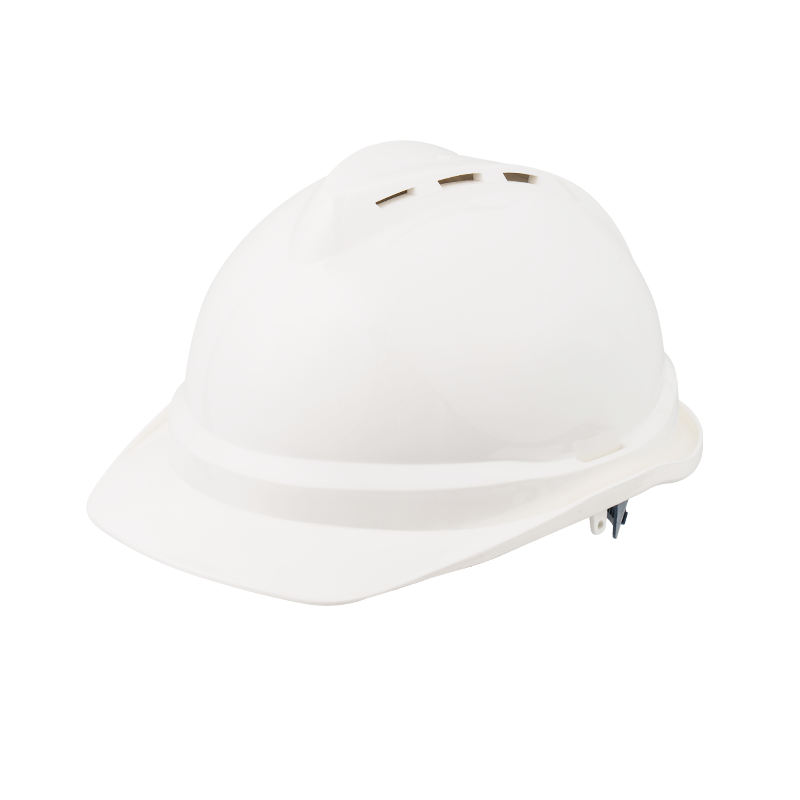
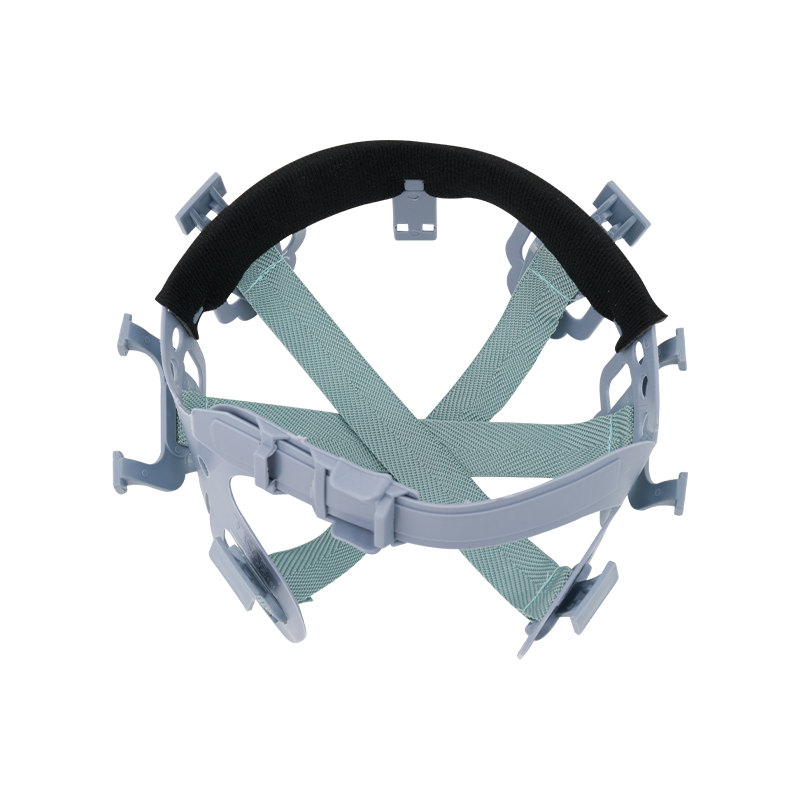 SH102 6 Point Suspension Breathable Safety HelmetsThis model is CE EN397 approved and which is designed with 6 ventilated holes, so it’s a good choice for summer or hot areas. The ventilation helmet has three channel ...View Product →
Adjustment mechanisms matter as much as the number of points. Ratchet adjustment allows one-handed tightening and consistent fit, which is faster and more repeatable across a large crew. Pin-lock adjustment is lighter and has fewer parts to fail. Both have legitimate use cases, but the ratchet system generally performs better in shift-based operations where helmets are shared or frequently removed.
Buyers sourcing from an industrial head protection manufacturer should ask for the head size range, the suspension type, the sweatband material, and the availability of spare suspensions as separate line items. Those four data points predict field satisfaction more reliably than most marketing claims.
Export-oriented buyers frequently handle documents showing both US and European certification on the same product family, and the temptation is to assume the two are interchangeable. They are not. The test philosophies overlap but the parameters differ, and a helmet certified to one scheme has not automatically demonstrated the other.
| Parameter | ANSI/ISEA Z89.1 | EN 397 | EN 12492 |
|---|---|---|---|
| Primary scope | Industrial head protection | Industrial head protection | Mountaineering and climbing helmets |
| Impact direction covered | Top only for Type I, top and lateral for Type II | Top impact, with optional lateral deformation | Top and lateral impact, plus front, rear and side |
| Striker and drop geometry | Defined mass dropped onto instrumented headform | 5 kg striker from 1 m | Different mass and drop configuration for each strike zone |
| Penetration test | Pointed penetrator, no headform contact allowed | 3 kg pointed striker from 1 m | Not the primary focus |
| Retention system | Required only for Type II and certain optional claims | Not mandatory in the base standard | Mandatory, with defined release force limits |
| Electrical classes | Class C, G and E | Optional 440 V AC marking | Not applicable |
| Optional features | Low temperature, high temperature, reverse wearing, high visibility, enhanced impact | Low temperature, high temperature, molten metal, lateral deformation, 440 V AC | Different optional test set |
A buyer in the United States cannot substitute an EN 397 helmet for an ANSI Z89.1 helmet on a regulated site, even if the European product is objectively robust. The reverse is also true in most European jurisdictions. The label is a legal document in context, and inspectors check for the standard that applies to their jurisdiction.
For exporters and importers, the practical consequence is that a single global SKU is rarely achievable. Manufacturers usually maintain separate certification streams for the US and European markets, which means separate test programs, separate labels, separate packaging artwork and often separate bill-of-material variations. Buyers who plan for this early avoid the expensive situation of discovering it at the container-loading stage.
Some manufacturers do carry both certifications on the same shell, which is efficient when the geometry can satisfy both test regimes. Even then, the labels are separate and the documentation packages are separate. A supplier who claims dual certification should be able to produce both test reports, from accredited laboratories, with the model number matching the item being quoted.
Both standards share the same underlying physics. Both require a shell that resists penetration, a suspension that attenuates energy, and materials that behave predictably across a temperature range. Both recognize that retention matters and both have mechanisms for certifying it. A well-engineered helmet design tends to perform well in both regimes, which is why experienced manufacturers can often qualify the same platform for both markets with limited tooling changes.
The divergence is in the details: striker mass, drop height, headform geometry, conditioning protocols and optional feature menus. Those details are exactly what a test report documents, and they are why a buyer should never accept "meets international standards" as a specification line.
Most head protection failures on site are not manufacturing defects. They are decisions made after the helmet was correctly purchased. Recognizing the common patterns helps safety managers protect their investment and their people.
Drilling a hole for a lamp bracket, clipping a radio to the suspension, or painting a shell with solvent-based paint all change the helmet in ways the original certification never covered. Solvent paint can attack the polymer structure. Holes create stress concentrators and, on electrical classes, a conductive path. None of these modifications shows up on an inspection checklist until something fails.
Attaching a face shield, earmuffs, a headlamp and a respirator to a single helmet creates a system that has never been tested as a system. Each accessory may be individually compliant. The combination may not be. Where multiple accessories are needed, the manufacturer should confirm the tested configuration.
Turning a hard hat around is common practice for welders, electricians working in tight spaces, and workers who simply find it more comfortable. Unless the specific model is certified for reverse wearing, the helmet is being used outside the conditions of its approval. The front brim and the rear profile of a shell are engineered differently, and the suspension attachment points are positioned for a specific orientation.
Shells degrade. UV exposure, heat cycling, chemical contact and physical abuse all reduce performance over time. Suspensions degrade faster than shells, because the webbing and plastic components are under continuous load and are frequently contaminated with sweat and oils. Replacement intervals are a manufacturer recommendation rather than a standard requirement, but the general industrial convention is that suspensions are replaced more frequently than shells, and any helmet that has taken a significant impact is retired immediately regardless of appearance.
Shared helmets create two problems. The first is fit, because the suspension setting is rarely readjusted between users. The second is hygiene, because shared sweatbands are a known vector for skin irritation and infection concerns. Where helmets must be shared, replaceable sweatbands and a documented sanitizing procedure are the practical controls.
Helmets stored on a rear parcel shelf in direct sunlight, or thrown into an open truck bed with tools, degrade and deform. Storage in a closed container away from direct sun and chemical vapors extends service life measurably. This is a trivial operational change that most sites never implement.
Sourcing head protection at volume is a documentation exercise as much as a commercial one. The following checklist reflects the questions that most often decide whether a shipment clears a buyer's quality gate or gets rejected at the warehouse door.
Working through this list before a first order is placed typically eliminates the majority of downstream disputes. The cost of asking is a few emails. The cost of not asking is a rejected container.
Where a program requires consistent quality across repeat orders, private label support, or specific optional certifications, buying directly from a hard hat manufacturer usually provides more control than buying from a trading intermediary. A manufacturer can hold tooling, maintain a quality management system, and adapt a shell design to a specific market requirement. A trader passes those requirements upstream and may not have the technical visibility to verify them.
Ningbo Hoyoung Safety Products Co., Ltd. operates as an industrial head protection manufacturer based in Ningbo, China, producing HDPE and ABS safety helmets alongside road safety products. The company runs an ISO 9001 quality management system, holds CE certification on its export range, and occupies a 5,000 square meter facility with automated injection molding capacity. Buyers evaluating a safety helmet supplier for a multi-year program should assess production capacity, quality system documentation and spare parts support alongside the unit price.
A helmet that is compliant on receipt does not stay compliant by default. Inspection and replacement practice determines whether the protection in the field matches the protection that was certified.
Workers should check their helmet before each shift. The check takes seconds and covers the failure modes that actually appear in the field.
Certain conditions require immediate retirement of the helmet regardless of age. Any helmet that has received a significant impact should be replaced, even if no visible damage is present, because the shell may have absorbed energy internally or developed micro-cracking that is not visible on the surface. Any helmet with cracks, deformation or a compromised suspension should be removed from service immediately.
Absent damage, the common industrial convention is to replace the suspension more frequently than the shell, and to retire shells after a defined service period that manufacturers typically express in years. Helmet accessories that have degraded or broken should be replaced only with parts that match the original tested configuration.
Helmets should be cleaned with mild soap and water, not with solvents, gasoline or aggressive degreasers. Solvent cleaning attacks the polymer and can void the electrical class even when no visible change is apparent. After cleaning, helmets should be air dried at room temperature, away from direct heat sources.
Storage should be in a cool, dry place away from direct sunlight, chemical vapors and heavy objects. A helmet crushed under a pile of equipment in a gang box may look fine when it is pulled out, but the shell may have taken a permanent set that reduces the clearance between shell and head.
Larger sites benefit from a simple fleet register recording the issue date, the model, the type and class, and the replacement schedule for each unit. Tagging helmets by date of issue makes turnover visible and prevents the slow accumulation of helmets that have quietly exceeded their service life. This is a low-effort administrative control with a direct effect on the risk profile of the whole workforce.
ANSI Z89.1 is a voluntary consensus standard, but OSHA regulations at 29 CFR 1910.135 for general industry and 29 CFR 1926.100 for construction require head protection that meets or is equivalent to it. Because demonstrating equivalence is difficult in practice, most employers and inspectors treat the ANSI Z89.1 label as the operative requirement. A helmet without the label is very likely to be rejected during an inspection.
Type I helmets protect against impact to the top of the head only. Type II helmets protect against both top impact and off-center impact from the front, back and sides, and they also include a tested retention system. Type II testing adds off-center impact attenuation, off-center penetration resistance and retention effectiveness to the core test set.
Class G is tested at 2,200 volts and covers most low and medium voltage industrial exposure. Class E is tested at 20,000 volts and is required for utility, substation and high-voltage environments. Class C provides no electrical protection at all and must not be used where energized conductors are exposed. The correct choice depends on the actual system voltage at the work location.
No. Ventilation openings prevent a helmet from claiming Class G or Class E, because the openings break the continuous insulating surface the dielectric test requires. Vented helmets are generally limited to Class C. Sites that need both breathability and electrical protection typically issue separate helmets for separate tasks.
Any helmet that has taken a significant impact should be replaced immediately, even if no damage is visible. Absent impact, replacement follows manufacturer guidance expressed as a service period, and the suspension is generally replaced more often than the shell because it degrades faster under continuous load and contamination. A dated fleet register is the simplest way to manage this.
Not automatically. The two standards use different striker masses, drop heights, headform geometries and optional test menus. A manufacturer may certify the same shell to both standards, but that requires two separate test programs and two separate labels. A US buyer cannot substitute an EN 397 helmet on a regulated site, and a European buyer cannot substitute an ANSI Z89.1 helmet in most jurisdictions.
The date stamp records when the helmet was manufactured, which anchors the replacement schedule. It is not an expiry date in the sense of a food product, but it allows a safety manager to calculate service life against the manufacturer's recommendation and against the conditions the helmet has been exposed to.
Only if the specific model is certified for reverse wearing. Some helmets are tested in both orientations and carry that optional claim. On helmets that are not, the suspension attachment points and the shell profile are engineered for forward wear, and reversing the helmet takes it outside the conditions of its certification.
Ask for a current test report from an accredited laboratory with the model number matching the quoted item. Check that the label on a production sample carries the type, class, standard designation, manufacturer identification and date code. Confirm which optional claims are being made and require documentation for each one. A supplier who cannot produce matching documentation should not be treated as an ANSI Z89.1 compliant source.
They refer to the same standard. ANSI/ISEA Z89.1 is the formal designation reflecting that the standard is administered by the International Safety Equipment Association under the ANSI consensus process. ANSI Z89.1 is the shorthand used in everyday purchasing and specification conversation.
The pages below support the topics covered in this guide, covering material selection, penetration performance and direct contact routes for specification questions.
For buyers assembling a head protection specification across multiple sites, the most useful next step is to map the type and class requirements against actual exposure at each location, then confirm that the selected models carry documented test results for every claim being made. That mapping process turns a general safety policy into a purchasing specification that can be verified at the warehouse door, and it eliminates the most common reason good helmets get rejected on arrival.
It is focused on the overall solution of dry bulk material port transfer system,
research and development,
manufacturing, and service
Contact Us
Contact UsMiss. Jenny
+86 136 5588 7720
sales8@hoyoungsafety.com
sales1@hoyoungsafety.com