 English
 Español
 عربى
عربى

Industry News
Home / News / Industry News / ANSI Z89.1-2014 Hard Hats Explained: Types, Classes and Sourcing Guide
Content
A plant manager in Ohio orders 600 hard hats against an ANSI Z89.1-2014 specification. The shipment arrives with a test certificate that quotes the 2009 edition. The shells look identical to the approved sample. The invoice differs by a few cents per unit. The compliance gap does not. ANSI/ISEA Z89.1-2014 is the edition that OSHA incorporates by reference for industrial head protection in the United States, and a helmet built to a superseded revision may not carry the same impact, penetration, or electrical ratings your site risk assessment quietly assumes.
Ten seconds of paperwork usually decides the outcome, and it happens inside the shell. If the permanent marking reads "ANSI/ISEA Z89.1-2014" next to a type, a class, and a manufacturer identifier, you are in the right document family. If it reads "Z89.1-1997", or carries no year at all, the helmet belongs to a different conversation, no matter how good the invoice price looks.
This guide walks through what ANSI Z89.1-2014 actually regulates, how Type I and Type II helmets differ in test procedure and real-world protection, what Class G, Class E, and Class C mean for anyone working near energized equipment, how the American standard lines up against EN 397, and what a procurement team should verify with a manufacturer, supplier, or wholesaler before signing off on a container. It also looks at how an experienced PPE factory organizes an HDPE hard hat range, because a supplier's model structure tells you more about its real capability than any brochure does.
Start with the simplest accurate statement: ANSI/ISEA Z89.1-2014 is the American National Standard for Industrial Head Protection, and it sets minimum performance, testing, and marking requirements for protective headwear used in workplaces. It is a consensus standard, developed with the International Safety Equipment Association serving as secretariat and approved by the American National Standards Institute. The 2014 edition replaced the 2009 edition, and it was later reaffirmed in 2019, which is why you will sometimes see it written as ANSI/ISEA Z89.1-2014 (R2019). The reaffirmation kept the technical requirements intact, so a helmet certified to 2014 remains current.
What the standard does not do is equally important for buyers. It does not dictate shell geometry, material selection, color, branding, or the number of suspension points. It does not tell a factory how to mold a helmet. It tells the factory what the finished helmet must withstand, and it tells the testing laboratory how to measure that. Two helmets from two different plants can look nothing alike and still both conform, provided both pass the same battery of tests.
OSHA does not write its own head protection performance criteria. Instead, the agency incorporates ANSI Z89.1 by reference. In general industry, 29 CFR 1910.135 requires employers to provide head protection where there is a potential for head injury from falling or flying objects or from electrical shock and burns. In construction, 29 CFR 1926.100 covers the same ground. When an inspector checks compliance, the practical question becomes: does this helmet meet ANSI Z89.1-2014, or can the employer demonstrate it is equally effective? A helmet marked to an obsolete edition makes that conversation difficult.
For that reason, most large general contractors and industrial owners write the 2014 edition number directly into purchase specifications. It removes ambiguity from the receiving dock. A warehouse worker comparing a marking against a purchase order does not need to interpret anything.
Every conforming helmet carries permanent marking, typically applied inside the shell or on the suspension. The marking identifies the manufacturer, the standard and edition, the type designation, and the electrical class. Third-party certification through programs such as the Safety Equipment Institute adds another layer, since an independent laboratory verifies that production units match the tested design. When you receive a shipment, the marking is the first thing to inspect and the cheapest thing to audit.
If you remember only one thing about ANSI Z89.1-2014, make it this: the standard sorts head protection along two independent axes. The type describes which directions of impact the helmet resists. The class describes the level of electrical insulation it provides. A single helmet therefore carries a two-part identity, such as "Type II, Class E", and both parts must be verified for a given task.
A Type I helmet is tested for impact and penetration from blows delivered to the top of the shell. It is the classic construction hard hat shape, built around the assumption that gravity brings hazards straight down. A Type II helmet is tested for the same top-of-head threats plus lateral impact and off-center penetration, and it must also retain its chin strap under load during those tests. Type II protection matters in confined spaces, around mobile equipment, in trench work, and anywhere a worker can strike the side of the head on structure or be struck from an angle.
The class designation reflects dielectric testing of the complete helmet, not just the shell material. Class G, historically called "general", is tested at 2,200 volts. Class E, historically "electrical", is tested at 20,000 volts, a full order of magnitude higher. Class C is conductive by design; it is not tested for electrical insulation at all and may include metal components. Class C helmets exist because they are lighter and cooler, but they belong only in workplaces where no electrical hazard has been identified.
| Designation | What It Guarantees | Typical Work Environment |
|---|---|---|
| Type I | Impact and penetration protection from blows to the top of the head | Open-site construction, general industrial maintenance, warehousing |
| Type II | Type I protection plus lateral impact, off-center penetration, and chin strap retention | Confined spaces, utility work, mining, trenching, work near moving equipment |
| Class G | Dielectric testing at 2,200 volts | General industry with incidental electrical exposure |
| Class E | Dielectric testing at 20,000 volts | Electrical contracting, substations, utility line work |
| Class C | No electrical insulation; conductive components permitted | Only where no electrical hazard has been identified |
Note how the two axes combine in purchasing practice. A crew doing overhead electrical line work generally needs Type II, Class E. A site crew pouring foundations with no energised equipment nearby may be well served by Type I, Class G. The mistake to avoid is treating one designation as inherently superior. Type II costs more and adds weight, so buying it for a task with no lateral impact risk simply spends budget that could go toward better suspension or more frequent replacement.
Understanding the structure explains why the standard tests what it tests. A modern industrial helmet is a two-part energy management system: a rigid outer shell that spreads a point load over a wider area, and a suspended harness that keeps the shell away from the skull while stretching and deforming to slow the head down.
High-density polyethylene remains the workhorse material for general industrial helmets because it balances toughness, low weight, and cost, and it performs predictably across a wide temperature band. ABS shells offer higher stiffness and better dimensional stability for complex molded shapes, which suits vented designs and helmets with accessory rails. The choice is a manufacturing one, but it affects the buyer: an HDPE shell and an ABS shell of the same type and class can behave differently at temperature extremes, so if your site regularly runs below freezing or above 40 degrees Celsius, ask which material the tested article used.
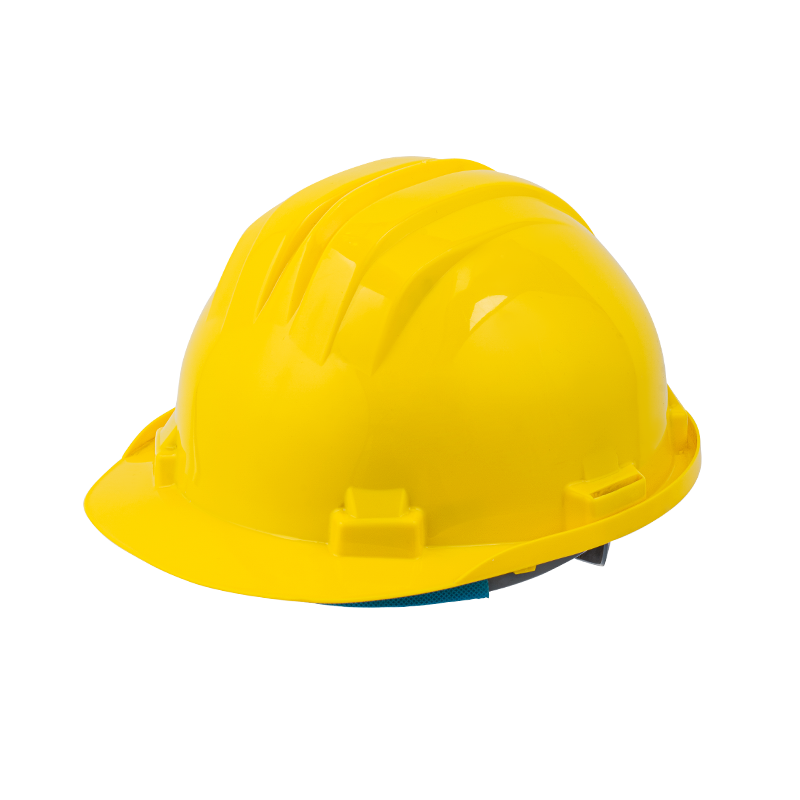
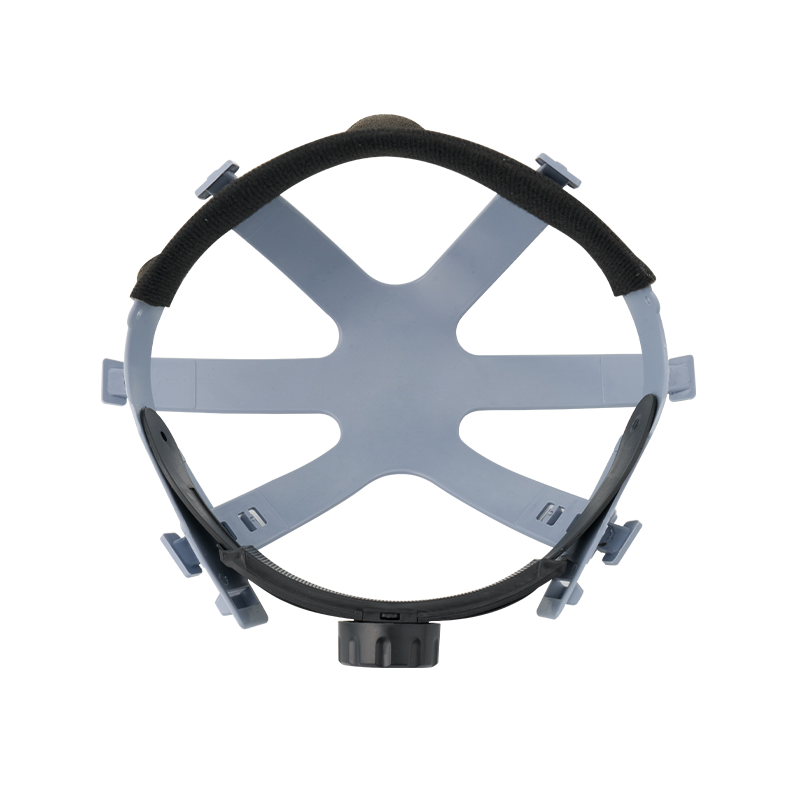 SH100 Penetration Resistant Safety Helmets1. Reliable quality,we always consider quality control as our top task, we are producing safety products to protect wearers, so this head protection helmet is heavy-du...View Product →
A penetration-resistant model illustrates the design logic well. Reinforcing the crown area, thickening the shell profile in the strike zone, or adding a structural ridge all raise resistance to a sharp falling object, which is precisely the scenario the apex penetration test simulates. The trade-off is weight and heat retention, which is why penetration resistance is usually specified deliberately rather than bought by default.
The suspension is where most of the energy attenuation happens. A four-point harness connects the shell to the head at four locations; a six-point harness distributes load across more contact points and tends to sit more stably, particularly on wearers who move their heads frequently. The gap between the shell crown and the top of the head, sometimes called the clearance, is a critical dimension. If a wearer adds a knit cap that reduces the gap, or if a suspension strap stretches, the shell can contact the skull directly and the protective margin disappears.
This is also why reversing a helmet requires explicit allowance. Some ANSI Z89.1-2014 helmets are tested for reverse wear and marked accordingly; others are not. A helmet that is comfortable backwards on site is not automatically a compliant helmet when worn backwards.
Chin straps, face shields, ear muffs, and headlamps attach to helmets in ways that can interfere with the suspension or introduce snagging hazards. The standard allows optional testing of certain features, and a manufacturer that documents accessory compatibility gives buyers a defensible answer when a safety committee asks whether a retrofit muff is acceptable. Compatibility documentation is one of the quiet differentiators between a factory that serves industrial accounts and one that simply ships shells.
Testing is where the standard becomes concrete, and procurement teams that understand the test sequence negotiate better and inspect smarter. The core protocol applies to every helmet; the Type II battery adds a second layer; optional tests cover special features.
Notice what these four tests have in common: they evaluate the assembled system, not the shell alone. A shell material that looks impressive on a data sheet means nothing if the suspension transmits force efficiently to the headform. This is why switching suspension suppliers without retesting is a genuine compliance risk, and why reputable manufacturers treat the shell-suspension pair as one tested article.
The chin strap requirement deserves emphasis, because it is the requirement most often ignored in day-to-day use. A Type II helmet worn with the chin strap loose or unbuckled cannot deliver the lateral protection it was certified for. Supervisors who enforce only the presence of a helmet, not the fastening of the strap, leave part of the investment unused.
Manufacturers may also have helmets evaluated for reverse wearing, for enhanced visibility, and for performance at higher or lower temperatures than the baseline range. Each option appears in the marking or documentation and should be confirmed explicitly if your specification depends on it. A helmet approved for high-temperature service is a different article from a baseline helmet that happens to be the same shape.
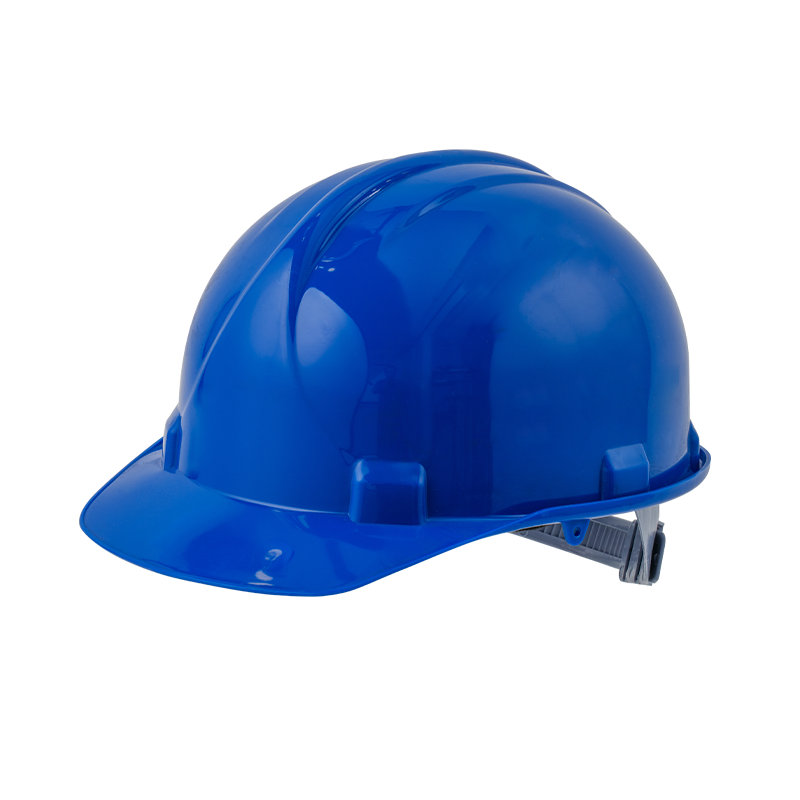
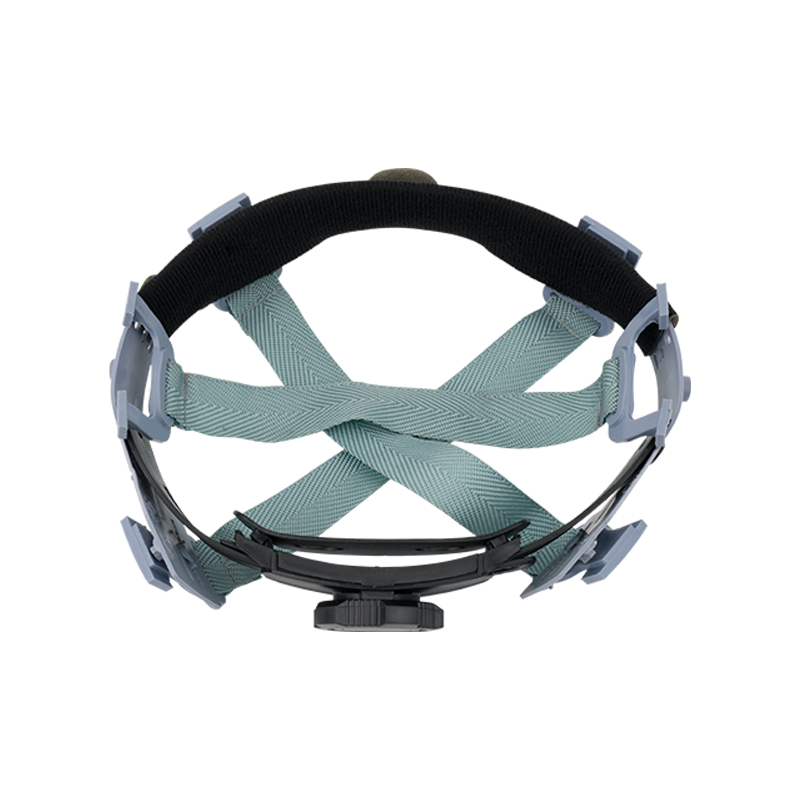 SH188 Two Layers of Ridges Safety HhelmetThis construction safety helmet is our new design model which is simple and elegant. The top of the hat is designed with two layers of ridges, which can better resist ...View Product →
Structural details such as a double-ridge crown are the visible result of this test-driven thinking. Additional ridges increase stiffness in the impact zone and help the shell distribute a point load before it reaches the suspension, which is a direct response to the impact and penetration testing protocol rather than a cosmetic choice.
Selection should follow a hazard assessment, not a catalog preference. Working through the following points in order produces a defensible specification that survives both an audit and a safety committee review.
Walk the work area and ask where a blow could come from. Overhead loads, tools dropped from a scaffold, and crane-suspended material point to top impact. Low structural beams, mobile plant operating in tight lanes, and trench walls create lateral exposure. If any realistic scenario involves side impact, specify Type II. If none does, Type I is sufficient and lighter.
Ask a qualified person whether any energized circuit could contact the head or be approached within a hazardous distance. If yes, Class E is the conservative default. If exposure is incidental, Class G usually suffices. Class C should never be chosen where electrical hazard exists, and it is worth stating that rule in writing, because Class C helmets are lighter and can look attractive on a hot day.
Heat stress drives non-compliance more reliably than discomfort does. A worker who removes a hot helmet is unprotected regardless of its class. Vented shells and breathable liner designs help significantly on outdoor summer work, while enclosed shells remain necessary for electrical and molten metal exposure, where ventilation openings would defeat the protection. A ventilated model with a V-shaped airflow profile is a reasonable answer for general construction crews who would otherwise improvise.
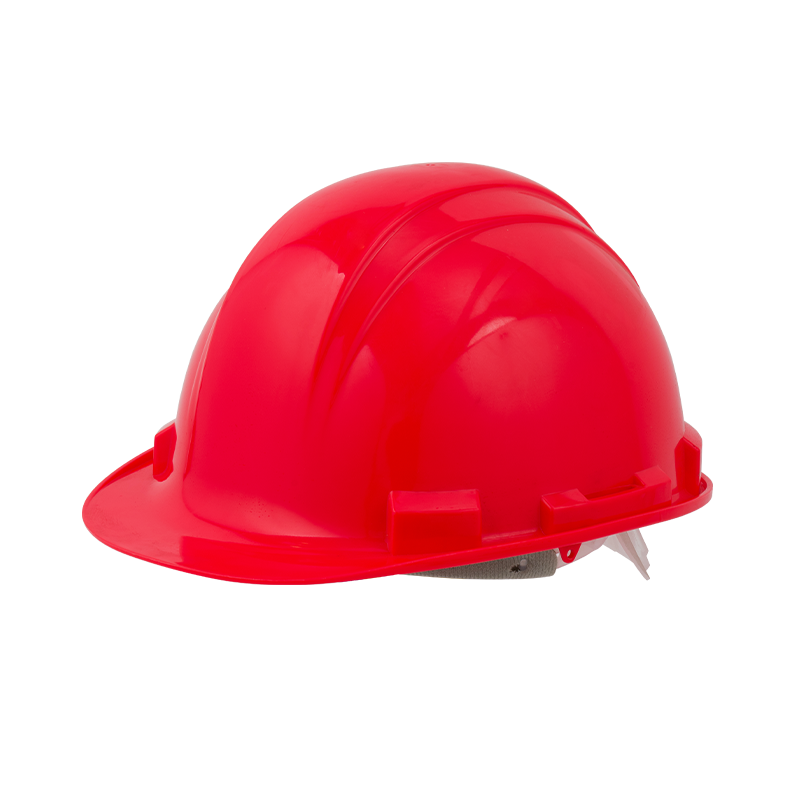
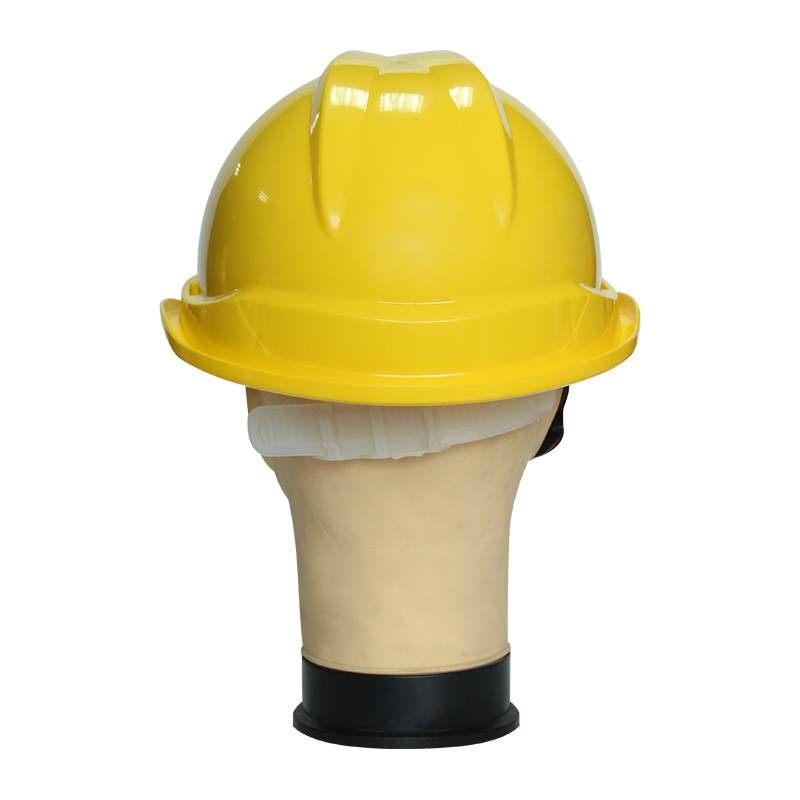 SH106 V Shape Breathable Safety HelmetsThe shell is designed as a popular V shape with ventilation on top. It's more breathable and cooler in hot weather.View Product →
Head size distribution varies by region and workforce. A suspension with a broad adjustment range reduces the number of stock sizes a distributor needs to hold, and six-point harnesses generally hold position better on wearers who look up and down repeatedly. Ratchet adjustment systems save time at shift change and make correct fit more likely when workers share equipment.
If work continues at low temperatures, verify the manufacturer's tested temperature range rather than assuming. Cold makes many polymers more brittle, and a helmet that has been stored in an unheated container through winter deserves inspection before issue. Confirm too that the marking includes the 2014 edition, the type, and the class, and that the accompanying documentation matches.
Replacement intervals, storage conditions, and cleaning methods are part of the specification, not an afterthought. A purchaser who orders three years of stock and stores it in a sun-exposed yard has effectively shortened the service life of every helmet in the pile. Order quantities that match realistic consumption, and store in a cool, dry, shaded place.
Companies that buy for both North American and European operations frequently discover that the two standards do not map onto each other neatly, and that a helmet approved for one market is not automatically approved for the other. Understanding the differences prevents duplicate inventory and awkward conversations with a notified body.
| Dimension | ANSI/ISEA Z89.1-2014 | EN 397 |
|---|---|---|
| Primary market | United States | European Union and many export markets |
| Impact direction | Type I top only; Type II top and lateral | Baseline top impact; lateral performance addressed through optional requirements |
| Electrical designation | Class G at 2,200 V, Class E at 20,000 V, Class C conductive | Electrical insulation treated as an optional property with its own marking |
| Chin strap | Mandatory retention test for Type II | Covered under separate optional requirements and specific helmet categories |
| Marking | Manufacturer, standard and edition, type, class | Manufacturer, standard reference, applicable optional properties |
The practical consequence for a wholesaler is inventory complexity. A European customer asking for EN 397 compliance and a North American customer asking for ANSI Z89.1-2014 compliance may need physically similar helmets that carry different test documentation and different markings. Factories experienced in export supply often maintain separate shell and suspension configurations so that each market receives a correctly tested article rather than a compromise.
Certification paperwork matters here as well. European conformity involves a notified body and a declaration of conformity; the American pathway typically runs through an independent certification program with periodic factory follow-up. Buyers should ask for the specific test report rather than a general quality statement, and should check that the report covers the type and class being quoted.
The class designation is the part of ANSI Z89.1-2014 that buyers most often treat as an interchangeable detail, and it is also the part where the difference is largest. Three class labels look similar on a specification sheet and sit within a few characters of each other in a purchase order, yet the verification behind them is not comparable at all. Class C carries no dielectric verification, which means nothing in the standard confirms it will resist electrical contact. Class G is verified at 2,200 volts, a level that covers incidental exposure around low-voltage equipment. Class E is verified at 20,000 volts, an order of magnitude above Class G. The gap between Class G and Class E is not incremental; it reflects fundamentally different working environments.
The chart makes the argument that a specification sheet cannot: the three classes describe three different risk postures rather than three quality tiers. Class E sits at the far end because utility and electrical contracting work can bring a helmet into contact with distribution voltages, and the standard responds by demanding that the complete assembly hold up at 20,000 volts. Class G covers the much more common situation of a general industrial site where a worker might brush against low-voltage equipment or a temporary power distribution panel. Class C occupies the base of the chart not because it is inferior in every respect, but because electrical insulation was deliberately excluded from its design brief.
For buyers, the bar on the right has a direct cost consequence. Achieving Class E generally requires a non-conductive shell formulation, a non-conductive suspension, and care with any rivets, fasteners, or accessory hardware, because a single conductive path through the assembly can fail the test. That constraint limits how many ventilation openings a shell can carry and which accessory attachments are permissible. It also explains why Class E helmets typically cost more and weigh slightly more than Class G equivalents.
The middle bar, Class G, is where the largest volume of industrial purchasing sits. It is the sensible default for manufacturing plants, warehouses, and general construction where the electrical hazard is incidental rather than central to the task. Many procurement teams specify Class G across an entire site to simplify inventory, issuing Class E only to the electrical maintenance group. That approach works, provided the risk assessment genuinely supports it and the exception is documented.
The left entry, Class C, is the one that causes trouble. Because a Class C helmet is lighter and often better ventilated, crews doing hot outdoor work sometimes prefer it. If that preference reaches the purchase order without a hazard review, a site can end up with head protection that offers no electrical insulation in an area where a risk assessment would have called for Class G or Class E. The correct control is procedural: write the electrical environment into the specification before the class is chosen, and require that Class C be justified in writing.
Two further points follow from the chart. First, the width of the gap between Class G and Class E means that a helmet cannot be upgraded between classes by swapping an accessory or adding a coating; the whole tested assembly defines the class. Second, because the standard tests the complete helmet, the class marking is only valid for the configuration as tested, which is why replacing a suspension with an aftermarket part can move a helmet out of its declared class without any visible change.
Sourcing head protection at volume is a different exercise from buying a handful of helmets at a retail counter. The questions that matter are about documentation, consistency between sample and production, and the factory's ability to hold a specification over repeat orders.
A supplier's model lineup is a useful diagnostic. A manufacturer that offers a coherent range across shell materials, suspension configurations, and feature sets is generally equipped to hold tolerances across that range. A supplier with a single generic shell and a long list of customer-specific labels is usually a trading operation, which is not automatically a problem, but it does mean the buyer carries more verification work.
Production depth matters too. Injection molding capacity, tooling ownership, and the degree of automation in the molding and assembly process all influence how consistently a helmet leaves the factory. A plant running multiple machines with an automated workshop can maintain repeatable wall thickness and cooling behavior, which is exactly what keeps impact performance stable between production lots. Buyers visiting a factory should ask to see the molding floor, the assembly line, and the quality records for the specific model being ordered.
Export logistics deserve a mention in the same breath. Helmets are bulky relative to their value, so container loading efficiency, carton strength, and port access affect landed cost meaningfully. A supplier located near a major port can consolidate and ship with fewer handling steps, which reduces the chance of transit damage to shells and suspensions.
A conforming helmet only protects while it remains in conforming condition. Inspection and replacement practice is therefore part of the ANSI Z89.1-2014 conversation, not a separate maintenance topic.
Before each use, a wearer should look for cracks, deep gouges, chalky or dull surface appearance indicating ultraviolet degradation, and any deformation of the crown. The suspension deserves equal attention: frayed straps, elongated adjustment holes, a cracked headband, or missing attachment clips all reduce performance. Helmets that have absorbed a significant impact should be removed from service immediately, even when no damage is visible, because the energy absorption capability of the shell may have been consumed.
Clean shells with mild soap and water, and avoid solvents, gasoline, and aggressive industrial cleaners that can attack the polymer. Store helmets in a cool, dry, shaded area, away from direct sunlight, and do not stack heavy items on them. Do not apply paint, stickers, or adhesives unless the manufacturer permits it, because some solvents and adhesive carriers degrade shell material and can obscure inspection.
Manufacturers publish recommended replacement intervals based on shell material and exposure conditions. Suspensions typically need replacement more often than shells because the webbing and adjustment hardware wear faster. In practice, the strongest replacement program combines a calendar interval with condition-based removal, so a helmet that has been struck or left in a hot vehicle is retired ahead of schedule. Distributors can support this by stocking suspensions separately from complete helmets, which lets a customer refresh a fleet at lower cost than replacing everything at once.
The edition itself was reaffirmed in 2019, so it remains the current version of the standard and helmets certified against it stay current. Individual helmets, however, do wear out, and manufacturers publish replacement intervals that should be followed regardless of the standard's status.
No. OSHA does not certify helmets. OSHA incorporates ANSI Z89.1-2014 by reference and requires employers to provide compliant head protection. Certification of the product itself comes from independent certification programs that verify testing and factory quality control.
Not by adding a chin strap. Type II certification requires that the complete assembly pass lateral impact, off-center penetration, and chin strap retention tests. A Type I shell with a retrofitted strap remains a Type I helmet.
It tells you the dielectric test voltage the complete helmet passed. Class G is tested at 2,200 volts, Class E at 20,000 volts, and Class C is not tested for electrical insulation at all. The letter describes the electrical environment the helmet was designed for, nothing else.
Service life depends on material, exposure, and use intensity, and the manufacturer's published interval governs. As a working rule, suspensions are replaced more frequently than shells, and any helmet that has been struck, exposed to chemicals, or stored in prolonged sunlight should be retired on condition rather than calendar.
Yes, and for volume orders it is often the better route, since the factory can supply the test report for the exact configuration, control production consistency, and provide spare suspensions. Distributors add value through local stock and rapid replenishment, so the right channel depends on order size and lead time tolerance.
No. Class E is not inherently superior to Class G for a task with no meaningful electrical exposure. Type and class should be matched to the assessed hazard, and an over-specified helmet can increase cost and weight without improving protection.
Only if the manufacturer permits them. Some adhesives and solvents degrade shell polymers and can hide cracks during inspection. Reflective strips and identification labels supplied or approved by the manufacturer are the safe choice.
The helmet that arrived with a 2009 certificate in the opening scenario is not a rare event; it is the ordinary result of writing a specification without naming the edition, the type, and the class. Fixing it costs nothing at the specification stage and a great deal at the receiving dock. Write "Type II, Class E, marked ANSI/ISEA Z89.1-2014" on the order, request the test report for the exact shell-and-suspension combination, and require the marking to match on every unit in every shipment.
From there, the operational work is straightforward. Match the type to the impact directions your risk assessment identified. Match the class to the electrical environment. Choose the shell and suspension configuration based on heat, fit, and task duration. Inspect on receipt, inspect before use, clean properly, store sensibly, and retire helmets on condition as well as on schedule. A safety helmet is a simple piece of equipment, and the standard that governs it is a practical document once you know which two letters on the marking actually matter.
It is focused on the overall solution of dry bulk material port transfer system,
research and development,
manufacturing, and service
Contact Us
Contact UsMiss. Jenny
+86 136 5588 7720
sales8@hoyoungsafety.com
sales1@hoyoungsafety.com