 English
 Español
 عربى
عربى

Industry News
Home / News / Industry News / ANSI Z89.1 Safety Helmet Guide: Types, Classes, Testing, and Compliance
Content
During a pre-bid technical review for a municipal infrastructure maintenance contract, the project safety officer stopped the helmet procurement because the bid sheet listed two models with the same printed trademark but different markings: one said Type I, Class G, and the other said Type II, Class E. The distributor had assumed that any ANSI Z89.1 label was enough. The bid was returned for respecification, adding a week of delay and hundreds of hours of coordination across three subcontractors. That scenario repeats every year because most buyers look for the certification logo instead of the classification details behind it.
ANSI Z89.1 is the North American benchmark for industrial head protection. It defines how helmets are classified, tested, and marked so that safety managers can match a hard hat to real hazards rather than to a marketing claim. Understanding the standard does not require a laboratory degree; it requires knowing three things: the Type, the Class, and the tested performance behind both labels.
This guide explains the structure of ANSI Z89.1, the difference between Type I and Type II helmets, the electrical classes, the test methods behind the standard, and the practical purchasing decisions that follow. It also connects those decisions to actual manufacturing considerations, including shell materials, suspension design, and supplier qualifications.
Key finding: ANSI Z89.1 is not a single-product approval. It is a classification and test framework; the right helmet for your work site depends on the impact direction you face, the electrical risks you isolate, and the documented test data behind the shell.
ANSI Z89.1, formally titled the American National Standard for Industrial Head Protection, is a voluntary consensus standard developed by the International Safety Equipment Association under the supervision of the American National Standards Institute. It establishes performance requirements for protective helmets commonly called hard hats, safety helmets, or industrial helmets. Although the standard itself is voluntary in a legal sense, the Occupational Safety and Health Administration incorporates it into workplace safety rules. OSHA regulations such as 29 CFR 1910.135 and 29 CFR 1926.100 require employers to ensure that workers exposed to falling objects, bumps, or electrical hazards wear protective helmets that meet an established national consensus standard, and ANSI Z89.1 is the standard named in those rules.
The standard has been revised several times over the decades. The most widely cited current version in procurement documents is ANSI/ISEA Z89.1-2014. It replaced earlier versions produced in 2009 and 2003, and it defines the types, classes, test methods, marking requirements, and performance criteria for industrial helmets. Buyers in North America often write “ANSI Z89.1 compliant” into their bid sheets, but without specifying Type and Class, the compliance statement remains incomplete because two helmets can both comply with the same standard and still be intended for completely different hazard profiles.
Why does this matter financially? A Type I helmet tested only for impacts to the top of the shell is generally less expensive than a Type II helmet tested for top and lateral impacts, but the lower cost does not make it suitable for tasks where side impact is plausible. Purchasing the wrong class also creates liability: a Class G helmet tested at 2,200 volts is not the same as a Class E helmet tested at 20,000 volts. In environments with energized conductors above the lower threshold, the difference can be fatal.
For this reason, compliance on paper is only a starting point. The value of ANSI Z89.1 comes when a safety manager translates the Type and Class into the specific exposure conditions on the job site: dropped tools, swinging loads, structural edges, low clearances, vehicle movement, work at height, and proximity to live electrical parts.
Key finding: Treat ANSI Z89.1 as a specification language. A compliant helmet is one whose Type and Class match the documented hazards of the work, not merely one that carries the label.
ANSI Z89.1 divides industrial helmets into two types according to the impact directions they are tested to handle. Type I helmets are evaluated for impacts to the top of the shell, which is the classic protection scenario for a falling object striking a worker vertically. Type II helmets must also pass impact and penetration tests applied to the front, back, and sides of the helmet, covering the kind of oblique or lateral impact that can occur when a worker swings into stationary objects, falls against a structure, or is struck from the side by moving material.
In practice, Type I remains sufficient for many stationary overhead-object environments such as general warehousing, simple assembly, and low-height maintenance tasks where dropped items are the primary risk. Type II becomes the more defensible choice for construction, oil and gas, utility work, confined-space work, and any task near moving machinery, vehicle cabs, articulated booms, or structural corners.
The two type categories also differ in design. A Type II shell must have an energy-management system that functions when force is applied from multiple directions, which often means a more complex suspension, thicker crushable lining, or an outer shell geometry designed to redirect lateral energy. That engineering complexity changes the weight, ventilation, and dimensional profile of the helmet.
| Type I Tested for vertical impacts to the top of the helmet. Suitable for tasks where dropped objects are the dominant hazard. Often lighter and easier to ventilate. Commonly selected for warehousing, light assembly, and indoor maintenance. |
Type II Tested for top, lateral, front, and rear impacts. Suitable for tasks involving moving equipment, low clearances, and side contact. Adds multi-directional energy management. Commonly selected for construction, utilities, oil and gas, and transportation work. |
Selecting a Type II helmet is not automatically better. Some Type II designs are heavier and warmer because additional crushable inner material is needed to attenuate side impacts. In a hot warehouse where the only risk is a falling box, a well-ventilated Type I helmet may produce fewer heat-stress problems and improve worker compliance. The correct approach is to define the direction of impact risk first and then select the type that covers it.
If your job site includes vehicles, mechanical equipment, scaffolds, structural steel, or any movement that can push the head sideways, the more conservative route is Type II. Fewer questions are asked when a helmet has been tested for lateral impact and the cost difference is usually modest compared with the cost of a single head injury.
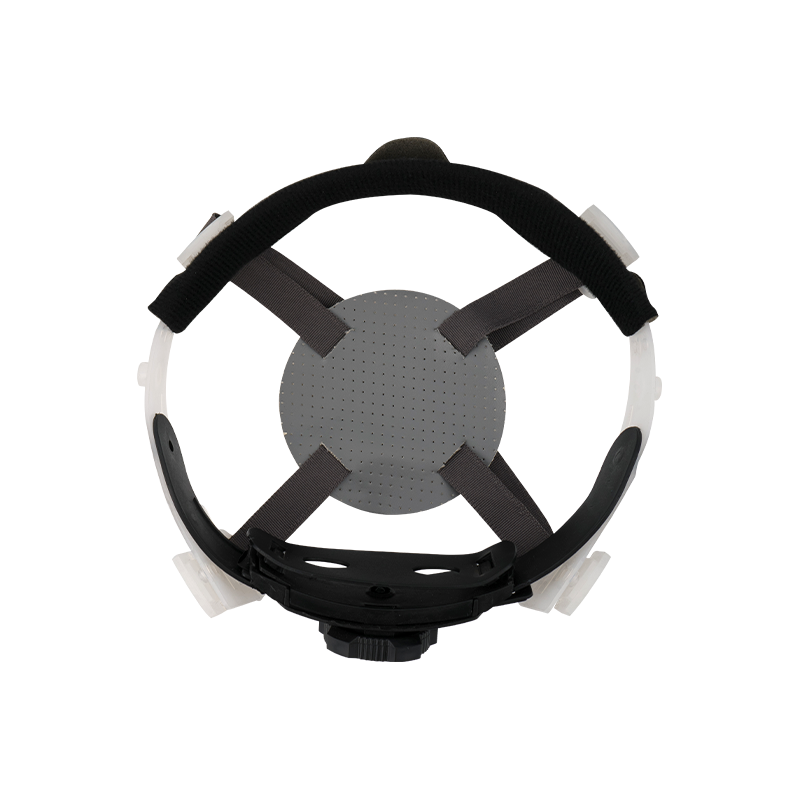 SH104 V-Guard Safety HelmetsThe shell is designed as a popular V shape on top. The regular material is PE and ABS. PE shows good puncture resistance, cracking resistance, corrosion resistance, an...View Product →
Key finding: Type I protects you from above; Type II protects you from above and around. Choose by impact direction, not by habit.
The second part of the ANSI Z89.1 classification system is the electrical class, which tells you how much voltage protection the helmet can physically provide through its shell and suspension. The standard defines three classes: Class G, Class E, and Class C. Each one is tested at a different voltage level, and each one has a different practical application boundary.
Class G stands for General and is tested at 2,200 volts. This is the minimum level for most industrial non-electrical work and is the most common class specified for construction, manufacturing, and maintenance where occasional contact with low-voltage wires is possible. Class E stands for Electrical and is tested at 20,000 volts. It is the level required for work near energized electrical installations, high-voltage lines, and substations. Class C stands for Conductive, but the practical meaning is important to understand in the negative: Class C helmets provide no electrical insulation because the shell or suspension materials are not engineered to resist current flow.
The most frequent mistake in helmet procurement is to treat Class E as a premium version of Class G. That thinking is incorrect. A Class E helmet is not simply “more insulating” in a continuous spectrum; it is a specific design that uses non-conductive materials and passes a much more demanding test. Meanwhile, a Class G helmet may perform poorly on a 20,000-volt test, so it must never be substituted for Class E work.
| Class | Test Voltage | Intended Work Environment | Common Misuse |
|---|---|---|---|
| Class G | 2,200 V | General industry, construction, maintenance | Used near high-voltage lines beyond its test rating |
| Class E | 20,000 V | Electrical utility work, substations, live-line zones | Assumed to be mandatory for every job site |
| Class C | Not rated | Areas where electrical hazards are absent | Used in electrical work because it is lightweight |
The chart below summarizes how typical industry sectors prioritize the Type and Class combination under ANSI Z89.1. These scores are based on commonly applied hazard assessments rather than a mandatory requirement table in the standard, and they provide a useful starting point for writing a bid specification.
It rates, on a scale of one to ten, the degree to which a sector's dominant hazards justify selecting a Type II shell, a Class E rating, or both. An electrical utility assignment scores highest because lateral impacts and high voltage frequently appear in the same work zone. A construction site scores high for Type II but moderate for Class E because electrical exposure is present but not continuous. A logistics environment scores lower for both because dropped boxes and aisle collisions define the risk more than side impact or voltage. The chart is intended to provoke discussion among buyers, safety officers, and suppliers, and to show that a single class across all sectors is rarely the best answer.
Reading the chart, several conclusions stand out for procurement teams. First, electrical utilities score 9.5 because both Type II protection and Class E insulation align with the hazard profile; a utility worker can be struck from the side by an energized line or by a tool carried on the shoulder. Second, construction scores 9.0 because lateral impact risk is high while electrical exposure is intermittent, meaning a Type II Class G helmet is often defensible unless workers enter live zones. Third, oil and gas scores 8.5 because workers move through congested platforms and vehicle areas, making Type II valuable and Class E less necessary except during electrical maintenance. Fourth, manufacturing scores 8.0 because overhead cranes, conveyors, and material handling lines produce both top and lateral impact scenarios, while the majority of plants operate below the Class E threshold. Fifth, logistics scores a lower 7.0 because the dominant risk in many distribution centers is vertical falling inventory, yet aisle collisions push the type recommendation in favor of Type II. Sixth, these scores should not be read as legal thresholds but as a prioritization aid for teams that need a quick starting point. Seventh, the chart also suggests that specifying Type II across all five sectors is a simpler and safer policy than varied type selection that depends on each crew assignment. Eighth, the Class G versus Class E decision deserves a separate conversation with a qualified electrician before you commit to a helmet model. Ninth, a safety officer may reasonably choose a Class E helmet everywhere to standardize, provided the added weight is acceptable to workers. Tenth, the ultimate answer still lives in the site-specific risk assessment, not in a chart.
Key finding: Class C is not an electrical rating, Class G protects only at 2,200 volts, and Class E is the only class tested at 20,000 volts. Let the live-line assessment decide the class.
When a helmet carries the ANSI Z89.1 label, the manufacturer is confirming that the model has been independently tested according to defined laboratory procedures. Understanding those procedures helps buyers distinguish between marketing language and measured performance. The standard evaluates helmets for force transmission, penetration resistance, flammability, and electrical insulation, plus several optional performance features that are marked on the label when specified.
Force transmission testing measures how much impact energy reaches the head. A weighted striker is dropped onto the helmet, and a sensor inside the headform records the peak force. Penetration testing is more binary: a pointed striker is dropped onto the shell, and the acceptance criterion is whether the point touches the headform. Flammability testing measures the burn time or self-extinguishing behavior of the shell material when exposed to a defined flame source. Electrical insulation testing applies a specified alternating-current voltage to the helmet shell and measures leakage current over a set period.
| Test | What the Lab Does | Acceptance Concept | Buyer Relevance |
|---|---|---|---|
| Force transmission | Drops a guided weight onto the helmet | Peak headform force stays below a limit | Proves the shell and suspension absorb impact |
| Penetration | Drops a pointed striker onto the shell | Striker does not contact the headform | Proves resistance to pointed falling objects |
| Flammability | Applies a defined flame to the shell | Material resists burning or self-extinguishes | Proves basic fire behavior for hot work |
| Electrical insulation | Applies a high voltage to the shell | Leakage stays within the class limit | Validates the Class G or Class E rating |
| Optional reverse | Tests the helmet worn in reverse | Meets the same impact criteria | Allows flexible wearing direction |
| High visibility | Checks retroreflective material presence | Meets min. reflective area and color | Improves worker visibility in traffic |
Type II helmets face additional testing because lateral protection cannot be proven by the same vertical drop method. The standard adds lateral impact testing from the side, an off-center penetration test that targets a location away from the apex, and a chin strap retention test to confirm that the strap stays fixed under a defined force. If a supplier claims Type II compliance, it must have documented results for those extra procedures. Buyers should ask for the test report and verify that the label includes the Type II designation.
The material of the shell has a direct influence on how these tests are passed. High-density polyethylene is a widely used shell for general industrial helmets because it blends impact toughness with a practical cost balance; ventilated HDPE models perform well in warm environments where workers wear head protection all day. Understanding the material properties helps when comparing suppliers: an HDPE helmet can differ from an ABS helmet in shell rigidity, chemical resistance, and behavior at high temperatures. To explore the relevance of HDPE in industrial settings, you can review this supplier article on the key benefits of an HDPE safety helmet in industrial environments.
Key finding: A Type II label is a promise that the helmet passed extra lateral impact, off-center penetration, and chin strap retention testing. Ask for the actual test report before you standardize on a model.
Once the Type and Class are written into the specification, the remaining selection work focuses on fit, comfort, shell material, suspension geometry, and the practical quality of the manufacturing process. These variables are not optional extras; they determine whether workers actually wear the helmet correctly for the full shift. A helmet that sits loosely, slides into the field of vision, or traps heat will be adjusted improperly or removed at the worst moment.
The suspension system is the interface between the hard shell and the worker's head. ANSI Z89.1 requires that suspension be provided with the helmet and that it must perform as a system with the shell. Six-point suspension models are preferred for heavy work because they distribute the load across more contact points, reducing pressure points and improving stability. Ratchet adjustment allows fast changes with gloved hands, while some low-cost designs use a pin-lock system that requires removing the helmet to change size. If the work involves scaffolds, ladders, vehicles, or tilted head positions, six-point suspension with a secure chin strap is the more reliable choice.
Shell material should be reviewed against the environment. HDPE helmets are strong, affordable, and widely available, making them the default for construction and general industry. ABS shells offer a harder surface and better resistance to certain oils and chemicals, though both materials can be formulated with ultraviolet stabilizers for outdoor use. The shell should have a smooth, low-friction surface so falling objects glance off, and the manufacturer should be able to explain how the shell and suspension combination passes the Type or Class relevant to your work.
| Workplace Condition | Helmet Feature to Prioritize | Reason |
|---|---|---|
| Hot outdoor site | Ventilation channels, lightweight shell | Reduces heat stress and increases wear time |
| Confined space | Low-profile or compact shell | Decreases clearance and snagging risk |
| Overhead work | Type II and six-point suspension | Handles vertical and angled impacts |
| Electrical work | Class E rating | Provides tested 20,000 V insulation |
| Wide-brim requirements | Full-brim shell geometry | Shields neck and ears from dripping fluids |
| Night or traffic exposure | High-visibility reflective markers | Improves recognition in low light |
Supplier qualification is just as important as product geometry. A direct manufacturer can provide process insight that a general wholesaler cannot: molding parameters, batch traceability, test reports, storage conditions, and the ability to integrate suspension components from a controlled source. When you buy from an experienced manufacturer, you can request a sample, measure the shell thickness, inspect the label, and verify the marking compliance before placing a large order. That kind of diligence is especially relevant when a safety regulator requires documentation.
Ningbo Hoyoung Safety Products Co., Ltd., for example, produces a broad range of safety helmets under a controlled factory process in Ningbo, China, supported by injection-molding capacity, automated production lines, and a stated focus on personal protective equipment. Buyers who visit such facilities can see how shells are molded, how suspensions are assembled, and how quality control is organized. If you are evaluating HDPE options, you can review the HDPE safety helmet product line, which includes penetration-resistant, V-guard, and ventilated models that can be compared against your site-specific specification.
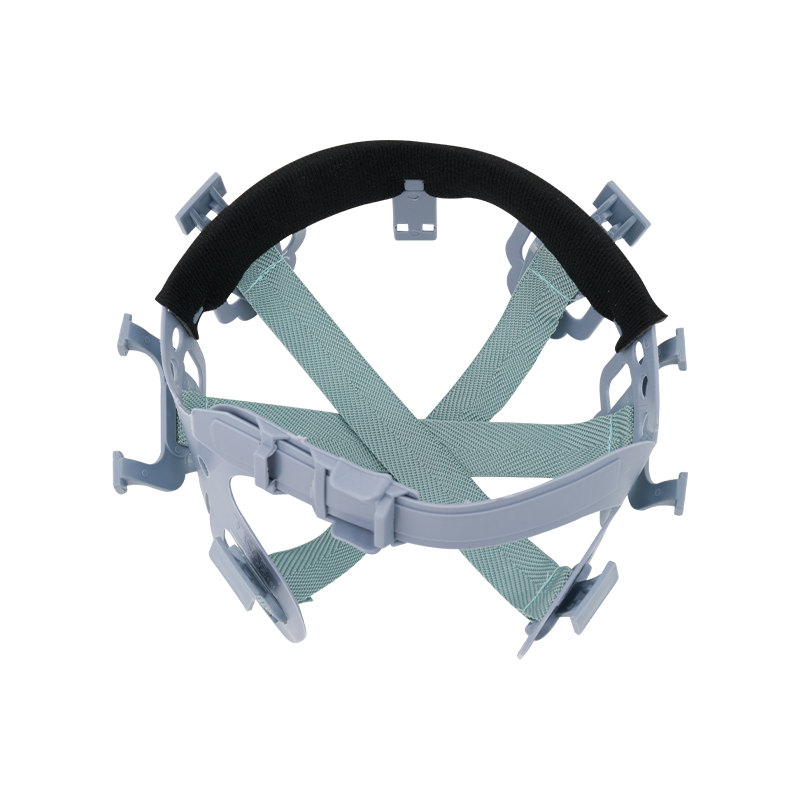 SH102 6 Point Suspension Breathable Safety HelmetsThis model is CE EN397 approved and which is designed with 6 ventilated holes, so it’s a good choice for summer or hot areas. The ventilation helmet has three channel ...View Product →
Key finding: The best ANSI Z89.1 helmet marries the correct Type and Class with a suspension system that fits real head shapes and a supplier that can show you test documentation.
Buying a compliant helmet is the first step; keeping it compliant is the ongoing responsibility. Helmets age, shells become brittle from ultraviolet exposure, suspensions stretch, and labels fade until the Type and Class can no longer be confirmed. Workers also assign a cultural meaning to their helmets: a scratched shell is sometimes treated as a badge of experience, but a damaged shell can be a hidden safety defect.
Inspection should be scheduled, not incidental. A quick visual check at the start of each shift can reveal cracks, dents, discoloration, or missing suspension components after storage. A monthly formal inspection, and the removal from service of any helmet that fails the check, is a routine practice that satisfies most compliance programs. The label requires attention because it carries the certification information: standard revision, Type, Class, manufacturer date, and lot number. When the label becomes unreadable, the helmet should be retired.
| Frequency | Inspection or Action | Acceptance |
|---|---|---|
| Daily | Visual check of shell, suspension, and label | No cracks, dents, loose parts, or faded label |
| Monthly | Detailed inspection in good lighting | Suspension intact, shell taper retained, no chemical damage |
| After impact | Immediate removal from service | Any impact event requires replacement or manufacturer review |
| After chemical exposure | Inspect for softening or discoloration | Questionable shell is replaced |
| Recommended shelf life | Follow manufacturer instructions | Typical guidance is 2 to 5 years from production date |
Replacement criteria are intentionally strict because the shell is a molded instrument of energy absorption. A helmet that has taken a significant impact may look correct and yet have crushed foam or a stressed shell that will perform differently in the next event. The standard itself does not print an expiration date, but most manufacturers apply service-life guidance based on material durability tests. High temperatures, chemical vapors, repeated cleaning agents, and ultraviolet exposure shorten that period. If you are using a lightweight penetrator-resistant model in a high-density workflow, keep a spare rotation so that one damaged helmet can be exchanged without leaving the worker unprotected.
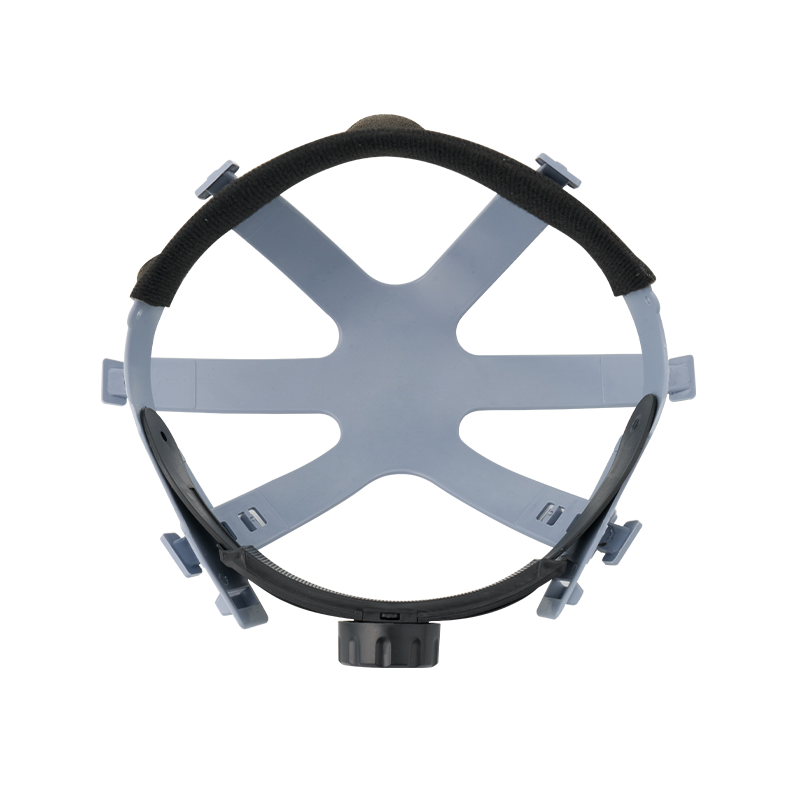 SH100 Penetration Resistant Safety Helmets1. Reliable quality,we always consider quality control as our top task, we are producing safety products to protect wearers, so this head protection helmet is heavy-du...View Product →
Key finding: Compliance is a service life, not a single event. Inspect daily, replace after impact, and retire any helmet whose label can no longer prove its ANSI Z89.1 classification.
The following questions come from procurement and safety conversations we hear regularly from distributors, safety officers, and operations managers across construction, industrial, and utility applications.
Is ANSI Z89.1 legally required by OSHA?OSHA does not publish its own helmet specification, but it requires employers to select protective helmets that meet a recognized national consensus standard. ANSI Z89.1 is that referenced standard in most jurisdictions, and using a helmet without the label can result in a citation if an inspector determines that head hazards exist. |
Do I need a Type I or Type II helmet for general construction?For most construction work, a Type II helmet is the more defensible choice because workers move around scaffolds, rebar, formwork, vehicles, and equipment where lateral impact is a real possibility. Type I remains acceptable for tasks with only overhead falling-object risk, but Type II covers a broader hazard envelope. |
What is the difference between Class G and Class E helmets?Class G helmets are tested at 2,200 volts and suit general industrial work with low-voltage risk. Class E helmets are tested at 20,000 volts and are required for work near energized conductors and high-voltage systems. Class C provides no electrical protection. Do not substitute Class G for Class E in utility environments. |
Can a safety helmet be reused after a light impact?The safest answer is no. ANSI Z89.1 does not define a light impact threshold for reuse. Any impact strong enough to create a visible dent, mark, or suspension complaint should remove the helmet from service. Unseen structural damage inside the shell or liner can compromise a second impact. |
How long is an ANSI Z89.1 hard hat valid?ANSI Z89.1 does not assign a universal expiration date. The manufacturer’s stated service life, usually 2 to 5 years from the production date, and the physical condition of the shell determine retirement. Storage conditions, sunlight, chemicals, and impact history all shorten the practical life. |
Is a chin strap required by ANSI Z89.1?ANSI Z89.1 does not require a chin strap on every helmet, but Type II helmets must pass a chin strap retention test because the strap is part of keeping the helmet stable during lateral impact. In practice, work-at-height and energized environments should always specify a three-point or four-point chin strap. |
Is ANSI Z89.1 the same as EN 397?No. EN 397 is the European standard for industrial safety helmets and uses different impact velocities, temperature conditioning, penetration probes, and marking requirements. ANSI Z89.1 and EN 397 are not automatically equivalent, so a helmet sold into global markets often carries multiple labels or requires product-specific comparison of test reports. |
How do I verify that a helmet is truly ANSI Z89.1 compliant?Check the permanent label inside the shell. It should identify the standard revision, the Type, the Class, the manufacturer date, and the lot number. Ask the supplier for the independent test report behind that label. If the report cannot be provided, treat the claim as marketing until documentation arrives. |
Key finding: Verification is a combination of label reading, test report review, and physical inspection; all three should be part of every helmet receiving inspection.
It is focused on the overall solution of dry bulk material port transfer system,
research and development,
manufacturing, and service
Contact Us
Contact UsMiss. Jenny
+86 136 5588 7720
sales8@hoyoungsafety.com
sales1@hoyoungsafety.com