Content
Choosing the right Traffic Cone For Road Safety comes down to one direct answer: match the cone material and height to the actual road speed, weather exposure, and duration of use, rather than picking the cheapest or the tallest option by default. A short indoor cone, a mid height roadside cone, and a tall highway cone all solve different problems, and mixing them up is one of the most common sourcing mistakes buyers make. This guide walks through the practical differences between a pe-traffic-cone, a Rubber Traffic Cone, and a PVC Traffic Safety Barricade Cone, along with height selection, visibility performance, and placement guidance for road crews, facility managers, and safety equipment distributors.
The short answer is that polyethylene, rubber, and PVC cones each serve a different balance of weight, flexibility, and durability, and no single material is the correct choice for every road safety situation. A pe-traffic-cone is molded from polyethylene, a lightweight plastic that keeps the cone easy to carry and quick to deploy across long stretches of roadway, which matters when a crew needs to set up or take down a work zone quickly. A Rubber Traffic Cone uses a heavier, more flexible base material that resists cracking in cold weather and tends to spring back into shape after being struck by a passing vehicle, making it a common choice for busy intersections and high traffic industrial yards. A PVC Traffic Safety Barricade Cone sits between these two in terms of weight while offering strong resistance to sun exposure and repeated folding, which is useful for cones that are stored flat and deployed often.
| Material | Typical Weight | Cold Weather Flexibility | Best Suited Use |
|---|---|---|---|
| Polyethylene (pe-traffic-cone) | Light | Good | Frequent relocation, long roadway stretches |
| Rubber Traffic Cone | Heavy | Excellent | High traffic zones, intersections, industrial yards |
| PVC Traffic Safety Barricade Cone | Medium | Moderate | Storage friendly deployment, general roadway use |
For buyers building a mixed fleet, a practical approach is to stock polyethylene cones for daily light duty tasks such as lane marking and parking area management, keep rubber cones on hand for locations with frequent vehicle contact, and use PVC barricade cones where storage space is limited and cones need to be folded flat between jobs.
The direct guidance here is that cone height should scale with road speed and lighting conditions, since a taller cone with a properly sized reflective collar is easier for drivers to notice from a greater distance. Traffic safety resource guides commonly describe three general height categories used across road, facility, and event settings: a shorter cone suited to parking lots and indoor spaces, a mid height cone commonly used for general roadway work, and a taller cone reserved for higher speed roads and nighttime conditions, according to guidance published by the Traffic Safety Resource Center. The chart below illustrates how these three height categories are typically distributed across general road management use cases.
This distribution shows why mid height cones with a reflective collar remain the most commonly stocked option across general road maintenance fleets, since they cover the widest range of daytime roadway tasks. Taller cones become the better choice once a road carries faster moving traffic or work extends into low light hours, because their added height and larger reflective banding give approaching drivers more time to notice and react. Shorter cones remain useful for controlled, low speed spaces such as parking areas, warehouses, and event walkways where vehicle speeds are minimal. Matching the right height category to each job site is one of the simplest ways to improve road crew visibility without increasing overall equipment cost.
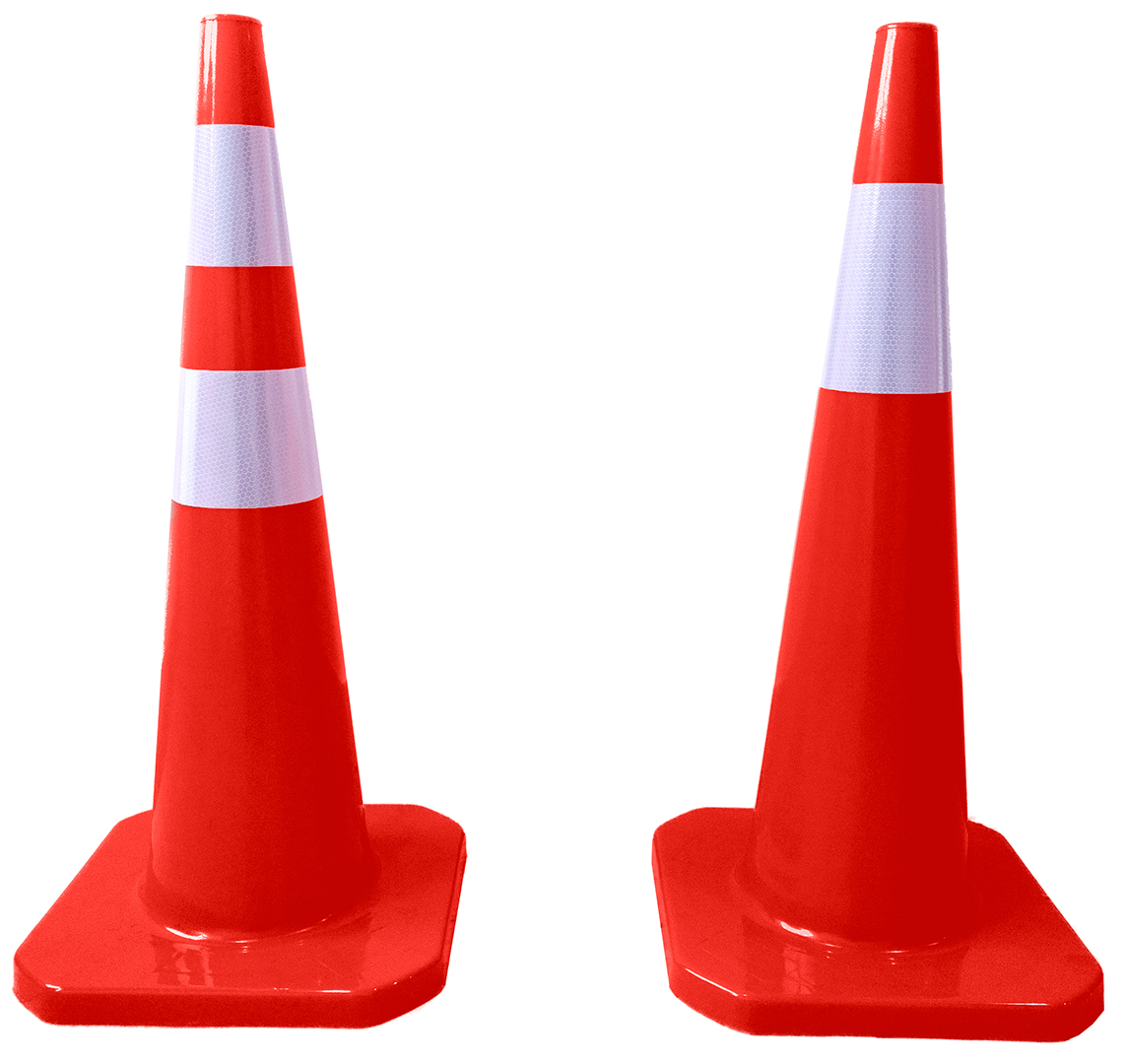
A pe-traffic-cone earns its place in a road safety fleet because polyethylene resists cracking under repeated handling and stays lightweight enough for one worker to place dozens of cones across a long taper without fatigue. This matters directly for crews who reposition cones several times a day, since a heavier cone slows down setup and increases the physical strain of the job. Polyethylene also holds molded color well, which helps the bright orange body stay visible even after months of outdoor sun exposure.
The diagram above shows the general layout shared by most standard road cones, including a polyethylene body, a mid body reflective collar, and a weighted base that keeps the cone upright in light wind or passing vehicle turbulence. This layout is common across the wider road safety equipment category and is a useful reference for buyers comparing different suppliers, since the placement and width of the reflective collar has a direct effect on how visible the cone appears to approaching drivers at dusk or during light rain.
The clear advantage of a Rubber Traffic Cone is impact recovery, since the flexible base can absorb a glancing hit from a vehicle tire and return to its original shape rather than cracking or splitting the way a rigid plastic cone might. This makes rubber cones a practical choice for locations where cones are frequently struck, such as tight loading dock entrances, active intersections, and busy industrial yards. Rubber also performs more consistently in cold temperatures, staying flexible rather than becoming brittle, which extends the useful life of the cone through winter months.
This stacked comparison reflects general material behavior rather than a single lab measured figure, and it is meant to guide relative expectations rather than exact performance numbers. Rubber cones show the strongest combined score across impact recovery and cold flexibility, which explains why many facilities reserve them for entrances and turning areas where vehicle contact is frequent. PE cones remain a reasonable middle ground for general daytime work where cones are placed and removed often but rarely struck directly. PVC cones fall in between, offering decent flexibility while remaining light enough for frequent folding and storage between jobs.
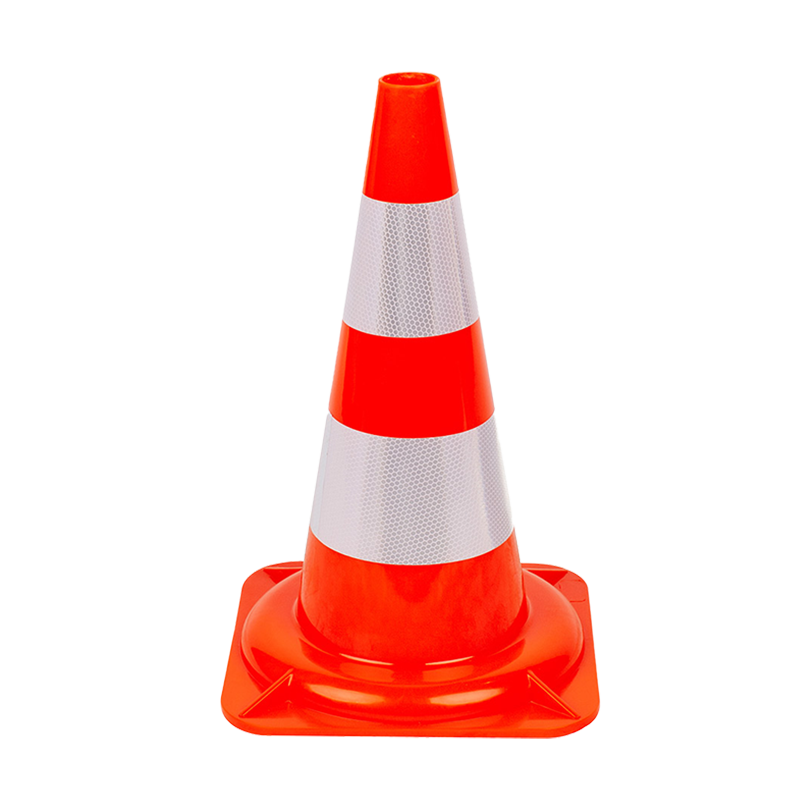
A PVC Traffic Safety Barricade Cone is often chosen when a crew needs cones that fold flat for transport and storage while still holding a bright, consistent color under sun exposure over time. PVC resists sun bleaching reasonably well compared with some softer plastics, which helps keep the cone body visibly bright rather than fading to a dull tone after repeated outdoor use. This makes PVC barricade cones a practical fit for mobile crews who carry a large number of cones in a single vehicle and need them to pack down efficiently between job sites.
This area chart reflects a general upward trend described across several road safety equipment guides, rather than a single precisely sourced statistic, since exact adoption figures vary by region and reporting agency. The consistent direction is what matters for buyers: interest in reflective collar equipped cones, including PVC barricade cones, has been rising steadily as more contractors and municipalities extend work into evening hours and low light conditions. This trend supports stocking reflective ready cones as a standard default rather than an optional upgrade, since the cost difference is small relative to the visibility benefit gained during dusk, dawn, and nighttime operations.
The direct point here is that a properly sized reflective collar is the single most impactful visibility upgrade available for any traffic cone, regardless of whether the base material is PE, rubber, or PVC. Industry guidance on work zone visibility consistently notes that recognition distance, not just raw brightness, is what keeps road crews and pedestrians safe, since drivers need enough time to see, process, and react to a cone line before reaching it. A collar that is too narrow or positioned too low on the cone body reduces the effective visibility distance, even if the material underneath is otherwise high quality.
This gauge illustrates the general relationship between reflective coverage and how far away a cone becomes clearly noticeable at night, based on the practical guidance widely shared across road safety equipment resources. A cone with no reflective treatment relies almost entirely on ambient light and headlight angle, which shortens recognition distance considerably in poor lighting. Adding a standard reflective collar improves this noticeably by returning light directly back toward oncoming headlights rather than scattering it. Combining a full width collar with a light topper or flashing accessory pushes recognition distance further still, which is why many crews treat this combination as the practical default for any roadway work extending past daylight hours.
Good cone placement is less about following a single fixed rule and more about matching spacing to the speed and shape of the road being managed. The following general guidance reflects common practice shared across road safety resource guides for setting up a clear, readable cone line.
Applying this kind of practical, condition based spacing helps crews build a road safety layout that reads clearly to approaching drivers, which is ultimately the main purpose behind every Traffic Cone For Road Safety deployment.
Ningbo Hoyoung Safety Products Co., Ltd. is a manufacturing enterprise focused on personal protective equipment and road safety facilities and supplies, located in Ningbo, Zhejiang province, a collaboration of Zhejiang wisdom and modern ports. With the concept of quality and service first, the company has 20 years of experience in the PPE field. As a professional Custom Traffic Cone For Road Safety Company and Traffic Cone For Road Safety Manufacturer, the operation includes a 5000 square meters workshop and 16 injection molding machines, largely implemented with an unmanned workshop capable of automated operation. Main products include safety helmets, earmuffs and other personal protective equipment, together with warning lights, collapsible safety cones, and other road protective equipment.
The company adheres to safety, peace of mind, and customer service as its purpose, staying market oriented with customer needs as the fundamental starting point, and works to provide more satisfactory service to partners around the world. Products are exported to Europe, the United States, South America, Southeast Asia and other countries and regions, trusted by customers across many markets. Ningbo Hoyoung Safety Products Co., Ltd. warmly welcomes domestic and foreign customers to visit and looks forward to working together toward a better future.
A pe-traffic-cone is lighter and easier to move frequently, while a Rubber Traffic Cone is heavier and recovers its shape better after being struck by a vehicle, making rubber a better fit for high contact areas.
Taller cones are generally recommended for roads with higher posted speeds and for any work extending into low light or nighttime hours, since added height and larger reflective collars improve driver recognition distance.
Yes, PVC barricade cones are commonly chosen by mobile crews because they fold flat for transport and storage while maintaining good color visibility under regular outdoor sun exposure.
Reflective collars should be checked regularly for fading, cracking, or dirt buildup, since a worn or dirty collar returns noticeably less light back toward oncoming headlights at night.
Rubber traffic cones generally perform well in cold weather because the material tends to stay flexible rather than becoming brittle, which helps the cone hold up through winter conditions.
Buyers should first match cone height and material to the typical road speed, weather exposure, and handling frequency of each job site, rather than choosing a single cone type for every situation.
It is focused on the overall solution of dry bulk material port transfer system,
research and development,
manufacturing, and service
Contact Us
Contact UsMiss. Jenny
+86 136 5588 7720
sales8@hoyoungsafety.com
sales1@hoyoungsafety.com